LEBANON INSTALLATION

Boiler Installation and Replacement in Lebanon, PA

Replacing an aging boiler in Lebanon? Sizing, fuel choice, and venting decide whether the new unit saves money or just costs it. Call to discuss your situation — house, current system, and what is failing.

✓ Proper heat-loss sizing✓ Gas and oil options✓ Venting and condensate planning

General inquiries: 7 AM–7 PM · Emergency calls: 24/7 · (888) 766-1474

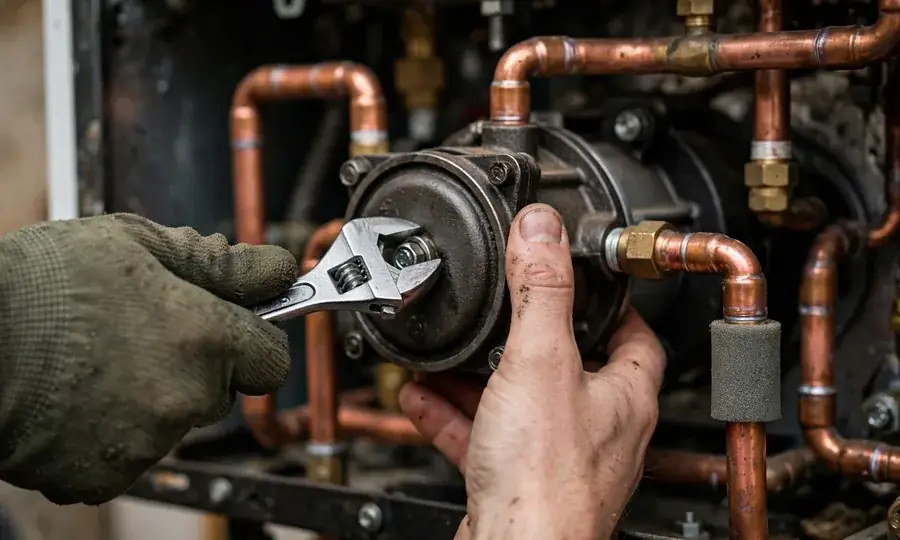
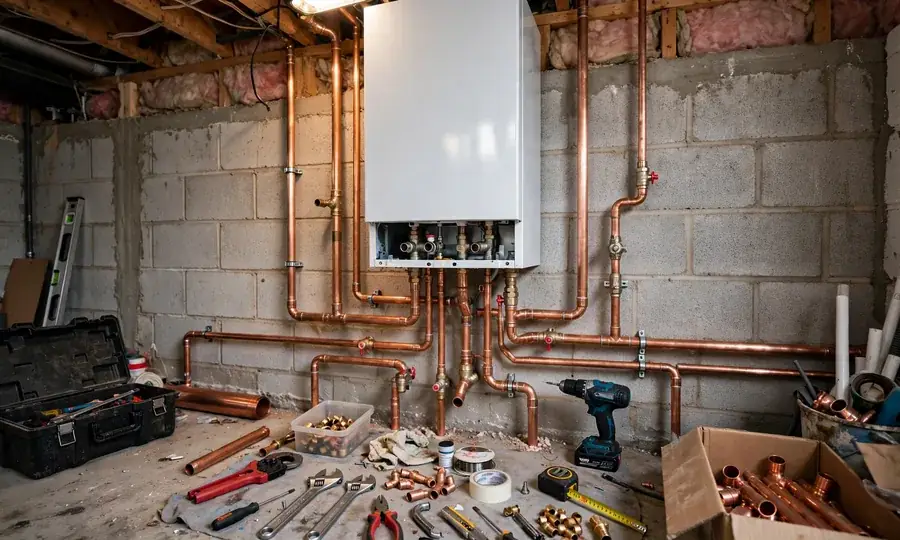
New boiler installation in progress with copper pipes

Sizing for Lebanon housing

Twins, suburbs, and the fuel question.

Lebanon housing runs from pre-war twins near downtown — shared walls, minimal insulation, high air leakage — to newer suburban construction on the outskirts. Most existing boilers in both were sized by rule of thumb, often 2 to 3 times larger than the building's actual heat loss. In a twin, that oversizing is compounded by the shared wall: the old boiler was sized as if the neighbor's heat did not exist. An oversized replacement short-cycles — blasting, satisfying the thermostat, shutting off, repeating — wasting fuel and wearing parts.

Proper sizing here starts with the building's heat loss, then immediately the fuel question, because Lebanon is one of the few markets where it is genuinely open: gas where mains serve the street, oil where they do not, each with real installed-cost and operating-cost trade-offs. Then venting: condensing units need flue routes and a condensate drain that survives teen-degree nights; atmospheric units need a chimney in serviceable condition.

Installation in Lebanon, PA

What replacement involves

A small construction project, done right.

  • Assessment — measuring the building and inspecting venting, chimney, and near-boiler piping
  • Removal — old boiler out, often with the expansion tank and near-boiler loop
  • Near-boiler repiping — where efficiency is actually won or lost
  • Controls — outdoor reset and staging commissioned properly, not just installed
  • Startup and tuning — fired and verified with instruments, with readings to show

For the deeper technical guide, see our national boiler installation guide.

Installation in Lebanon, PA

What to ask in a mixed-fuel market

Lebanon-specific questions that separate good installs from expensive ones.

  • "Is gas actually available at my street — and at what service-line cost?" — in Lebanon this is the first question, not an afterthought; distance from the main decides the conversion budget
  • "How did you calculate my heat loss?" — expect building math, not the old nameplate; twins share walls and size differently
  • "What happens to my chimney?" — atmospheric gas in an old oil chimney, or condensing with new flue routes: the venting plan decides the install's longevity
  • "How is the condensate handled in January?" — internal routing or insulated exterior run, with freeze protection planned
  • "What controls come commissioned?" — outdoor reset and staging set up properly, not just installed and left

Stay oil or convert? the Lebanon math

In this market, the fuel question is live.

In most markets the fuel question is settled; in Lebanon it is the central decision. The honest math has four parts: the gas service line cost (distance from the main matters — get the number from the utility before committing), venting and chimney changes for the new unit, the installed price difference between oil and gas equipment, and the fuel-price spread over the boiler's life. Where mains already serve the block, conversion often pencils out. Where they do not, a modern oil boiler with disciplined annual service is a solid system — not a consolation prize.

Either way, size to the building's actual heat loss first, fuel second. An oversized boiler on the "right" fuel still short-cycles its way through extra fuel and extra wear.

Installation in Lebanon, PA

Frequently Asked Questions

Straight answers before you call.

01

Should I switch from oil to gas when I replace my boiler?

If gas is available on your street and your oil unit is at end of life, replacement is the natural moment to switch — you avoid paying for an oil burner you will soon abandon. But do not replace a healthy oil boiler early just to change fuels; run it out with good maintenance and convert at the next natural replacement. Availability first, equipment condition second.

02

How long does a boiler replacement take?

A straightforward swap usually takes a day or two of work, with the heat off during the changeover — the radiators and most piping stay, so the disruption is concentrated in the basement. Conversions that add a chimney liner or remove an oil tank add time. The tech will give you a realistic schedule after seeing your basement, not before.

03

Can I keep my existing radiators with a new boiler?

Almost always — cast-iron radiators outlive several boilers and pair fine with modern oil or gas units. What gets replaced is the boiler, burner, and near-boiler piping, which are brought up to current practice. Keeping the radiators is also what keeps a replacement from turning into a whole-house renovation.

04

Is my 30-year-old boiler worth replacing preemptively?

Only if the block is telling you to — weeping sections, cracks, or a burner that needs constant attention are the signals, not the birthday. A sound 30-year-old block with a healthy burner can run for years with annual service. Have the block inspected and combustion tested; that assessment, not the age, should drive the decision.

Planning a boiler replacement in Lebanon?

Call (888) 766-1474 — discuss sizing, fuel, and options for your home.

☎   Call (888) 766-1474