BOILER REPAIR PRO

Steam vs. Hot-Water Boilers

See how steam and hydronic systems differ, and why troubleshooting depends on the type of heating.

How hot-water systems work

The hydronic loop: heat water, pump it around, bring it back.

Hot-water (hydronic) systems heat water in the boiler — typically to 140–180°F — and a circulator pump pushes it through pipes to radiators, baseboards, or in-floor tubing. The water gives off its heat, cools, and returns to the boiler to be reheated. It is a closed loop: the same water circulates for years.

Modern hydronic systems are sealed and pressurized (that 12–25 psi on the gauge), with an expansion tank absorbing the water's expansion as it heats. Older ones may be open-vented with a feed-and-expansion tank in the attic. Either way, the physics is the same: move hot water to where the heat is needed, on demand, zone by zone.

How steam systems work

Boil water, let physics do the distribution.

Steam systems boil water into steam, which rises through the pipes under its own pressure — no circulator needed — and condenses inside each radiator, releasing a large amount of heat as it turns back to water. That condensate then flows back to the boiler by gravity (one-pipe systems) or is pumped back (two-pipe systems).

Steam boilers run at very low pressure — typically under 2 psi, barely above atmospheric — which surprises homeowners expecting big numbers. The sight glass on the side shows the boiler's water level, the single most important thing to watch: too low and the boiler can be damaged; too high and radiators get waterlogged and bang.

Each radiator has an air vent that lets air escape as steam arrives, then closes. Failed vents are the #1 steam complaint — a hissing vent that never closes, or a cold radiator with a dead vent, are textbook symptoms.
Key differences at a glance

Same fuel, different physics — and different failures.

  • Pressure: hydronic runs 12–30 psi sealed; steam runs under 2 psi
  • Distribution: hydronic needs a pump; steam rises on its own
  • Zoning: hydronic zones easily with valves; steam is harder to zone well
  • Noise: hydronic is nearly silent; steam can hammer if vents or pitch are wrong
  • Heat feel: steam radiators get very hot and cycle; hydronic can modulate gently
  • Water quality: steam systems need clean condensate return; hydronic needs corrosion control

Which homes have which

Age and region wrote this map.

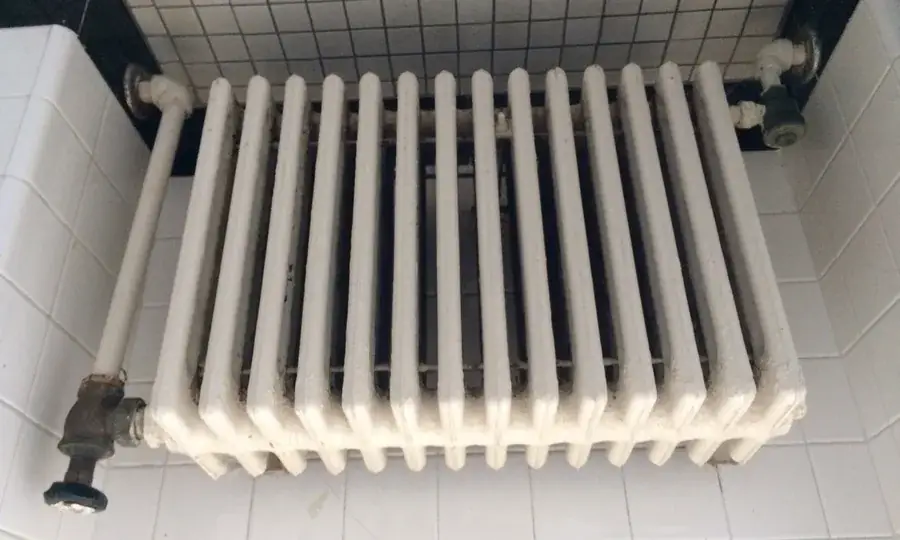
Steam dominates pre-1950s housing in the Northeast and Midwest — Philadelphia and Pittsburgh rowhouses, Brooklyn brownstones, Chicago two-flats. If your radiators are big cast-iron beasts and the boiler has a sight glass, you have steam. Hot water took over from the 1950s onward and dominates everything built since, plus converted systems.

Knowing which you have changes everything about troubleshooting: a cold steam radiator means venting or water-level problems; a cold hydronic radiator means air, sludge, or circulation. Describe the right system on the phone and the triage starts in the right place. Our steam boiler repair and hot-water boiler repair guides go deep on each.

Steam vs. Hot-Water Boilers

Maintenance and conversion

What each system asks of you — and whether to switch.

Steam maintenance centers on water: check the sight-glass level regularly, skim and flush to control water quality, test the low-water cutoff, and replace failed air vents. Hydronic maintenance centers on pressure and flow: annual service, pressure checks, bleeding, and water treatment against corrosion.

Should you convert steam to hot water? Honestly, rarely. Conversion means replacing near-boiler piping, adding circulators and controls, and often re-piping distribution — a major project. A well-maintained steam system heats just fine; the money is usually better spent on insulation, venting, and controls than on ripping out a working system.

Steam vs Hot-Water FAQs

Quick answers to the questions homeowners ask most.

01

How do I tell if I have steam or hot-water heat?

Look at the boiler: a sight glass showing water level means steam. Big cast-iron radiators with a small air vent on the side also mean steam. A pressure gauge reading 12–25 psi and a circulator pump mean hot water.

02

Why does my steam system bang?

Water hammer — condensate pooling where it should drain, or steam slamming into trapped water. Common causes: failed air vents, sagging pipes that lost their pitch, or too-high water level. It is the signature steam complaint and it is fixable.

03

Can a steam boiler explode?

Modern steam boilers have multiple safeties — pressuretrols, relief valves, low-water cutoffs. The real historical danger was low water with the burner firing, which is exactly what the low-water cutoff prevents. Keep it tested and the system is safe.

04

Is steam heat more expensive than hot water?

Steam systems can be slightly less efficient in practice — they run hotter and cycle more — but the difference is usually smaller than insulation and air-sealing differences between houses. A tuned steam system beats a neglected hydronic one.

05

My steam radiators are cold at the far end of the house. Why?

Steam is not reaching them — usually failed main vents (the big vents on the basement mains) or a sagging main that traps condensate. Main vents are cheap parts with an outsized effect; they are the first thing a steam tech checks.

Need Boiler Repair Help?

Tell us what's happening with your heating system and where service is needed.

☎ Call (888) 766-1474Regular phone hours: 7 AM–7 PM  |  24/7 emergency telephone line
☎   Call (888) 766-1474