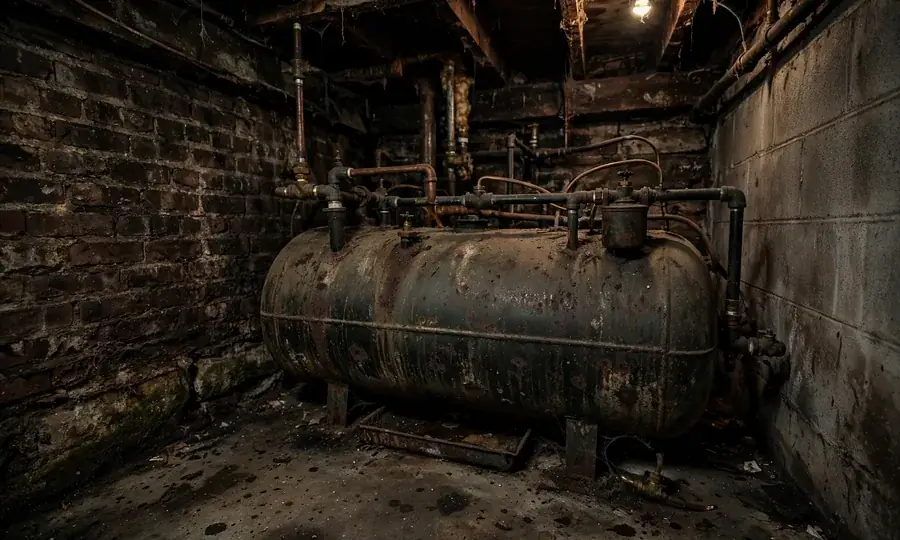
Can we replace one of our two boilers and keep heat?
Often yes — phased replacement keeps one unit running while the other is swapped. Ask your installer; it depends on the piping arrangement.
Replacing a boiler in Boston? Large residential systems need proper sizing, tenant coordination, and sometimes phased replacement. Call to discuss your situation.
General inquiries: 7 AM–7 PM · Emergency calls: 24/7 · (888) 766-1474
Who decides, who pays.
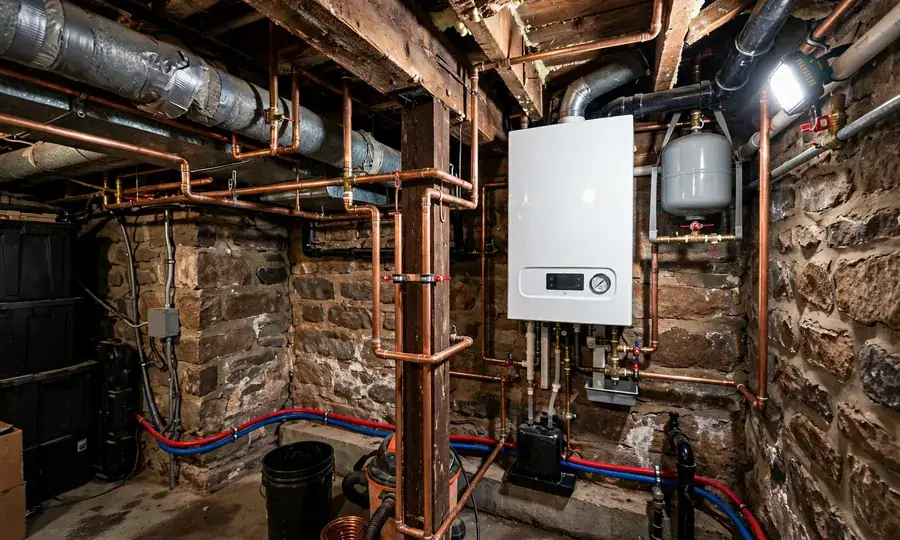
Condo boiler replacements are governance problems wearing work clothes: who authorizes (board vote? management?), who pays (reserves? special assessment? per-unit?), and who is inconvenienced (no-heat window coordination across owners).
Start with the docs: master deed and bylaws define responsibility for central plant. Then the money: reserves vs. assessment — decided before quotes, not after. Then the work: scheduled in mild weather with a written tenant/owner communication plan. The installer handles the boiler; the board handles the building.
The Boston specialty.
Boston replacements size for buildings, not homes: heat-loss across many units, domestic hot water loads, and distribution through extensive piping. Oversizing is endemic — legacy boilers were sized for leakier envelopes — and short-cycling on an oversized large boiler wastes staggering amounts of fuel.
On two-boiler systems, phased replacement (one now, one later) spreads cost and keeps heat during the work. Ask about it.
The human side.
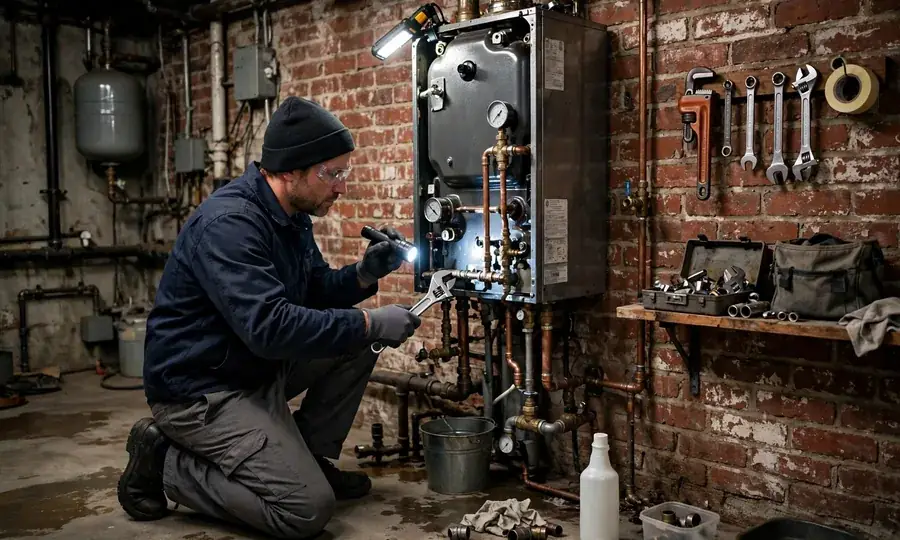
Replacing a boiler in an occupied building means coordinating no-heat windows with tenants, ISD notification if required, and a day-by-day plan with a guaranteed heat-restoration time. The installer who cannot give you that plan is not ready for Boston buildings.
Demand: building heat-loss calculation, near-boiler repiping, controls modernization (staging, outdoor reset), and startup tuning verified with instruments. See our national installation guide.
Five questions.
A fuel bill, not a percentage.
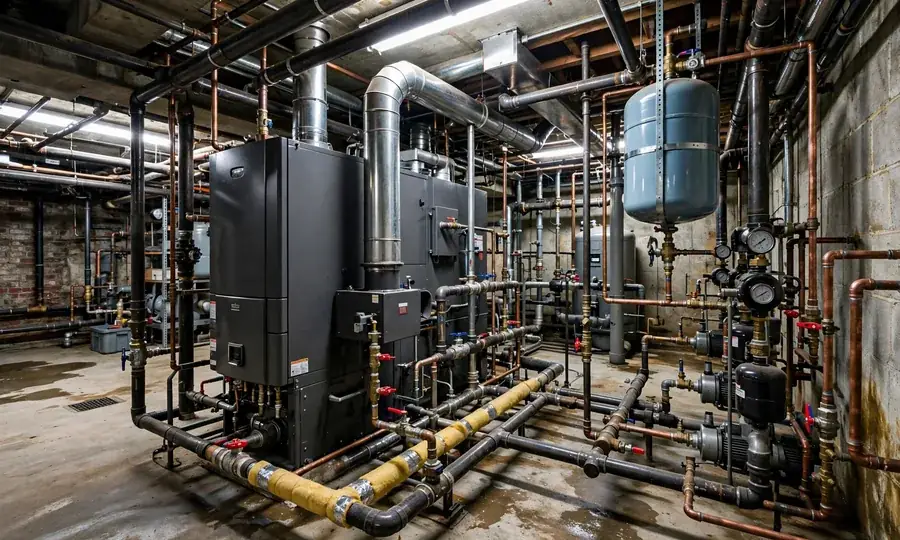
On a 12-unit building, the efficiency gap between a 1970s atmospheric unit and a modern replacement is not a percentage — it is a fuel bill. But the savings only materialize with heat-loss sizing across the building’s actual envelope, near-boiler repiping, controls modernization (staging, outdoor reset), and startup tuning verified with instruments. Oversizing is endemic in legacy buildings — the old unit was sized for leakier walls — and an oversized large boiler short-cycles away the efficiency it was bought for. On two-boiler plants, phased replacement (one now, one later) spreads cost and keeps heat during the work. Get the building heat-loss number; everything else follows it.
Every quote needs a chimney line.
Boston replacements live or die by the flue: century-old masonry chimneys sized for ancient boilers cause condensation and draft problems with modern units. Every replacement quote should include a chimney inspection and usually a properly sized liner — the liner is not an upsell, it is the difference between a boiler that drafts correctly for 25 years and one that soots and dies young. In shared buildings, verify the flue serves only the boiler being replaced; shared flues and abandoned connections are common in brownstone basements. A quote without a chimney line item is incomplete — for oil or gas.
Straight answers before you call.
Often yes — phased replacement keeps one unit running while the other is swapped. Ask your installer; it depends on the piping arrangement.
Longer than residential — plan for several days to a week for large systems, with a guaranteed interim heat plan. Get the timeline in writing.
Yes — and inspections. Your installer handles them; confirm they are in the written quote.
With your condo docs (who owns the plant), then the money (reserves vs. assessment), then quotes. Do the governance before the engineering.
Depends on your bylaws — most require board or supermajority approval for common-element capital work. Your property manager or attorney knows the threshold.
Related services in the Boston area.
Call (888) 766-1474 — start with a building-level assessment.