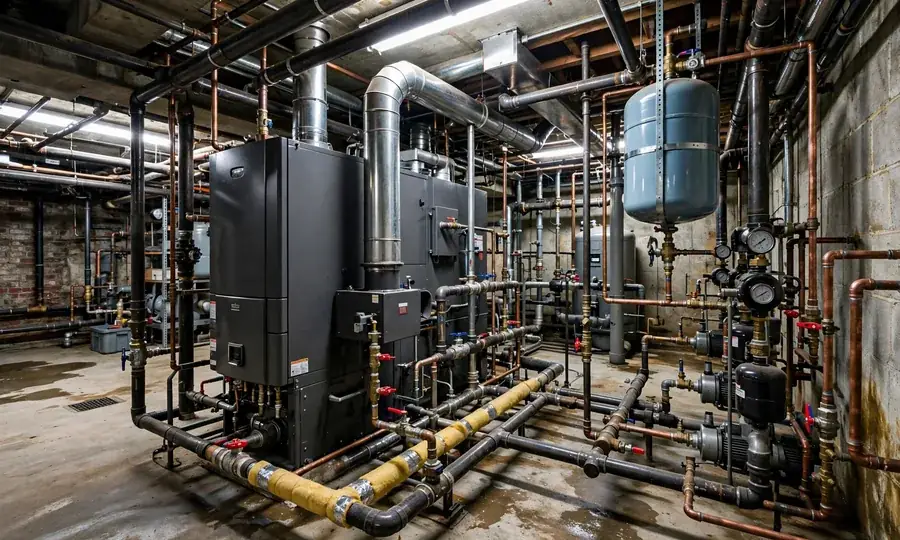
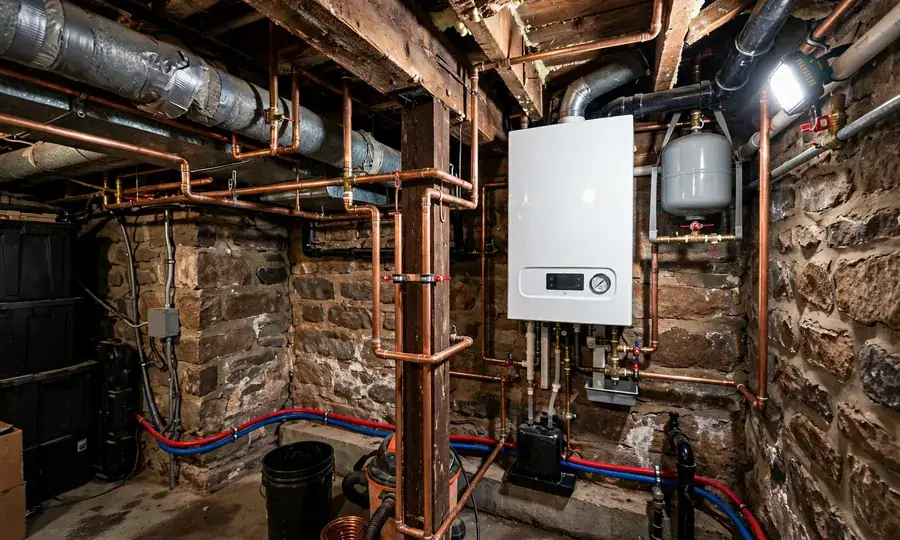
Is oil heat rare in Boston?
If you are unsure, check for a gas meter; oil buildings will not have one.
Oil burner trouble in Boston? But rare does not mean neglected: burner expertise applies everywhere. Call to describe the symptoms.
General inquiries: 7 AM–7 PM · Emergency calls: 24/7 · (888) 766-1474
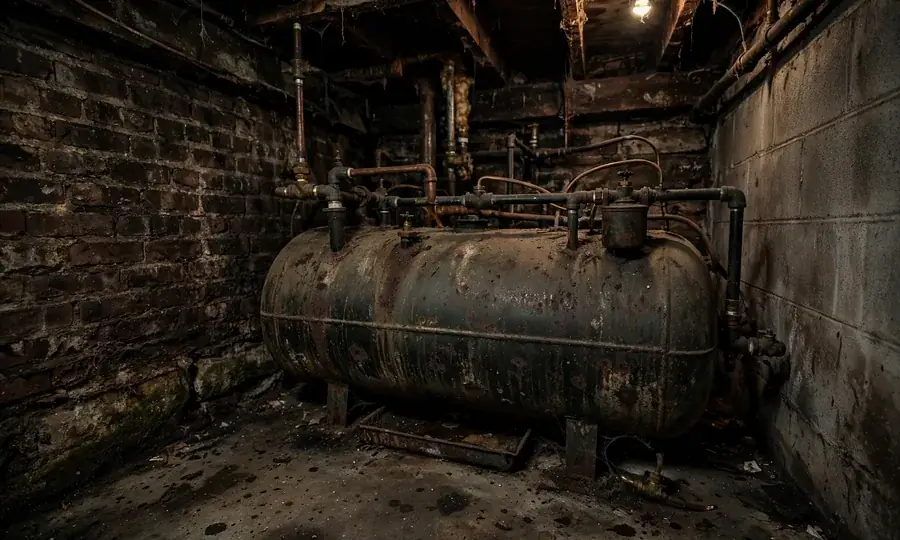
Boston's holdouts.
These systems are commercial-scale residential — bigger burners, bigger tanks, bigger consequences of neglect.
Servicing them requires commercial-burner competence on residential streets — a narrower bench. The triage routes Boston oil calls accordingly: building scale changes the parts, the expertise, and the timeline.
Oil burner problems can involve fuel supply, filters, ignition components and the condition of the tank. Describe your symptoms and system when calling.
These are typically older buildings that never converted , running original oil boilers decades later. Finding oil service in Boston takes more effort — which is why the triage line exists.
The burner does not know it is rare. Nozzles, electrodes, filters, tanks — the same components, the same expertise.
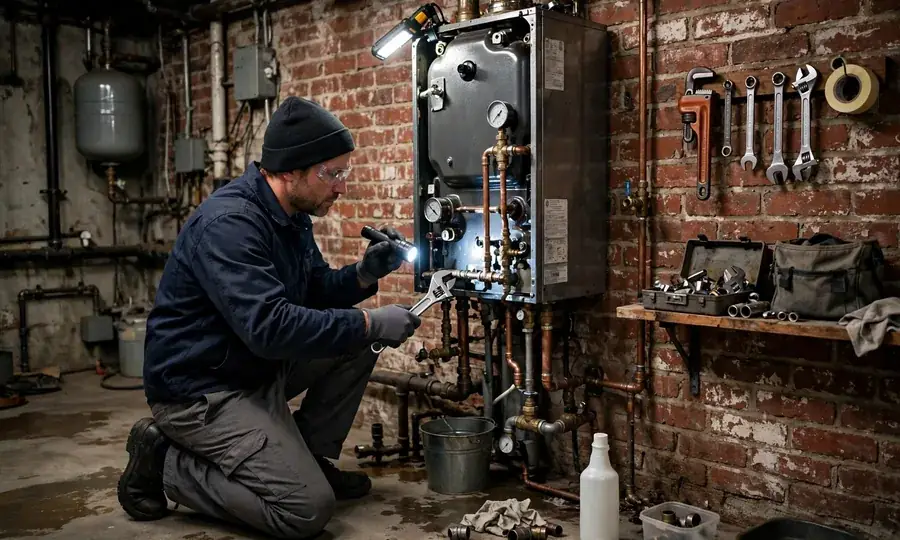
Oil symptoms, decoded.
For the full burner-component breakdown, see our national oil boiler repair guide. (On gas — the Boston overwhelming majority — see gas boiler repair in Boston.)
Same components, bigger consequences.
Boston’s oil holdouts run commercial-scale residential burners: bigger nozzles, higher pump pressures, larger combustion chambers — the same components as a home burner, sized for buildings. Servicing them takes commercial-burner competence on residential streets: combustion setup with instruments (not by ear), pump pressure verified against spec, electrodes gapped for the larger flame. The wear pattern is familiar — nozzles, electrodes, filters, tanks — but the consequences of neglect scale with the building. Triage routes Boston oil calls accordingly: building scale changes the parts, the expertise, and the timeline. Annual service is still the whole game; it is just a bigger game.
Oil burner problems can involve fuel supply, filters, ignition components and the condition of the tank. Describe your symptoms and system when calling.
A missed January delivery is a run-out, and a run-out on a building-scale tank stirs serious sludge: post-delivery, the burner needs attention before it runs clean again. Tell triage the tank size, the gauge reading, and the access situation; “quarter tank, truck can’t reach the fill” is a complete report that gets the right plan.
Straight answers before you call.
If you are unsure, check for a gas meter; oil buildings will not have one.
A handful of metro dealers still serve Boston oil customers — ask for dealers experienced with urban fill locations and access constraints.
With gas mains covering nearly all of Boston, conversion is feasible — but get full installed pricing on both options first. On large buildings, the conversion math deserves real analysis.
But the systems work fine with proper service; rarity is a servicing challenge, not an equipment verdict.
On building scale, the conversion math deserves real analysis — gas mains are available, but commercial-scale conversion costs are significant. Get engineered numbers, not rules of thumb.
Related services in the Boston area.
Call (888) 766-1474 — describe the symptoms for oil-specific triage.