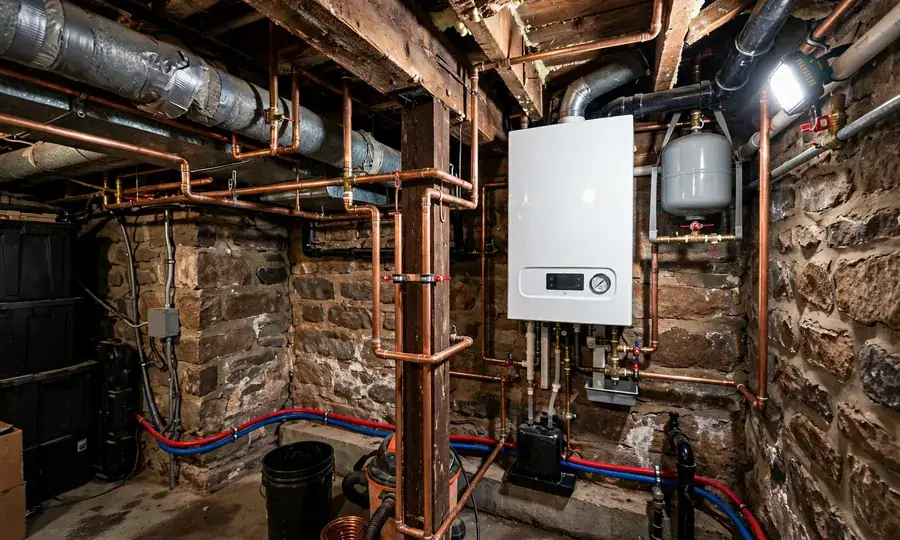
My building's boiler has two stages and only one fires. What is wrong?
Staging fault — could be the second-stage gas valve, the staging control, or a sensor. Note exactly what happens; it routes the diagnosis.
Gas boiler will not fire in Boston? Describe the fault code and building size for fast triage.
General inquiries: 7 AM–7 PM · Emergency calls: 24/7 · (888) 766-1474
The Boston arrangement.
Many Boston multis run on a master gas meter — one meter, one bill, landlord-paid, cost baked into rent. Others are individually metered. It matters for diagnosis: master-metered buildings sometimes have older, larger gas trains and landlord-maintained (read: deferred) equipment.
It also matters for shutoff authority: in a master-metered building, the gas shutoff affects everyone — coordinate with the landlord or management before any gas work. The tech will confirm authority on arrival.
The urban majority.
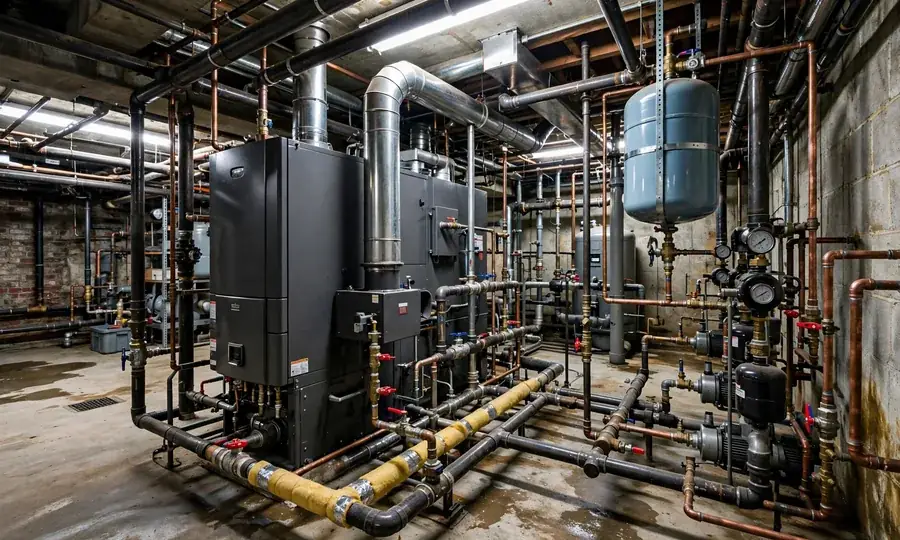
The systems are larger than suburban : big atmospheric boilers in brownstone and apartment basements, some 30 to 50 years old, with commercial-scale gas trains (larger valves, multiple stages).
Safety first: smell gas, leave the building, call the utility or 911 from outside. In a multi-unit building, alert other occupants as you leave.
The fingerprints.
For the full technical breakdown, see our national gas boiler repair guide.
Scaled-up ignition, scaled-up faults.
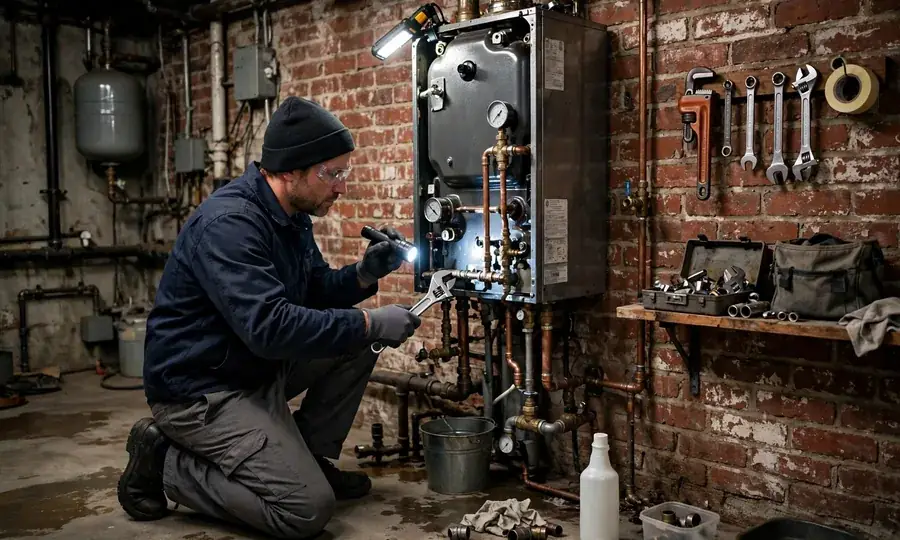
Boston’s big atmospheric units run scaled-up ignition: standing pilots with heavy thermocouples on the oldest, intermittent pilot and hot-surface ignition on the newer, multi-stage gas trains with larger valves. The fault pattern scales with it: flame-sensing failures that drop a 12-unit building instead of a single home, staging controls where one stage fires and the other does not, gas valves and pressure switches in commercial sizes. Diagnosis is the same discipline at larger scale — confirm supply and venting, test ignition components under load, read combustion with instruments. In master-metered buildings, coordinate shutoff authority with the landlord or management before any gas work; one meter serves everyone.
Staging deserves its own note: on two-stage and multi-boiler setups, the failure is often sequencing, not ignition — stage one fires fine, stage two never gets the call. The tech tests the staging controls independently of the burners, because a building running on half its plant all winter pays full price for half the heat.
One boiler, a dozen households.
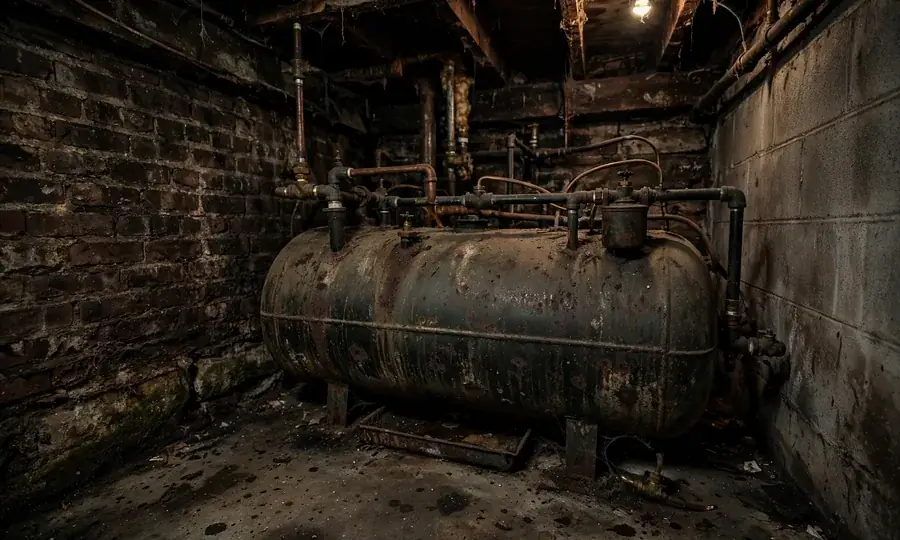
One boiler serving a dozen households multiplies the stakes of incomplete combustion. The Boston basics: working CO detectors in every unit (test them — they are your early warning, not the building’s), never block boiler vents or combustion-air paths in shared basements, and treat soot marks, yellow flames, or exhaust odors as same-day calls affecting the whole building. Annual service includes the combustion check that catches CO problems before detectors do. If an alarm sounds: everyone out, call 911 from outside, and alert other occupants as you leave — in a multi-unit building, your detector may be the first of several.
Straight answers before you call.
Staging fault — could be the second-stage gas valve, the staging control, or a sensor. Note exactly what happens; it routes the diagnosis.
No. Note the error code and call instead — especially in a multi-unit building.
If some units heat and others do not, it is distribution (zones, valves, balancing). If nothing heats anywhere, it is the boiler. That distinction saves a misdiagnosis.
The property owner or authorized management — especially with a master meter, where shutoffs affect all units. Tenants should report, not authorize.
Not inherently — but master-metered buildings skew toward landlord-maintained equipment, which skews toward deferred maintenance. The arrangement is fine; the maintenance is the question.
Related services in the Boston area.
Call (888) 766-1474 — describe the fault code for fast triage.