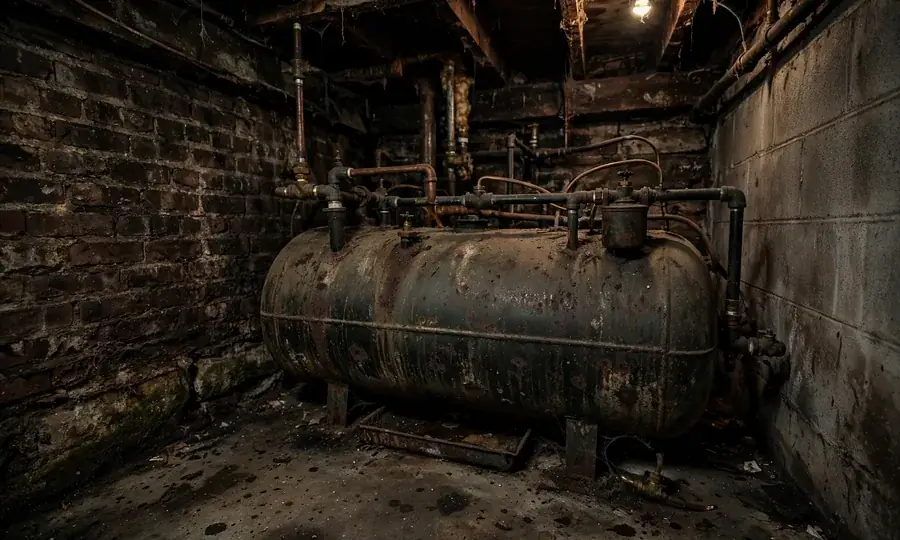
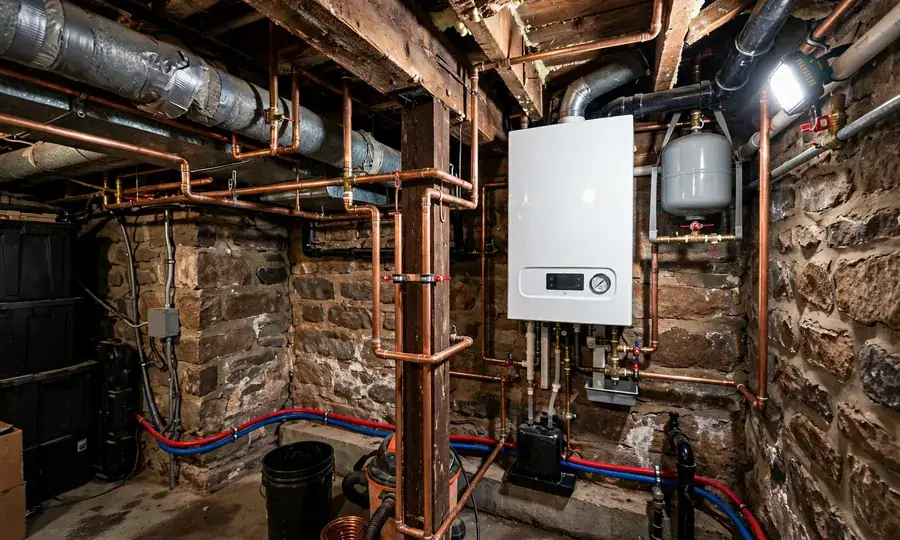
One unit in my brownstone is cold, the rest are fine. What is it?
Distribution: zone valve, air-bound loop, balancing, or a failed radiator valve. Note which unit and whether it is new — that routes the diagnosis.
Boiler not heating right in Boston? Large residential systems in brownstones and apartment buildings — scaled-up faults, multi-unit stakes. Describe the symptoms by phone for honest triage.
General inquiries: 7 AM–7 PM · Emergency calls: 24/7 · (888) 766-1474
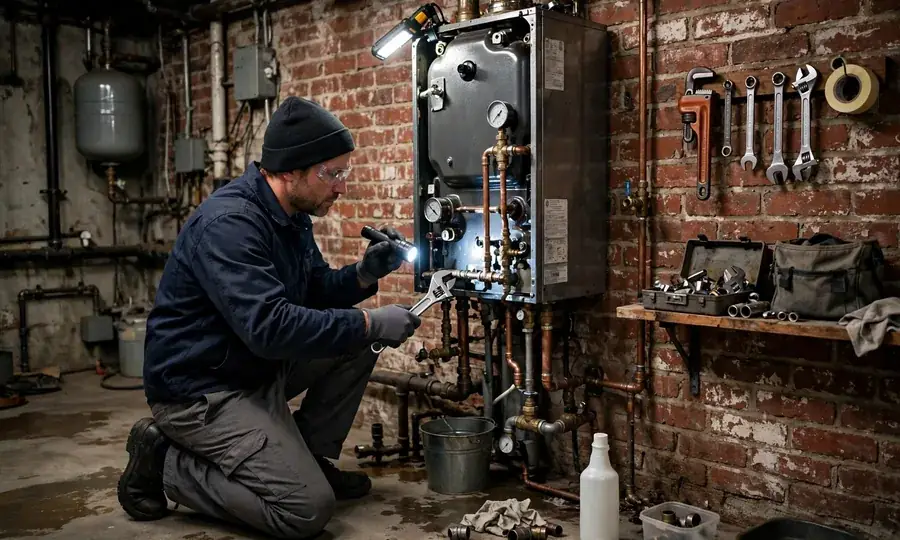
The key distinction.
Building-wide (nothing heats anywhere): the boiler or its main controls — ignition, gas train, main circulator, system-wide control failure. Unit-level (some units fine, some cold): distribution — zone valves, balancing, air-bound loops, individual radiator valves.
Why it matters: building-wide faults need the boiler tech; unit-level faults need distribution diagnosis. Reporting the distinction accurately ("third floor cold, rest fine" vs. "nothing works") prevents misdispatch and gets the right fix faster.
Bigger boiler, bigger picture.
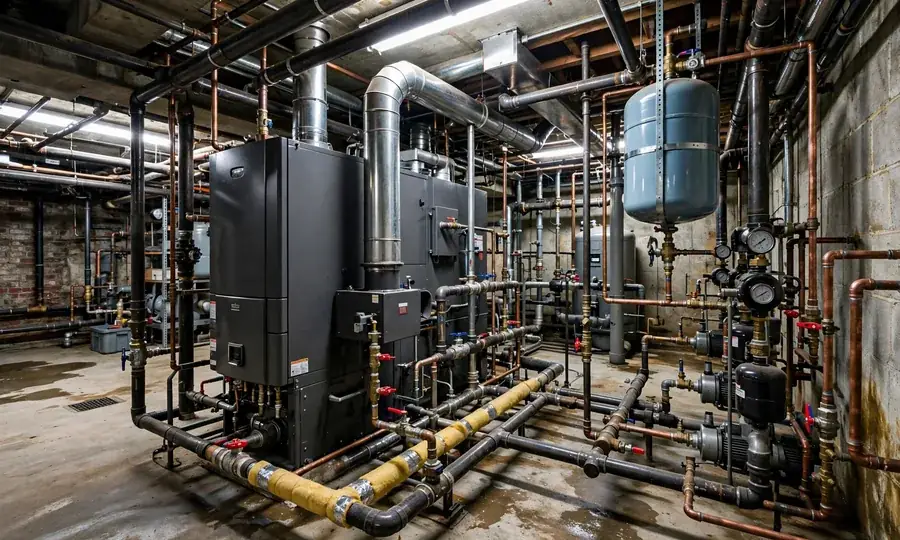
Boston residential boilers are bigger — serving 3 to 12+ units through extensive distribution. The faults scale up: ignition trains on large atmospheric units, staging controls that fail to sequence, distribution imbalances across many units, and wear components (pumps, valves, controls) sized for commercial duty.
Good triage asks: building type, units served, boiler size and age, which units are affected, service history. On site, the tech tests the ignition and control subsystems — and walks the distribution, because in a 6-unit brownstone the pipes are half the diagnosis.
What comes up.
The line, stated plainly.
Repair makes sense when the block (or blocks) are sound and the fault is in replaceable components. Replacement enters the conversation when: sections weep, repairs exceed roughly a third of replacement on a 25+ year unit, or the system has become unmaintainable. On large systems, phased replacement (one of two boilers) is sometimes the smart middle path.
Building facts first.
City triage needs building facts first: building type (brownstone, triple-decker, apartment block, condo), units affected (all of them, or some?), boiler size and age if known, the exact error code, and whether the gas is master-metered or individual. “Third floor cold, rest fine” routes to distribution diagnosis — zone valves, balancing, air-bound loops. “Nothing heats anywhere” routes to the boiler itself — ignition, gas train, main circulator, system controls. Bring the distinction to the call; it prevents misdispatch and gets the right expertise on site the first time. No heat anywhere in freezing weather is emergency — lead with the unit count, because it drives triage priority.
Half the “boiler problems” aren’t.
In a 6-unit brownstone, half the “boiler problems” are distribution problems. Homeowner-safe checks: thermostats set and calling, radiator valves open (not seized shut from disuse), obvious air-bound radiators (cold top, hot bottom — a bleed-key job). Pro territory: zone valves that do not open, balancing across many units, pumps sized for commercial duty, controls that fail to stage or sequence. Do not bleed a whole building’s radiators without watching the pressure gauge — every bleed drops system pressure, and a big system at low pressure air-locks. Report the pattern (“top floor cold, bottom fine”) rather than a theory; the pattern is the diagnosis.
Straight answers before you call.
Distribution: zone valve, air-bound loop, balancing, or a failed radiator valve. Note which unit and whether it is new — that routes the diagnosis.
you can call to describe the problem; larger building systems are quoted after on-site assessment. Component repairs scale with system size.
If the sections are sound, repairs can still make sense — large cast-iron lasts. If sections weep or parts are obsolete, get the replacement math, including phased options.
Almost certainly distribution — zone valves, balancing, or air. A dead boiler takes everything down, not half. Report exactly which units are affected.
For Boston multis, yes — large cast-iron residential boilers 30–50 years old are common. Size and age are not problems; weeping sections and obsolete controls are.
Related services in the Boston area.
Call (888) 766-1474 — describe the symptoms for honest triage.