How long does a Lynn replacement take?
One to two days like-for-like; longer for multi-family repiping or venting changes. Schedule in mild weather.
Replacing a boiler in Lynn? Coastal corrosion, multi-family sizing, and wind-aware venting shape the right choice. Call to discuss your situation.
General inquiries: 7 AM–7 PM · Emergency calls: 24/7 · (888) 766-1474
When Lynn replaces.
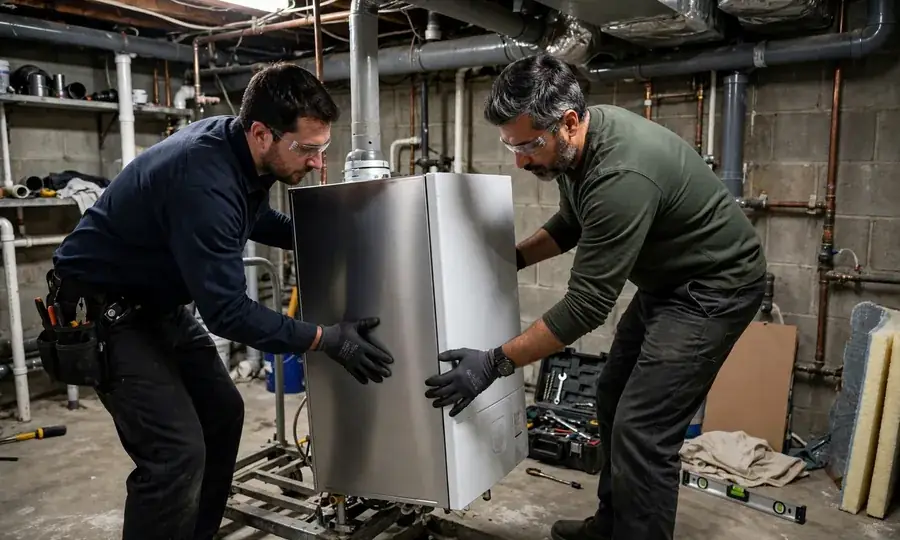
Best: late summer through early fall — mild weather, open schedules, time for proper sizing and thoughtful choices. Okay: spring — post-season assessments, good availability. Worst: January — emergency conditions, limited equipment, premium urgency, and every installer booked.
For multis: coordinate the no-heat window with tenants in writing, in advance — date, duration, and what to expect. Surprise no-heat in a Lynn multi is a tenant-relations disaster on top of a heating project.
What Lynn changes.
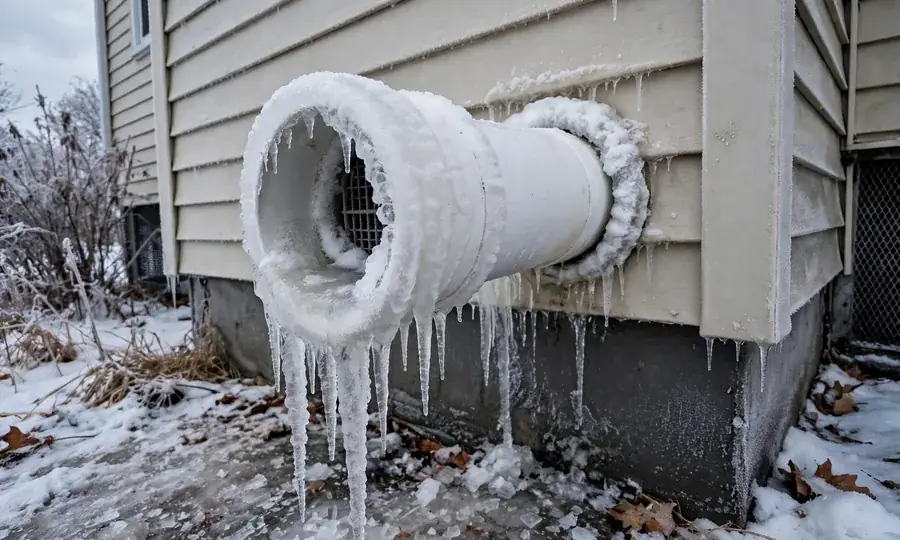
Lynn replacements answer coastal questions: venting (wind-resistant terminations, corrosion-resistant materials), sizing (ocean wind raises real heat loss — the calculation should reflect exposure), and multi-family distribution (zoning that treats every unit fairly).
Corrosion-resistant venting near the water is not an upgrade — it is the correct specification. A standard terminal that lasts 15 years inland may last 8 on the Lynn waterfront.
The two decisions.
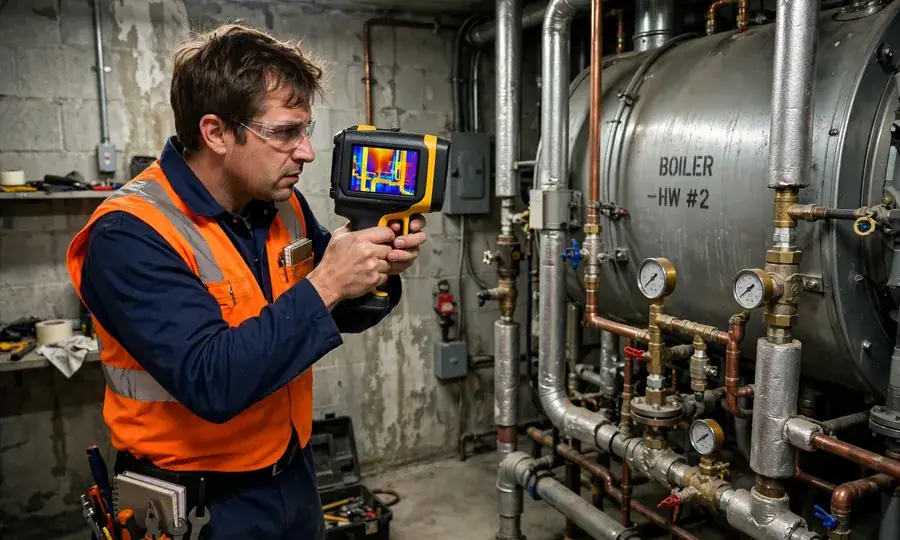
Sizing: heat-loss calculation with wind exposure factored — not the nameplate. Most Lynn replacements downsize.
Demand: heat-loss sizing, near-boiler repiping, zone controls with outdoor reset, and startup tuning verified with instruments. See our national installation guide.
Five questions.
Street-specific, not folklore.
Price both fully installed before deciding: modern oil (no conversion cost; annual service keeps it efficient) versus gas (conversion cost amortized over fuel savings). Fuel-price folklore is not a quote. For multis, factor the no-heat window coordination with tenants into the decision — the conversion with the cheaper fuel but a chaotic install is not the cheaper project.
One more Lynn factor: replacements near the water should be scheduled, not emergency-driven. A January emergency replacement gets whatever equipment is available and whatever venting goes in fastest; a September replacement gets the right-sized unit, corrosion-resistant venting, and a startup verified with instruments. The calendar is part of the specification.
Where the savings actually live.
Modern units publish AFUE in the mid-80s to low-90s versus 60s–70s for a 30-year-old coastal workhorse — but realized efficiency needs heat-loss sizing with wind exposure factored (ocean wind raises real heat loss), near-boiler repiping, outdoor reset, and annual service keeping combustion tuned. A right-sized unit with outdoor reset, verified by combustion instruments at startup, is where the savings live — not in the brochure number. Corrosion-resistant venting near the water is the correct specification, not an upgrade; it protects the efficiency investment for its full life. Our national installation guide covers the full sequence.
Straight answers before you call.
One to two days like-for-like; longer for multi-family repiping or venting changes. Schedule in mild weather.
Yes — it is the correct specification for coastal installs, not a luxury. Standard materials fail early in salt air.
Mass Save has offered high-efficiency heating rebates historically; check the current program before buying, and ask about pre-approval.
Late summer for fall installation. That leaves time for quotes, sizing, permits, and tenant coordination — none of which work rushed.
In writing, in advance: the date, expected duration, and what they should do (protect pipes, plan accordingly). Written notice protects everyone.
Call (888) 766-1474 — start with a coastal-aware assessment.