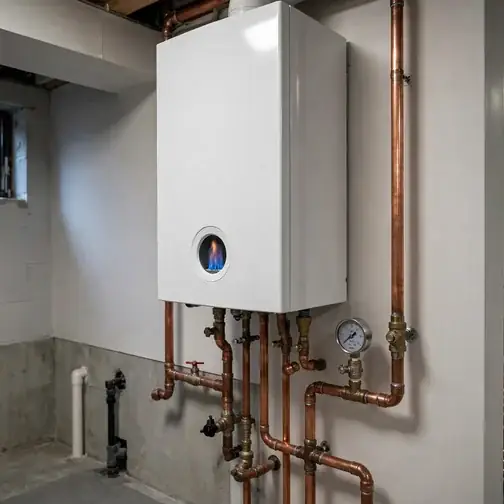
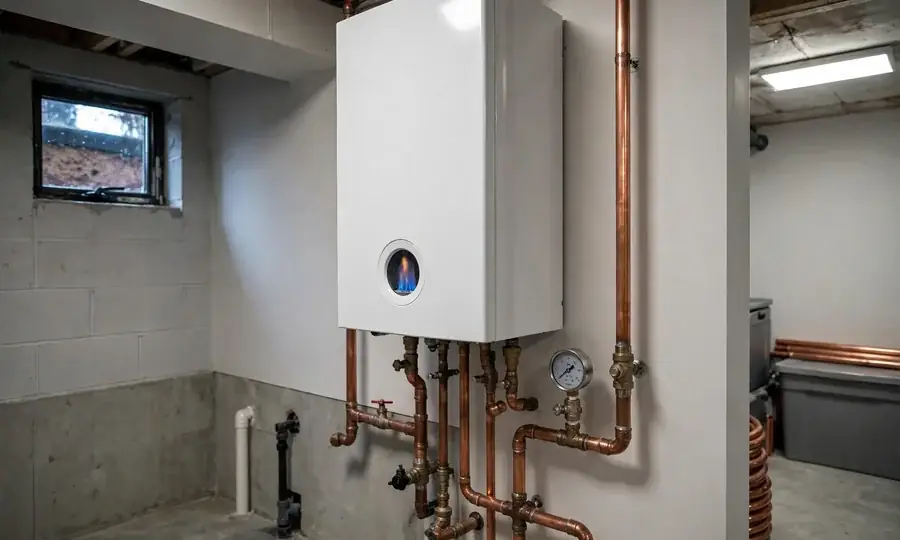
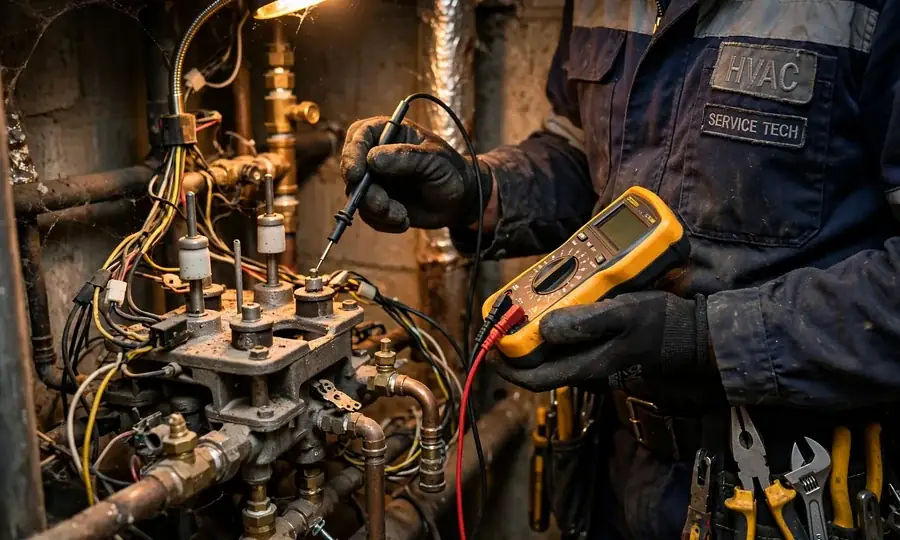
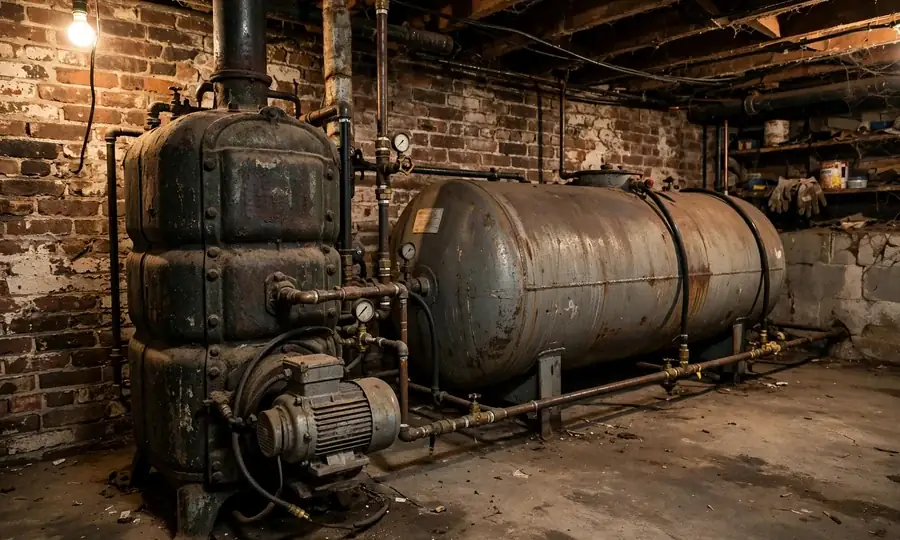
A proper gas visit moves in order: combustion air and venting first, then ignition and flame (sensor, igniter, wiring, burner condition), then gas supply (pressure and valve operation), then the water side (pressure, expansion tank charge, auto-fill valve, air), and finally distribution. On condensing units the condensate path and error history get their own look — a technician who reads the fault log instead of clearing it will find the intermittent lockout’s cause in the log’s memory.
Expect findings explained before any work is authorized — what failed, why it failed, and the options. If the block itself is finished, the replacement page covers Wilmington fuel-choice and sizing math; a dead unit right now is an emergency call. Unsure whether your unit is condensing or conventional? The model plate answers it — read it aloud on the call and the triage takes it from there.