
My Wilmington house still burns oil. Do you actually service oil here?
The triage runs a full oil fault tree for them. Just say oil first when you call (888) 766-1474 so you get burner questions, not ignition questions.
But that small minority is real: older homes that were never switched over, properties beyond the gas mains, and rental units where nobody wanted to pay for conversion. If you are one of the holdouts, this page is for you: burner, nozzle, and fuel-supply faults, and what burner service actually looks like.
General inquiries: 7 AM–7 PM · Emergency calls: 24/7 · (888) 766-1474
A small minority — and no reason to feel stranded.
If your basement holds a cast-iron oil unit with a tank along the wall, you are in small but genuine company.
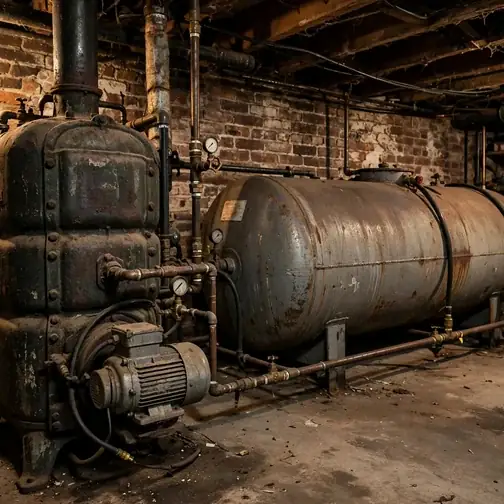
Being in the minority changes the service reality in two ways, and we will name both. First, triage starts with the tank — fuel supply is part of the story in a way it never is for gas. Second, parts and burner expertise are narrower — not every tech carries oil-burner parts the way they carry gas ignition parts. Say “oil” first on the call and the triage routes you to the right visit instead of a wasted one. The national oil boiler page covers burner work in general terms; this page is the Wilmington-specific version.
Where oil service actually happens.
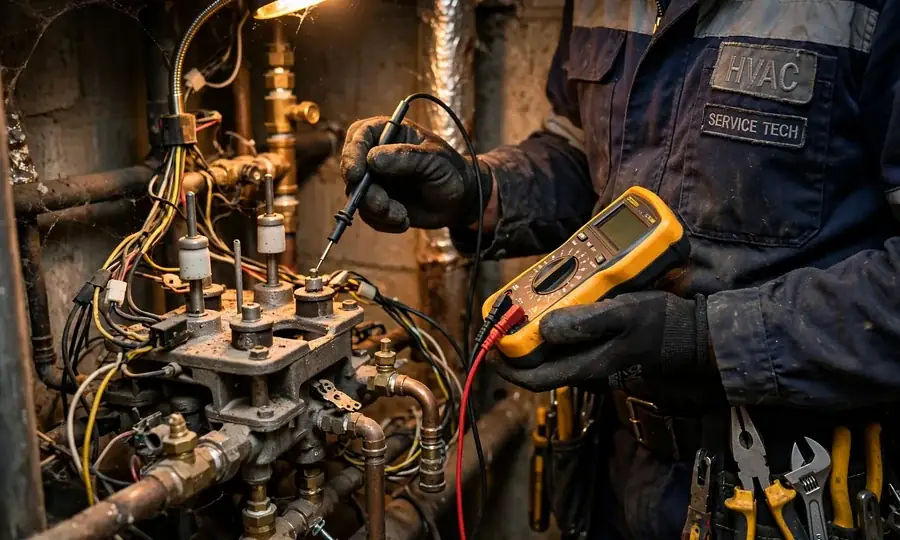
Almost all oil service is burner service. The burner is a precision spray-and-spark assembly, and its failure family is specific: clogged or worn nozzles (the spray pattern degrades, combustion goes sooty, efficiency drops), worn electrodes (the spark weakens until ignition fails), clogged fuel filters (starved burners short-cycle and lock out), failing transformers (no spark at all), and sooted heat exchangers from years of slightly-off combustion. The symptom pattern is distinctive: the burner tries, fails, and locks out — or it runs but the house never quite gets warm and the stack looks sooty.
Annual burner service is the real maintenance story for oil — nozzle, filter, electrodes, and a combustion check. It is also the best efficiency money an oil household can spend: a tuned burner burns cleaner and cheaper than a neglected one. When the triage asks about your last service, “I don’t remember” is honest and useful information, because it points the visit at the burner first.
Half of “no heat” oil calls start here.
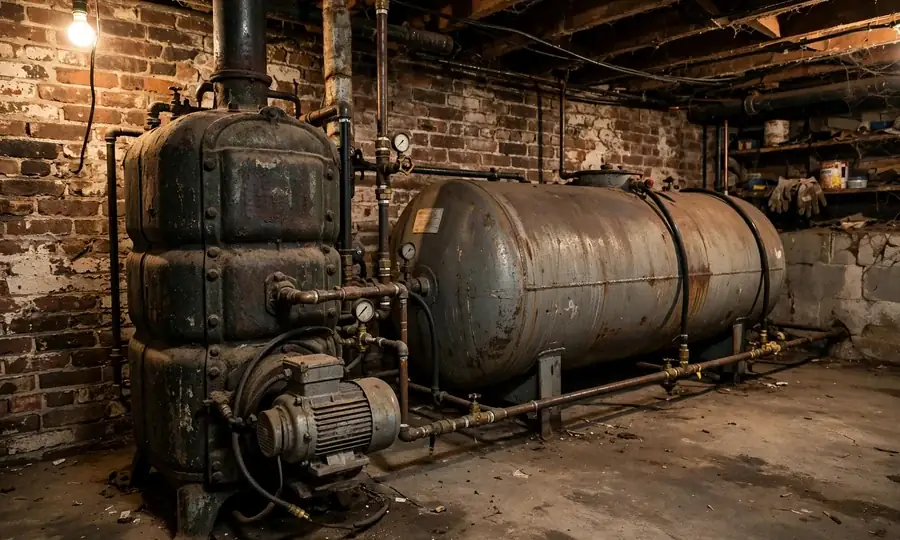
Half of all “my oil boiler quit” calls are not burner problems at all — they are fuel problems. Check these before anything else: the tank gauge (an empty tank is a delivery call, not a repair call — and running a tank dry pulls sludge into the filter), water in the tank (condensation in older above-ground tanks, worse in Wilmington’s humid climate), blocked tank vents (a plugged vent starves the burner of fuel flow), and sludge-clogged lines on tanks that have sat for years. Buried tanks — still common in older Wilmington properties — add their own questions about condition and access, which the pro will ask about on the call.
The discipline is simple: no-heat on oil starts at the gauge, not the burner. Read the gauge, note the level, and say it on the call — it saves the visit from starting in the wrong place. Delivery timing matters too: Wilmington’s oil minority buys from a thinner network of dealers than gas households imagine, so do not let the tank run to fumes in January.
Oil burners punish impatient resets.
Every oil burner has a reset button, and every oil burner owner has been tempted by it. Here is the rule: two failed resets is the limit. Each reset sprays unburned fuel oil into the combustion chamber; after a few failed starts, the chamber holds a pool of it — and the eventual ignition can be violent. This is the one oil-specific safety rule that matters most, and it is non-negotiable.
If the burner locked out once and a single reset brought it back, mention it on the call — the pattern is diagnostic. If it locked out again, stop resetting and call. A tech who knows the reset count arrives expecting a flooded chamber and plans the visit accordingly. And if the unit is dead right now on a freezing night, the emergency page takes over — no-heat on oil in January is exactly what the 24/7 line is for.
The honest conversion conversation.
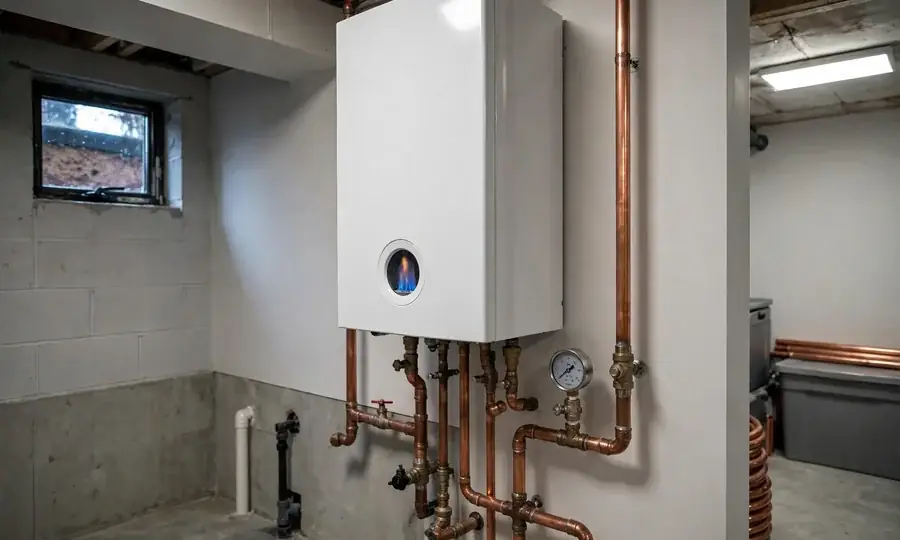
The question every Wilmington oil holdout eventually asks. The honest answer: if piped gas reaches your street, conversion usually wins over time — gas equipment is cheaper to maintain, the fuel arrives by pipe instead of by truck, and the burner-service ritual goes away. The conversion cost is real (gas line, new equipment, chimney/venting changes), and it is the reason many holdouts are still holdouts — nobody is pretending otherwise.
Staying with oil is defensible too: a sound cast-iron oil block with a well-maintained burner can run for years, and if your tank and lines are in good shape, the math may favor keeping it. What does not work is neglecting an oil system because conversion is “someday” — an unmaintained burner is the most expensive way to stay with oil. The replacement page walks through the fuel-choice math; a call can talk through what your unit and your street actually support.

Straight answers before you call.
The triage runs a full oil fault tree for them. Just say oil first when you call (888) 766-1474 so you get burner questions, not ignition questions.
For common burner designs, usually yes — nozzles, electrodes, filters, and pumps for 1970s-era burners remain standard stock. What varies is the boiler itself: sections and jackets for some 1970s units are obsolete. Have the burner and boiler model information handy when you call.
When it shows the signs: weeping seams, rust at the legs, or a persistent oil smell. Basement tanks are inspectable, which is their advantage — walk yours each heating season. Mention the age and condition on the call; tank replacement is straightforward to plan alongside other work.
Wilmington is the most gas-heavy market in Delaware, so the main almost certainly reaches your street — check availability at your address to be sure. Conversion ends deliveries, tank monitoring, and run-dry risk permanently. If your oil unit is aging, it is one of the more straightforward conversions around.
The delivery stirs sediment in the tank, which clogs the filter or fouls the nozzle. If it happens after every fill, the tank is shedding heavily — the fix may be tank assessment as well as burner service. Mention the delivery pattern on the call; it points the triage at the fuel-supply side.
Yes — check the filter housing, line fittings, and tank seams for weeping; even a slow seep smells strongly in a closed basement. Ventilate and do not run the burner if you find active dripping. A faint chronic smell still deserves a service visit with a full fuel-line inspection.
National burner guidance and Wilmington’s other services.
The national oil boiler repair page covers burner and fuel-supply work in general terms, and the signs of trouble guide helps you read the early warnings. In Wilmington, a dead oil unit on a freezing night belongs on the emergency page, a unit that runs but misbehaves starts at general diagnosis, and the end-of-life conversation — including the switch-to-gas question — lives on the replacement page. The city’s gas-served majority is covered on the gas page.
Call (888) 766-1474 — say “oil” first so the triage routes you correctly.