/>
WILMINGTON BOILER INSTALLATION

Boiler Installation & Replacement in Wilmington, DE

Every boiler reaches the point where repair stops making sense — but age alone is not the signal. This page covers the real replacement signals for Wilmington housing, how sizing works for downtown rowhouses versus Brandywine colonials, and the fuel-choice question in a city where gas dominates and a small oil minority persists. A phone conversation about symptoms on the call: (888) 766-1474.

✓ Replacement signals, honestly✓ Sizing for Wilmington housing✓ a phone conversation about symptoms

General inquiries: 7 AM–7 PM · Emergency calls: 24/7 · (888) 766-1474

The real replacement signals

Age is a rumor — these are evidence.

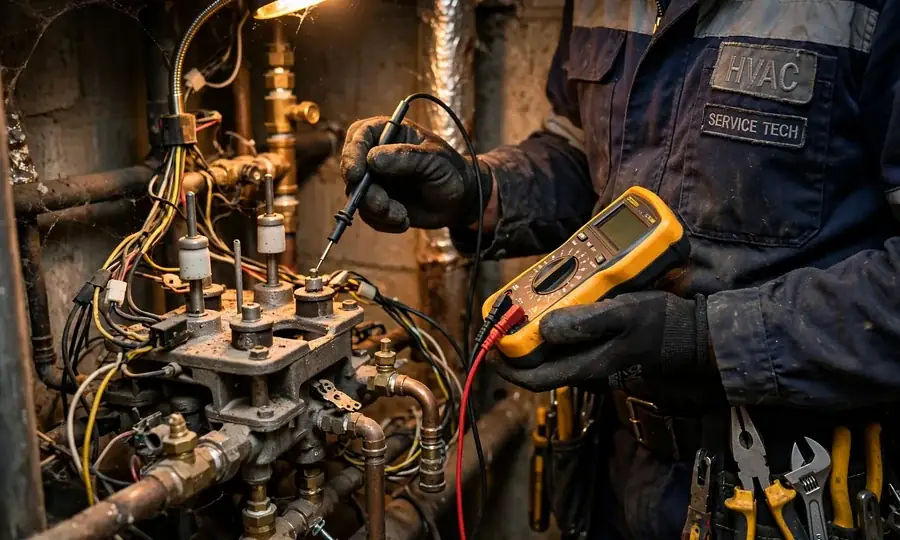
A boiler that is merely old is not a boiler that needs replacing — plenty of Wilmington’s converted atmospheric units are past 30 and running fine. The signals that actually matter: section weeps or cracks in the cast-iron block (a weeping section is the beginning of the end; a cracked one is the end), a burner that needs constant attention (monthly service calls are a replacement budget wearing a repair costume), efficiency stuck in the 70s while fuel bills climb (sooted exchangers and tired burners waste fuel every cycle), and parts that no longer exist (when the control or gas valve is obsolete, the next failure is a full stop). Two or more of these together is the honest replacement conversation.

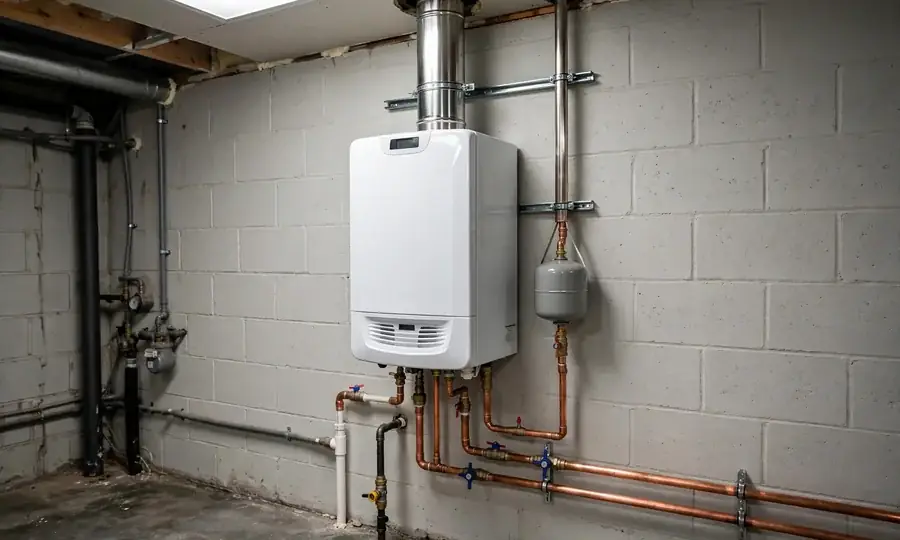
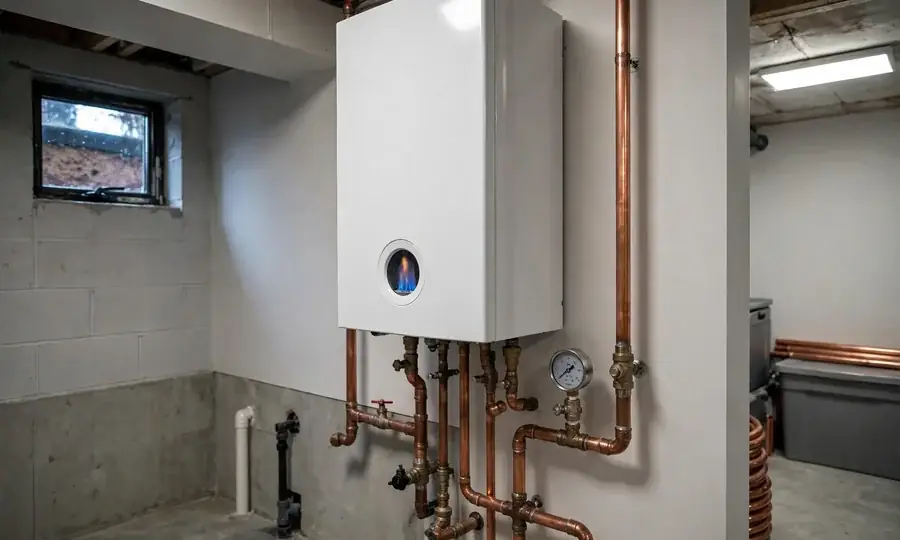
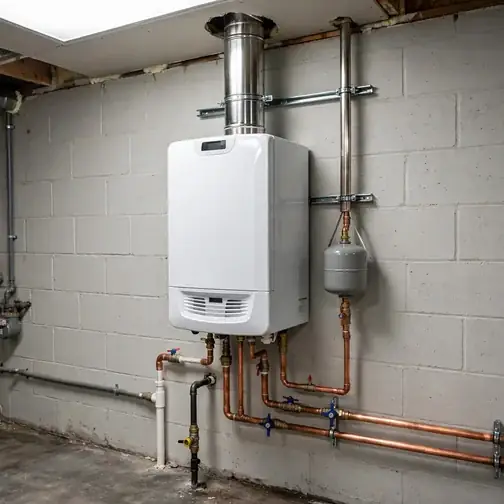
Newly installed gas boiler with venting in a basement utility room

One signal that is not a signal: a single expensive repair on an otherwise healthy unit. A failed circulator or a cracked ignition cable does not condemn a sound block. The diagnosis page is where that judgment gets made — replacement starts when the pattern of failures says the unit is done, not when one part fails.

Sizing for Wilmington housing

Rowhouses and colonials are different heat loads.

Boiler sizing is a heat-loss calculation, not a square-footage guess — and Wilmington’s housing makes the difference concrete. Downtown rowhouses share walls on both sides, which cuts heat loss dramatically; a tall narrow brick rowhouse often needs far less boiler than its square footage suggests, and oversizing one is the classic way to buy a short-cycling new unit. Brandywine colonials and county ranches are detached with more exposed wall and window area — bigger loads, and the 60s–70s stock often has the original single-pane windows to prove it. Renovated homes with new windows and insulation sit somewhere in between.

The right process is a room-by-room heat-loss calculation (the industry calls it a Manual J) done before equipment is selected — not a rule of thumb, and not “the same size as the old one,” because the old one was probably oversized too. An oversized boiler short-cycles from day one, wastes fuel, and wears itself out early. If a quote skips the calculation, that tells you what you need to know about the quote. Wilmington’s humid mid-Atlantic winters also mean design temperatures are moderate by boiler-country standards — sizing to a realistic cold snap, not a worst-case fantasy, is part of getting it right.

Installation & Replacement in Wilmington, DE

Fuel choice in a gas-heated city

The Wilmington-specific question.

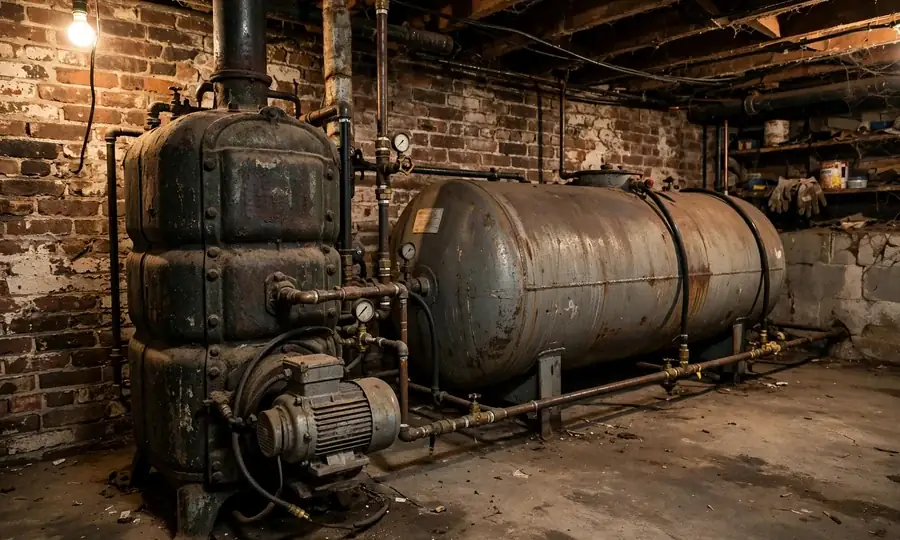
In Wilmington, fuel choice is usually a short conversation: if you have piped gas, the replacement is gas. The interesting cases are the oil holdouts. If gas reaches your street, a replacement is the natural moment to convert — one project instead of two, and the end of the burner-service ritual. If gas does not reach you, a modern oil unit with a properly maintained burner is a legitimate choice, not a consolation prize.

What about the other fuels? Electric boilers exist but are rarely the economic answer where gas is available; heat pumps are a different conversation for a different page. The honest Wilmington fuel map is two fuels — gas for the overwhelming majority, oil for the holdouts — and the replacement decision is about which side of that line your house sits on. The oil page covers the stay-with-oil case; the gas page covers what you are switching to.

Installation & Replacement in Wilmington, DE

Condensing vs. conventional

What the efficiency choice actually means here.

Condensing wins on fuel bills, but it has requirements — low return-water temperatures to actually condense (which means the radiation has to be able to heat the house at lower temperatures), a condensate drain that will not freeze (see Wilmington’s January cold snaps), and plastic venting rather than a chimney.

In practice: a Brandywine colonial with generous baseboard or radiators is often a good condensing candidate; a downtown rowhouse with a chimney in good shape and high-temperature radiators may do fine with a conventional unit and skip the condensate complexity. Sizing and system temperature come first; the efficiency label comes second.

Installation & Replacement in Wilmington, DE

What the replacement process looks like

From first call to first fire.

It starts with the call: fuel type, unit age, the failure pattern, and your ZIP. The on-site assessment covers the heat-loss calculation, the existing radiation and piping, venting or chimney condition, gas supply or oil tank status, and access — downtown rowhouse basements with narrow stairs get planned differently than suburban utility rooms. Then comes the proposal: equipment options sized to the calculation, with the efficiency and fuel trade-offs explained in plain language.

Installation itself is typically a multi-day project for a full replacement: old unit out, new unit in, piping and venting adapted, controls wired, system filled and purged, combustion checked, and the whole thing test-fired before sign-off. Expect the house to be without heat during the work — scheduling matters, which is why fall replacements beat January emergencies. If your unit died tonight instead, start at emergency repair; the replacement conversation happens once the house is warm.

Installation & Replacement in Wilmington, DE

Frequently Asked Questions

Straight answers before you call.

01

What should replace my coal-conversion boiler?

A modern gas unit, keeping the radiators — the distribution is usually the best part of these old systems. The chimney will likely need a liner for the new burner, and the venting plan has to suit the rowhouse or colonial it sits in. An on-site assessment ties the fuel, venting, and distribution together.

02

My one-pipe steam system needs a new boiler. Should I stay with steam?

If the steam distribution is sound — good pitch, working air vents, no chronic water hammer damage — a modern steam boiler is the simpler and cheaper job. Converting to hot water means repiping the house. Unless the steam piping is failing, keeping steam usually wins.

03

How is a replacement sized for a downtown rowhouse?

By a heat-loss calculation that credits the shared walls — rowhouses lose far less heat than detached houses of the same size, and rule-of-thumb sizing wildly oversizes them. An oversized boiler short-cycles and wastes fuel. The calculation, not the old unit's rating plate, sets the size.

04

Should I put a condensing unit in my Brandywine colonial?

Condensing units earn their keep in colonials with proper drain routing — the efficiency gain is real. The project hinges on two things: a freeze-proof interior condensate drain path and correct venting. An assessment of both decides whether it is a clean upgrade.

05

My 25-year-old boiler runs fine. Should I replace it now or wait?

A consult now costs nothing; a midwinter failure costs plenty in emergency premiums and a cold house. If it is reliable, plan on your timeline — venting, sizing, mild-weather scheduling. If repairs are stacking up, the math is already speaking. Call (888) 766-1474 with the service history for a straight read.

06

My basement stairs are steep and narrow. Can a new boiler even fit down there?

Usually yes — sectional and modular boilers are designed to go in as pieces and assemble in place, which is exactly how tight rowhouse basements get new equipment. Mention the access constraints on the consult call so the site survey plans the rigging, not the boiler model, around the stairs.

Replacement resources

National guidance and Wilmington’s other services.

The steam vs. hot-water guide helps if the replacement changes system type, and the pressure guide is worth reading before the new unit’s first winter. In Wilmington, the diagnosis page is where the repair-vs.-replace judgment starts, gas and oil cover the fuel-specific present, and emergency repair is the fallback if the old unit quits tonight. Delaware-wide context: the Delaware hub.

Thinking about a new boiler in Wilmington?

Call (888) 766-1474 — talk through the signals and get connected to a local pro.

☎   Call (888) 766-1474