DOYLESTOWN INSTALLATION SERVICE

Boiler Installation & Replacement in Doylestown, PA

Replacing a boiler in Doylestown is a sizing and fuel question before it is an equipment question. Stone colonials with massive thermal mass, farmhouses with aging oil tanks, and streets without gas mains — each pushes the decision a different way. This page covers what to ask, how sizing works for stone-mass housing, and what a replacement actually involves.

✓ Sized by heat loss, not guesswork✓ Confirm coverage by ZIP✓ a phone conversation about symptoms

General inquiries: 7 AM–7 PM · Emergency calls: 24/7 · (888) 766-1474

What to ask before you sign

Questions that separate good sizing from guesswork.

Any installer worth hiring will do a heat-loss calculation — or at minimum size from the radiation actually in the house (the EDR of those cast-iron radiators in the borough's stone homes), not from the old boiler's nameplate. Ask: how did you size this unit, and what happens if it short-cycles? In Doylestown's oldest housing, the old boiler is very often oversized for the real load, and copying its size forward just buys another short-cycling unit.

Then the Doylestown-specific questions: is gas available on my street or property? — township farmhouses and unpiped borough pockets often have no mains, which settles the fuel question. What happens to the old oil tank? — removal or proper abandonment, especially for outdoor and buried tanks, should be in the quote. What happens to the chimney? — old masonry chimneys often need a liner for a new gas unit, and condensing units need a condensate drain and proper venting. For the national walkthrough, see our boiler installation guide.

Boiler Installation & Replacement in Doylestown, PA

Sizing for Doylestown housing

Stone mass changes the math.

A stone colonial is a thermal battery: thick walls that absorb heat slowly and release it slowly. That means the boiler does not need to meet a sharp peak the way a frame house does — it needs steady, even output matched to the radiation. Oversizing is the classic stone-house mistake: a big boiler that short-cycles never lets the mass do its job, and the house swings between overheated and chilly. Size to the radiators and the real load, and the system purrs.

Township farmhouses are the opposite detailing exercise: larger footprints, additions and outbuildings the original boiler never knew about, drafty envelopes, and sometimes multiple heating zones added over decades. Those need the load calc to include the actual envelope as it stands today — additions, insulation, new windows all change the number. Either way: the house determines the size, not the old boiler.

Boiler Installation & Replacement in Doylestown, PA

What replacement involves

The shape of a typical swap.

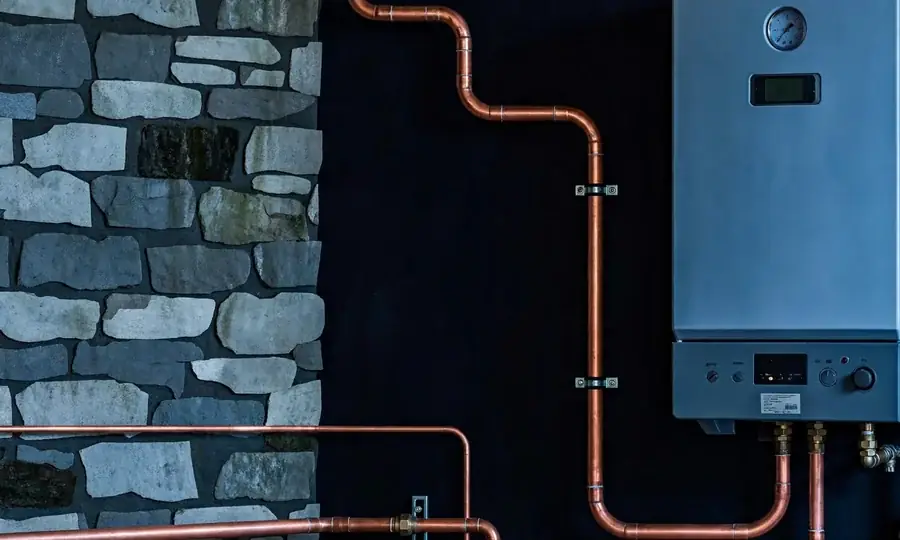
A standard replacement runs a predictable sequence: the old unit comes out, the oil tank gets removed or properly abandoned where one existed (outdoor and buried tanks need proper handling, not improvisation), the new boiler goes in on the existing footprint where possible, and the near-boiler piping gets redone — feed valve, expansion tank, air elimination, and zone controls are part of a real install, not extras. Then startup: firing rate set, combustion checked, and the system balanced so every radiator actually heats.

Expect the crew to spend real time on venting and condensate: a condensing gas unit needs a freeze-proof drain route and venting run to spec, and any unit using the old masonry chimney needs that chimney evaluated for a liner — stone-house chimneys are often oversized for modern units. If your replacement conversation started from a repair visit, the findings from our diagnosis page carry straight over — the same pros, the same system knowledge.

Boiler Installation & Replacement in Doylestown, PA

Frequently Asked Questions

Straight answers before you call.

01

When does a stone colonial's boiler need replacing instead of repairing?

When the block is failing: weeping sections, a cracked exchanger, or a burner rebuilt twice on a thirty-year-old unit. In stone houses, there is a second trigger: a new high-efficiency unit running the low water temperatures that thick walls love can transform comfort, which a patched old block never will. Rising bills plus repeat breakdowns seal it.

02

How do you size a boiler for thick stone walls?

With a real heat-loss calculation that accounts for the mass: stone stores heat, so the peak load is lower than a frame house of the same size, but recovery from setback is slow. Oversizing is the classic stone-house mistake; it short-cycles and never lets the mass do its work. The calculation, not the old nameplate, decides.

03

Should I keep steam if my borough house has one-pipe steam?

Yes, almost always. Converting steam to hot water means repiping the house, and a properly installed modern steam boiler with working vents heats a stone colonial beautifully. The replacement must be sized to the connected radiation, not the old block. Say steam on the call so the project gets a steam-knowledgeable technician.

04

What is the hardest part of replacing a boiler in an 1800s home?

Everything around the boiler: a century of layered piping, a block that leaves in pieces, low basement headroom, and sometimes a chimney that needs a liner for the new venting. The unit itself is the easy part. A site visit beforehand is what keeps the project to days instead of weeks.

05

Should the new boiler be condensing or conventional for my farmhouse?

It depends on the distribution. Condensing units need low return-water temperatures to hit their efficiency, which oversized farmhouse radiators can provide. If the house runs hot baseboard at high temperature, a conventional unit may be the honest choice. The radiator survey and the heat-loss calculation decide together.

Planning a boiler replacement in Doylestown?

Call (888) 766-1474 — talk through sizing and fuel options with a local pro.

☎   Call (888) 766-1474