/>
COLLEGEVILLE INSTALLATION SERVICE

Boiler Installation & Replacement in Collegeville, PA

Replacing a boiler in Collegeville is a sizing and fuel question before it is an equipment question. Borough colonials with cast-iron radiators and aging oil tanks heat very differently from the suburban ranches and townhomes on PECO gas — and the oil-to-gas decision is real here. This page covers what to ask, how sizing works, and what a replacement actually involves.

✓ Sized by heat loss, not guesswork✓ Oil-to-gas guidance✓ a phone conversation about symptoms

General inquiries: 7 AM–7 PM · Emergency calls: 24/7 · (888) 766-1474

What to ask before you sign

Questions that separate good sizing from guesswork.

Any installer worth hiring will do a heat-loss calculation — or at minimum size from the radiation actually in the house (the EDR of those cast-iron radiators in the borough core), not from the old boiler's nameplate. Ask: how did you size this unit, and what happens if it short-cycles? In both the borough and the suburbs, the old boiler is very often oversized for the real load, and copying its size forward just buys another short-cycling unit.

Then the Collegeville-specific questions: is gas available on my street? — the borough-core oil pockets exist where mains are thin, and the answer decides the fuel. What happens to the old oil tank? — removal or proper abandonment should be in the quote, not discovered later. What happens to the chimney? — old masonry chimneys often need a liner for a new gas unit, and condensing units need a condensate drain and proper venting. For the national walkthrough, see our boiler installation guide.

Boiler Installation & Replacement in Collegeville, PA

Sizing for Collegeville housing

Borough colonials and suburban ranches size differently.

A borough-core colonial or twin has real thermal mass, original windows (or replacements of varying quality), and cast-iron radiators sized for a colder era — its heat load is often far smaller than the ancient oil boiler in the basement suggests. Size to the radiation and the load, and the replacement runs long, efficient cycles; size to the old nameplate, and you get short-cycling and wasted fuel.

The post-war ranches, split-levels, and townhomes are the opposite detailing exercise: less mass, more glass, finished basements and additions the original unit never knew about. Those need the load calc to include the actual envelope — and the condensate drain routing for a condensing unit deserves planning, not improvisation, given the January freeze-ups this area sees. Either way: the house determines the size, not the old boiler.

Boiler Installation & Replacement in Collegeville, PA

What replacement involves

The shape of a typical swap.

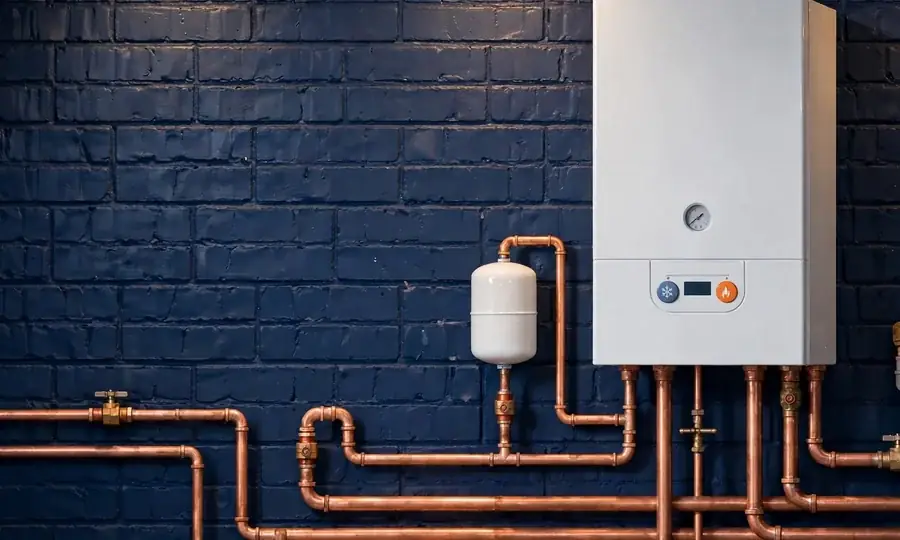
A standard replacement runs a predictable sequence: the old unit comes out, the oil tank gets removed or properly abandoned where one existed, the new boiler goes in on the existing footprint where possible, and the near-boiler piping gets redone — feed valve, expansion tank, air elimination, and zone controls are part of a real install, not extras. Then startup: firing rate set, combustion checked, and the system balanced so every radiator or baseboard loop actually heats.

Expect the crew to spend real time on venting and condensate: a condensing gas unit needs a freeze-proof drain route and venting run to spec, and any unit using the old masonry chimney needs that chimney evaluated for a liner. If your replacement conversation started from a repair visit, the findings from our diagnosis page carry straight over — the same pros, the same system knowledge.

Boiler Installation & Replacement in Collegeville, PA

Frequently Asked Questions

Straight answers before you call.

01

My borough oil boiler is 30 years old. Repair or replace?

Start planning the replacement. Thirty-year-old oil blocks weep at the sections and lose efficiency to soot and scale, and each repair buys less time than the last. A planned swap also lets you revisit the fuel question: if gas reaches your street now, the math may have changed since the unit went in.

02

What does a heat-loss calculation change about sizing?

Everything. Most existing boilers in Collegeville were sized by rule of thumb or copied from the coal-era unit before them, which means oversized. A real calculation usually lands one or two sizes smaller, and the right-sized unit runs longer, steadier cycles instead of short-cycling itself to an early grave.

03

Is a condensing boiler worth it in a colonial with cast-iron radiators?

Often yes, with a caveat. Cast-iron radiators are oversized by modern standards, which lets the system run the lower water temperatures a condensing unit needs to actually condense. If the radiators are marginal, the unit will run hotter and condense less. The radiator survey decides, not the brochure.

04

What should I expect on installation day in a borough twin?

Old equipment coming out in pieces through a narrow basement stair, new piping adapted to a century of layered plumbing, and a day or two of work. Borough basements were not designed for equipment access, so the site visit beforehand matters more than the installation day itself. Clear the path to the unit before the crew arrives.

05

Should I replace the oil tank at the same time as the boiler?

If the tank is over 25 years old, yes, do them together. The crew is already there, the piping is already open, and a new boiler on a dying tank is a leak waiting to happen. A tank inspection during the replacement quote settles it; weeping seams or leg rust means the tank goes too.

Planning a boiler replacement in Collegeville?

Call (888) 766-1474 — talk through sizing and fuel options with a local pro.

☎   Call (888) 766-1474