COLLEGEVILLE REPAIR SERVICE

Boiler Diagnosis & Repair in Collegeville, PA

A Collegeville boiler that runs but misbehaves — short-cycling, losing pressure, banging on startup, throwing lockouts you can clear — needs diagnosis, not parts roulette. This page covers how local pros test a system before touching it, the repair calls that recur across the borough core and the suburbs, and where repair stops and replacement starts.

✓ Diagnosis before parts✓ Gas, oil & steam systems✓ a phone conversation about symptoms

General inquiries: 7 AM–7 PM · Emergency calls: 24/7 · (888) 766-1474

Repair or replace?

The honest framing, before anyone sells you anything.

In the borough core, many boilers are oil-era veterans — and old is not the same as done. Cast-iron blocks routinely last decades; most recurring faults live in the replaceable parts around the block: nozzles, electrodes, and filters on the burner; feed valves and expansion tanks on sealed systems; zone valves and circulators on the distribution side. Those are repairs, and good ones.

Replacement becomes the honest answer when the block itself is weeping from sections, when the tank under an oil system is failing (a tank replacement can tip the math), or when the system has been patched so many times the repair bill keeps returning. If that is where your system sits, the replacement page walks through sizing and fuel choices for Collegeville housing — including the borough-core question of whether oil stays or gas comes in.

Boiler Repair in Collegeville, PA

How Collegeville boiler diagnosis works

Testing before parts.

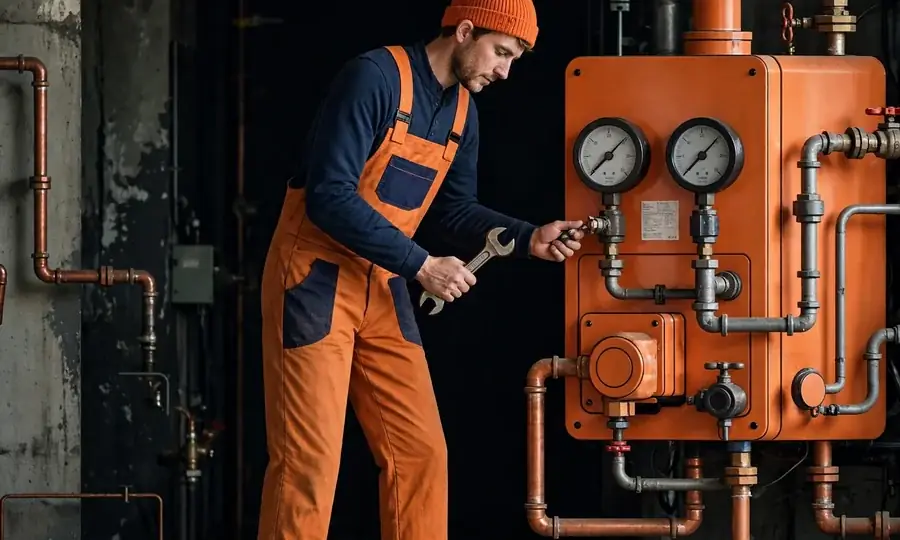
A proper diagnosis starts with the symptom and works outward. The pro checks what the boiler is actually doing: error codes on modern units, flame behavior on atmospheric burners, gauge readings — a sealed system should sit around 12–15 psi cold, so a gauge pinned at zero or climbing toward the relief valve's blow-off point is evidence, not guesswork. The auto-fill feed valve and expansion tank get tested as a pair, because a tank that has lost its air charge will push water out the relief valve every heat cycle and make the feed valve top the system up again — the classic slow self-draining loop.

On the borough-core oil systems the diagnosis runs through the burner and the tank: nozzle spray pattern, electrode gap, filter condition, and fuel level — a January run-out masquerades as a burner failure more often than people expect. On the suburban gas units it runs through ignition components, flame sensing, and condensate handling. The point is the same every time: find the failed component by testing, then replace only that. Anything else is parts roulette with your money.

Boiler Repair in Collegeville, PA

Common Collegeville repair calls

The recurring local patterns.

  • Oil burner service — nozzles, electrodes, and clogged filters in the borough-core oil stock; covered in depth on our oil boiler repair page
  • Feed valve and expansion tank failures — the pressure-loss / relief-valve-drip cycle on suburban sealed systems
  • Condensate drain freeze-ups — dead-by-morning lockouts on newer condensing units after teen-degree nights
  • Zone and circulator faults — cold rooms in split-levels and added-on zones that trace to distribution, not the burner
  • Neglected rental systems — student rentals near the college with years of deferred maintenance surfacing at once

For leak and pressure problems specifically, there is also a dedicated walkthrough on our national boiler leak and pressure guide — the 12–15 psi cold rule and what deviations mean.

Frequently Asked Questions

Straight answers before you call.

01

My sealed gas boiler loses a little pressure every month. Normal?

Slow pressure loss is common but not healthy: it usually means the expansion tank is losing its charge or a fitting is weeping somewhere in the loop. A system that needs topping more than once or twice a season needs service. Keep feeding it and the fresh oxygenated water corrodes the system from the inside.

02

The boiler fires, then shuts off after a few minutes, over and over.

That is short-cycling, and it wastes fuel while wearing out the ignition train. Causes range from an oversized block to a waterlogged expansion tank to a thermostat issue. Note how long each cycle lasts and whether all zones heat evenly, then call (888) 766-1474; the pattern points the diagnosis.

03

One bedroom is always cold. The boiler seems fine otherwise.

Then the boiler probably is fine, and the fault is distribution: a stuck zone valve, air in that loop, or balancing that was never done right. In split-levels and cape cods around the suburbs, the far bedroom is the classic victim. Bleed the radiators in that room first; if it persists, it needs a technician.

04

My radiators gurgle. What does that mean?

Air in the system. Gurgling radiators need bleeding, and if the air keeps coming back, the system is pulling it in somewhere: a failing auto-fill feed valve or a leak on the suction side of the circulator. Occasional air is maintenance; chronic air is a symptom.

05

The boiler display shows an error code I have never seen. What now?

Write the code down exactly before you touch anything, because clearing it erases the diagnostic trail. Look it up in the manual if you have one, but do not start changing parts. Call (888) 766-1474, read the code off, and describe what the boiler was doing when it appeared.

Boiler acting up in Collegeville?

Call (888) 766-1474 — describe the symptoms and get a diagnosis-first local pro.

☎   Call (888) 766-1474