
/>
ALLENTOWN BOILER SERVICE

Boiler Repair & Diagnosis in Allentown, PA

A boiler that still runs but misbehaves — firing in short bursts, losing pressure, locking out every few days — is telling you something, and the message changes depending on where in Allentown it lives. Downtown rowhouse basements hold aging atmospheric units that fail at the ignition train. Township utility rooms hold sealed systems that fail at pressure and condensate. This page teaches you to read those messages, so your call carries useful detail and the visit starts with testing instead of guesswork.

✓ Diagnose first, replace parts second✓ Rowhouse to township coverage✓ Fuel-first phone triage

General inquiries: 7 AM–7 PM · Emergency calls: 24/7 · (888) 766-1474

Rowhouse basements vs. township utility rooms

Two settings, two failure languages.

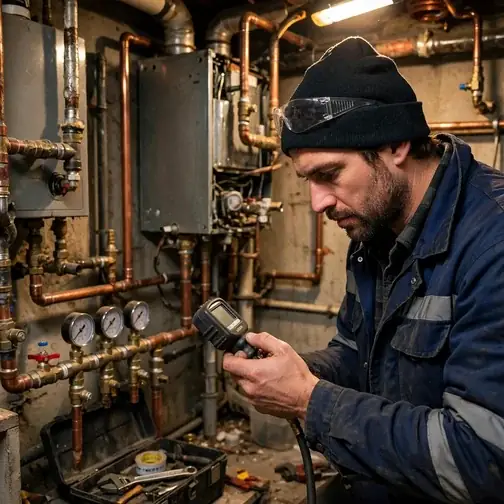
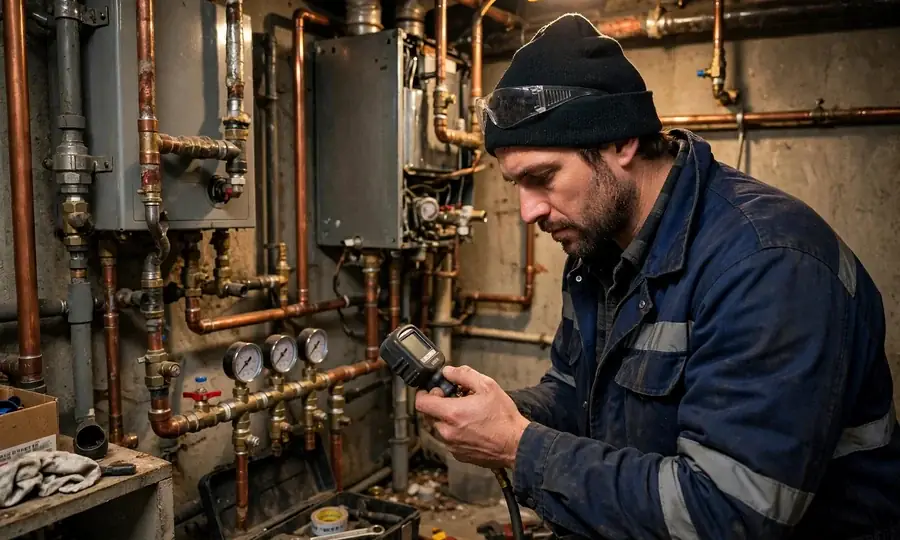
Technician diagnosing a residential boiler with pressure gauges in Allentown, Pennsylvania

Downtown (18101/18102 core) means tight basements, narrow stairs, and converted atmospheric gas units past their twenty-fifth year. The chronic complaints are fire-side: flame sensors, igniters, pilot assemblies, and steam air vents on the one-pipe systems that remain. Access is part of the diagnosis — describe the basement and the unit’s age when you call, because the pro plans the visit around both.

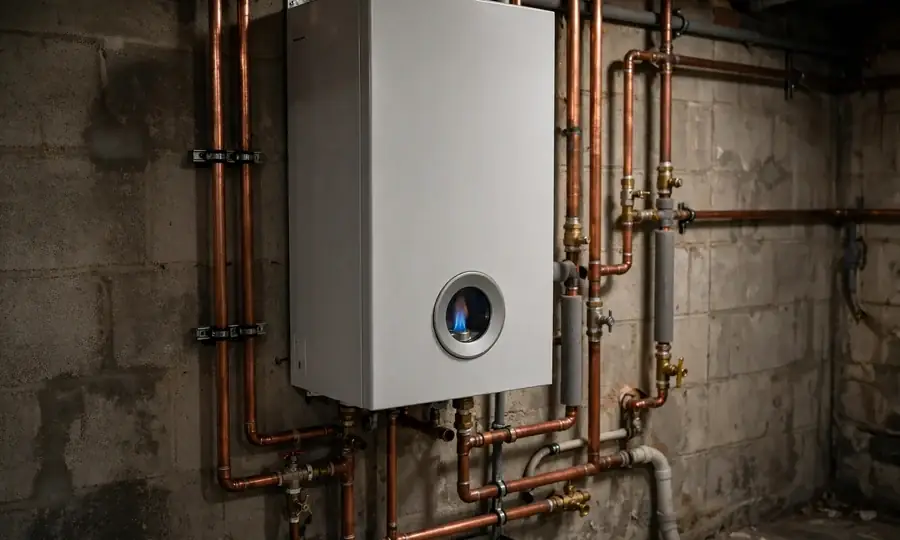
West end, South Whitehall, and the township edges mean sealed gas systems from the 70s onward and condensing units in the newer stock. The chronic complaints are water-side: expansion tanks losing their charge, auto-fill/feed valves that stop holding, weeping fittings, and condensate drains that freeze on January nights. On the oil edges, the complaints move back to the burner — nozzles, electrodes, filters — and the call starts with the tank gauge.

Reading the warning signs

Patterns the visit will confirm.

  • Fires for minutes, then quits — flame-sensing and ignition faults on converted gas units; starved burners on oil when nozzles or filters clog
  • Banging and kettling — scale buildup in aging heat exchangers, or steam hammer from dead air vents on one-pipe systems
  • Gauge sliding below 12–15 psi cold — the expansion tank, the auto-fill/feed valve, or a weeping fitting on sealed systems
  • Lockouts that clear with a reset — the safety chain caught something real; repeated resets hide ignition faults on gas and risk the chamber on oil
  • Uneven heat across floors — zone-valve motors, noisy circulators, air-bound radiators, unbalanced loops
  • Rising fuel bills, steady comfort — sooted exchangers and short-cycling waste fuel; a diagnosis visit finds the efficiency fault
Boiler Repair in Allentown, PA

What to check before you call

Five minutes that sharpen the visit.

Read the pressure gauge cold and note the number — and whether it has been drifting. Know your fuel type, and if it is oil or propane, check the tank level. Write down the symptom timeline: when it started, whether it tracks the weather, what sounds the unit makes, and what you have already tried. Clear a path to the boiler, the thermostat, and any locked utility areas. If you can safely reach the data plate, note the make and approximate age.

That is the whole triage in five facts. Calls that open with them get routed faster and diagnosed sooner than calls that open with “it just stopped working.”

Boiler Repair in Allentown, PA

How a proper diagnosis runs

Order matters: fuel, flame, water, distribution.

A proper visit starts with your symptom history, then moves through the system in order: fuel supply (gas pressure, oil tank level and filter condition), ignition and flame (sensors, igniters, electrodes, nozzle spray pattern), the water side (pressure, expansion-tank charge, auto-fill/feed valve function, air in the system), and distribution (zone valves, circulators, radiator balance).

Findings get explained before any work is authorized — what failed, why it failed, and what the options are. That is the standard; accept nothing less. If you are unsure whether what you are seeing counts as urgent, the signs your boiler needs repair guide helps sort routine from urgent.

Boiler Repair in Allentown, PA

Frequently Asked Questions

Straight answers before you call.

01

My Allentown boiler short-cycles. What should I check first?

Look at the thermostat setting, the pressure gauge, and whether any radiators or zones are air-bound, because distribution faults often wear a burner-fault costume. In west-end colonials, short-cycling frequently traces to water-side issues like a failing expansion tank rather than the burner itself. If it keeps cycling after the basics check out, it needs hands-on diagnosis.

02

The radiators bang in our downtown rowhouse. What causes that?

On one-pipe steam systems, banging usually means failed air vents or near-boiler piping that has lost its pitch over a century of settling. On hot-water systems, it can be kettling from scale in an old cast-iron block. Either way, describe the sound and the fuel type on the call, because steam and hot water are different trades.

03

How do I tell a burner problem from a distribution problem?

If every radiator is cold, the burner or the boiler itself is the suspect. If only one room or one zone is cold while the rest heat fine, the problem is almost always distribution: a stuck zone valve, trapped air, or an unbalanced loop. That split saves real diagnostic time when you describe it on the phone.

04

The pressure gauge reads zero. Can I just add water?

You can top up a sealed system once, then watch it, but repeated drops mean something is wrong: a tired expansion tank, an auto-fill feed valve that has failed, or a weeping fitting. A healthy cold system holds 12 to 15 psi. If the gauge keeps sinking, call for service instead of feeding it indefinitely.

05

Why is the bottom of my radiator cold while the top is hot?

That usually means sludge has settled in the lower part of the radiator or air is trapped at the top of the loop, both common in older west-end systems with original piping. Bleeding the radiator helps when air is the cause. If the cold bottom persists, the system likely needs a proper flush and water treatment.

06

At what point does repair stop making sense for my boiler?

When the block itself is failing: weeping sections on a cast-iron unit, a cracked heat exchanger, or a burner that has been rebuilt more than once on a thirty-year-old block. Rising fuel bills alongside repeated breakdowns are the other signal. The installation page walks through the replacement math for Lehigh Valley housing.

Related Allentown boiler services

Where to go next from a diagnosis.

When the fault turns out to be fuel-specific, the gas boiler page goes deeper on ignition, flame sensing, and condensate problems, and the oil boiler page covers burner and fuel-supply work for the township edges. A dead unit on a freezing night belongs on the emergency page instead, and when testing shows the block is finished, the installation and replacement page takes it from there. Nationally, boiler leak and pressure repair and hot-water hydronic repair cover these fault families in general terms.

Allentown boiler acting up?

Call (888) 766-1474 — describe the symptom, note your fuel type and the gauge reading, and get real diagnosis from a local pro.

☎   Call (888) 766-1474