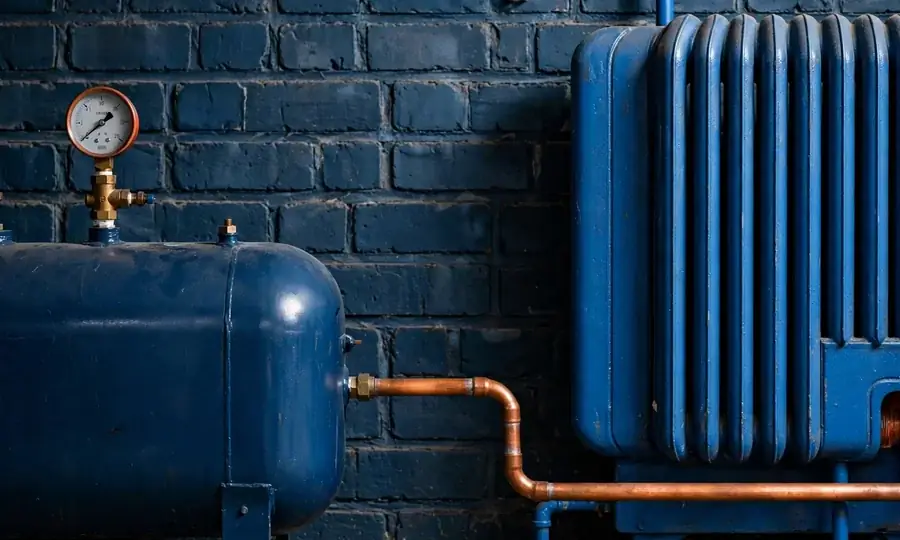
The burner gets the blame; the tank usually deserves it. Westbury's oil tanks are overwhelmingly indoor basement 275-gallon steel tanks, and a 30-plus-year tank is living on borrowed integrity: water condenses inside, rust blooms, sludge settles, and the filter catches all of it — until it cannot. The signature is filters clogging every few weeks or a burner that starves with oil visibly in the tank. That is not a burner fault; it is a fuel-supply fault wearing a burner costume, and replacing nozzles will not fix it.
What the triage wants to know: the tank's rough age, when the filter was last changed, and whether this is the first starvation event or the third. Legs, seams, and the tank bottom deserve eyes during any service visit — a weeping seam is a replacement conversation, not a repair. And on the oldest streets, keep the abandoned underground tank question in mind: plenty of these houses converted from buried tanks decades ago, and a forgotten tank in the ground becomes an environmental question the moment replacement planning starts.