WESTBURY BOILER SERVICE

Boiler Diagnosis & Repair in Westbury, NY

Boiler misbehaving in Westbury — short-cycling, losing pressure, locking out, leaving the far rooms cold? Start with a phone description: the sounds, the codes, what stopped working. Oil and gas hot-water systems, diagnosed by testing rather than by parts-swapping, for 11590 and nearby.

✓ Oil & gas diagnosis✓ Phone triage first✓ Tested, not guessed

General inquiries: 7 AM–7 PM · Emergency calls: 24/7 · (888) 766-1474

The ranch-house distribution trap

Westbury's most misdiagnosed call — and how the triage avoids it.

Here is the call that comes in all winter: the boiler runs, the living room is warm, and the bedrooms at the far end of the ranch are cold. The homeowner is sure the boiler is dying. Nine times out of ten the boiler is fine — the heat simply is not making the trip. Long single-story baseboard runs lose temperature along the way, air collects where the run turns, zone valves seize half-open, and circulators sized for a smaller loop give up at the far end. The triage asks which rooms are cold before anything else, because that one answer separates a distribution job from a boiler job — and the two have nothing in common in cost or urgency.

The same logic applies to split-levels: heat that never quite reaches the upper half is a circulation question first. A tech who condemns a working boiler for a distribution fault has cost you a boiler; the diagnosis-first approach walks the loop, checks the bleed points, watches the zone valves, and only then talks about the burner.

Boiler Repair in Westbury, NY

Oil-first triage

In the heaviest oil pocket on Long Island, the burner questions come first.

An oil no-heat call gets a fixed sequence: tank gauge (run-outs are common and need delivery plus a bleed-and-reprime, not parts), reset history (one press is diagnostic; five presses is a flooded chamber), last service date (nozzle, electrodes, and filter are consumables — a burner two years past service is a lockout waiting for January), and filter behavior (filters clogging every few weeks point at the tank — rust, sludge, water — rather than the burner).

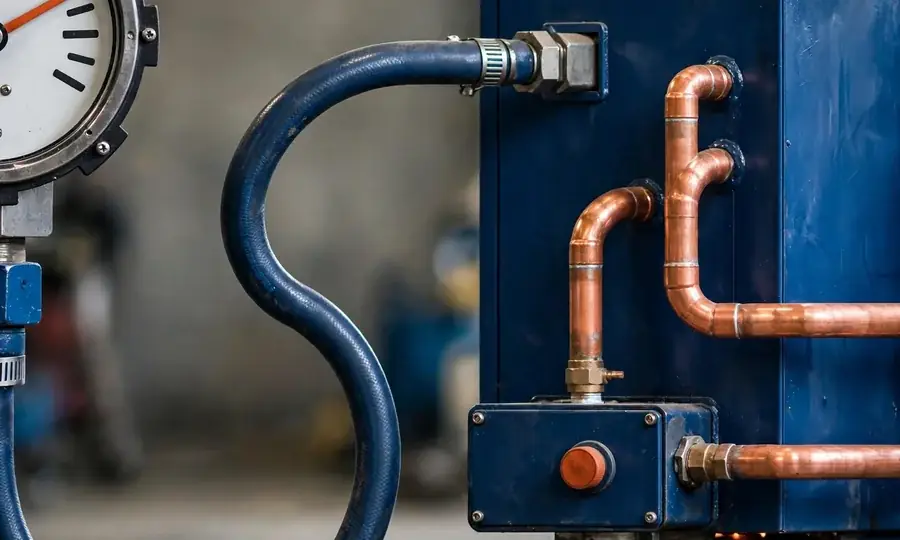
Gas calls get their own sequence — flame-sensing behavior, igniter history, condensate symptoms after cold snaps — but the principle is the same: the symptom plus the fuel plus the house style usually names the subsystem before anyone drives over. On site, the tech tests inside that subsystem with instruments: flame rectification current on gas, nozzle spray and cad-cell sighting on oil, expansion tank charge and feed valve behavior against the gauge on sealed systems. Findings come before authorization, always.

Boiler Repair in Westbury, NY

Repair or replace?

The honest arithmetic for aging Westbury units.

Three inputs decide it: the fault (a ten-minute flame-sensor cleaning versus a cracked block), age and design efficiency (a 35-year-old oil-fired cast-iron unit versus a modern condensing boiler), and repair frequency (a first fault in years versus the third this season). The working rule techs use: when a repair approaches a third of replacement cost on a unit past twenty years, price both options.

Westbury tilts this math in two directions. The oil stock is old — blocks of 30-plus-year cast-iron boilers still heating — so a major burner or control repair should be weighed against the block's remaining life, not just the part's price. The gas stock is younger on average, so component repairs usually win there. Either way the on-site diagnosis hands you both numbers — the repair and the replacement — and the condition of everything around the failed part, so the decision is yours with the facts in front of you.

Boiler Repair in Westbury, NY

The ten-minute homeowner check

Five answers that make the call twice as productive.

Run this before dialing — each answer sharpens the triage:

  • Thermostat state — calling for heat, set above the room, batteries good; dead batteries end more “boiler failures” than anyone admits
  • Which rooms are cold — whole house versus far rooms only; the single most routing-informative answer in a ranch town
  • Gauge and tank — sealed-system pressure near 12–15 psi cold is normal; on oil, read the tank float — an empty tank is the most fixable no-heat there is
  • Reset count — press once, observe, report; the pattern matters more than the press
  • What changed — new sounds, new smells, the cold snap's arrival, any recent work; timing is diagnostic gold

Confused by the gauge? Our boiler pressure guide translates the needle before the pro arrives. Seeing a familiar pattern in the signs your boiler may need repair? The repair visit picks up where that list leaves off.

Frequently Asked Questions

Straight answers before you call.

01

Our oil ranch's burner keeps locking out. What is the triage looking for?

Nozzle, electrodes, and filter first; tank and fuel line second. Westbury's oil pockets write the steadiest winter call volume on Long Island, so the questions are honed: lockout frequency, whether a reset holds, last service date, tank gauge. On oil, those four answers usually name the fault.

02

The far rooms in our ranch are cold. What is the fix?

Almost always distribution work, not a new boiler: bleeding air from the long runs, checking the circulator's capacity for the loop length, and verifying zone valves open fully. Ranch long-run cold spots are the local classic. Tell the triage which rooms and how far they sit from the boiler.

03

Our garage-level boiler shut down in January. What happened?

Most likely a frozen condensate drain or frozen piping in the semi-heated utility room. Split-level garage installs are the first to freeze because the equipment sits in the coldest part of the house. The triage will ask about the drain routing and the room's temperature; the fix is freeze protection, not just a restart.

04

Our gas colonial keeps losing pressure. What should we check?

The sealed-system trio: expansion tank charge, auto-fill feed valve, and weeping joints. Note whether you are topping up often; constant makeup water is hard on the system and moves the call up. The tank gets tested first because a waterlogged tank is the most common cause.

05

Our split-level short-cycles. What causes that?

Oversizing for the actual load, a thermostat in a bad location, or zone issues where small zones call alone. Short-cycling wastes fuel and wears parts. Tell the triage how long the burns last and which zones call; the pattern distinguishes sizing from controls.

Boiler acting up in Westbury?

Call (888) 766-1474 — describe the symptoms and check local repair options for your ZIP.

☎   Call (888) 766-1474