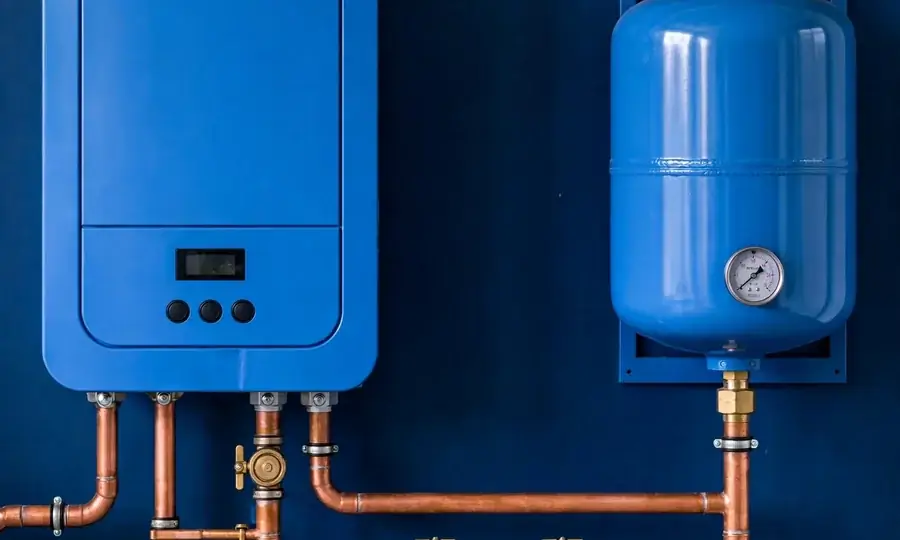
The gas side of Westbury is really two fleets. The older fleet lives in the earliest post-war ranches: atmospheric boilers with thermocouples, spill switches, and gas valves old enough to have voted in several elections. Their faults are ignition-end and predictable — and they have a housing-specific twist. When those ranch basements got finished over the decades, the boiler room sometimes got sealed up with them; a unit that breathed fine for thirty years starts tripping its spill switch once its combustion air is drywalled away. The triage asks about finished basements for exactly this reason.
The newer fleet — sealed-system and condensing units in renovated homes — fails at igniters, flame sensor rods, pressure switches, and condensate drains. These are consumable parts with finite lives: hot-surface igniters crack, sensor rods coat with oxide, pressure switches drift. A boiler asking for its igniter every few years is not defective; it is normal wear, and the fix is diagnosing which component failed rather than replacing parts by guess. Split-levels add the garage-utility-room effect: boilers in colder, dustier air foul flame sensors faster and freeze condensate lines earlier in the season than basement units.