/>
TRENTON BOILER INSTALLATION

Boiler Installation & Replacement in Trenton, NJ

When the block is finished — section weeps, a dead burner on a 30-year unit, efficiency stuck in the 70s — replacement becomes the honest answer. This page covers the repair-vs-replace math, proper sizing for Trenton rowhouses and Hamilton Township homes, and fuel-choice reality in a gas-heated city. No pricing games: sizing and options come from seeing the actual space.

✓ Repair-vs-replace honesty✓ Rowhouse & suburban sizing✓ a phone conversation about symptoms

General inquiries: 7 AM–7 PM · Emergency calls: 24/7 · (888) 766-1474

Repair or replace: the honest math

Condition and trajectory — not age alone.

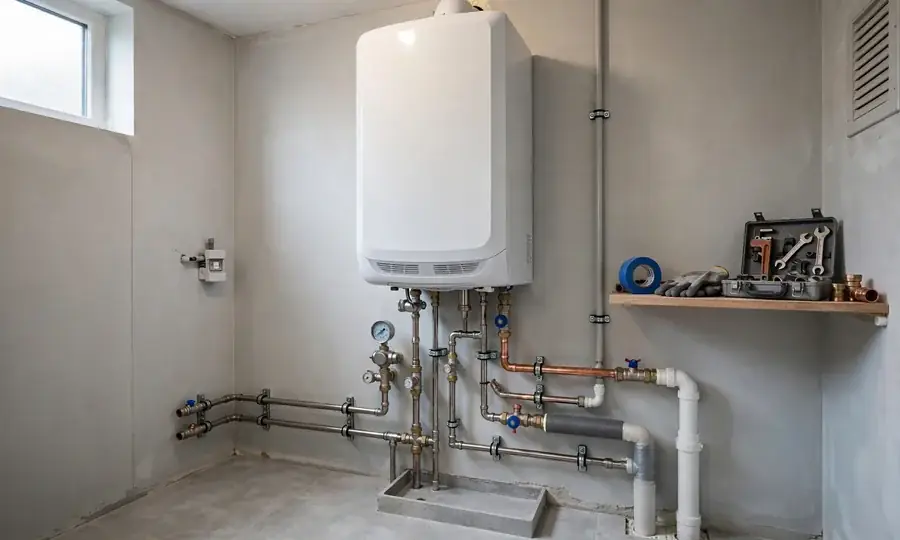
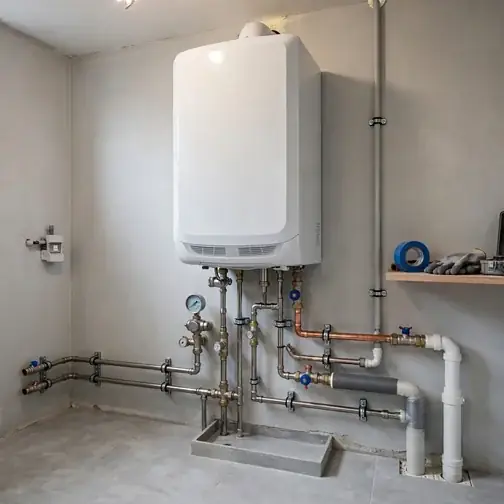
Photograph of a newly installed modern boiler in a home utility room

Age alone does not decide replacement. A 28-year-old cast-iron block in a Chambersburg rowhouse with a sound heat exchanger, a healthy burner, and steady efficiency is a repair candidate. A 20-year-old unit with section weeps or cracks, a burner that needs attention every season, and efficiency stuck in the 70s while fuel bills climb is telling you it is done — no matter what the birth year says.

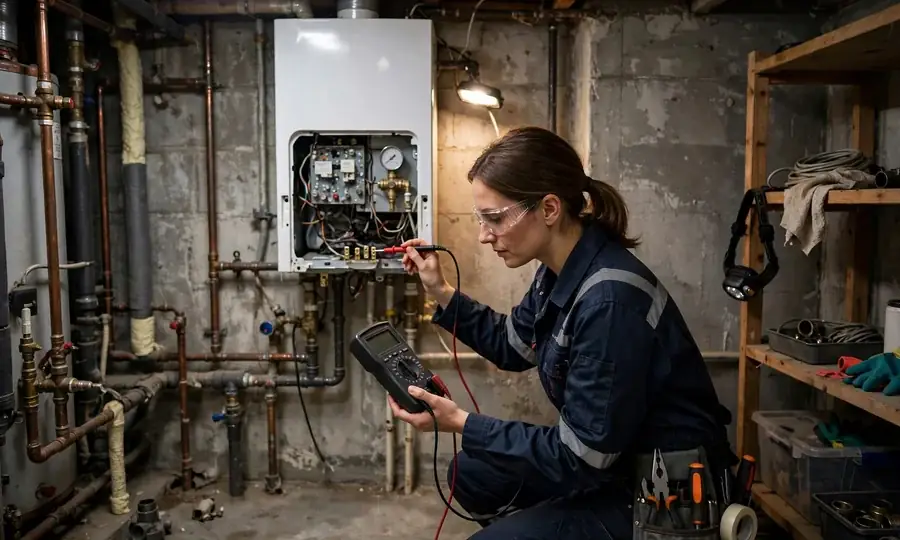
The signals that tip the math: repeated lockouts traceable to the block rather than the controls, parts that are getting genuinely hard to find, a chamber that is sooting faster than service can keep up, and repair bills that approach what a year or two of a new unit would save. A diagnosis visit gives you the honest read — what failed, why, and whether the trajectory points to repair or replacement — before you spend anything. See the diagnosis page for how that evaluation works.

Sizing for Trenton housing

Your house, not a rule of thumb.

Rowhouses (Chambersburg, Mill Hill): shared party walls mean a rowhouse's heat load is often smaller than a same-square-foot detached home — and many Trenton rowhouses are carrying oversized units installed on rules of thumb decades ago. Oversizing wastes fuel and short-cycles the new unit from day one. Proper sizing starts from a heat-load calculation on the actual house: wall exposure, window area, insulation, and air leakage.

Hamilton Township and suburban edges: detached ranches, split-levels, and Cape Cods with full exterior exposure and varied insulation eras. Here the calculation swings the other way — additions, finished basements, and leaky 1960s envelopes all change the number. Either way, the size of the last boiler is information, not the answer.

Distribution matters as much as the block: tall radiators sized for low-temperature water behave differently from fin-tube baseboard, and a unit that cannot feed the emitters properly is badly sized regardless of its rating. The steam vs. hot-water guide helps if you are weighing a system-type change alongside the swap.

Boiler Installation & Replacement in Trenton, NJ

Fuel choice in a gas-heated city

Trenton's reality simplifies the decision.

In Trenton the fuel question is simpler than in most cities: piped gas reaches almost everywhere, so gas is the default answer for replacements. The live question is the edge cases — the oil holdouts deciding between a new oil block and conversion. Conversion is usually feasible; the honest question is the math: the remaining life of the oil unit, conversion cost against fuel savings, and whether the distribution suits the new unit. Sometimes keeping a healthy oil block is the right answer — the oil boiler page covers the oil minority's situation in full.

Steam-to-hot-water conversions are Trenton's other special case: one-pipe steam survives in the oldest rowhouse blocks, and replacing a steam boiler with a hot-water unit is not a drop-in swap — it means new near-boiler piping and often radiator work. A call can walk through what your specific system would need, because the answer depends on the pipes in your walls, not the boiler catalog. The New Jersey hub covers the statewide fuel picture these decisions sit inside.

Boiler Installation & Replacement in Trenton, NJ

What the replacement conversation covers

Before anything is scheduled.

  • Repair-vs-replace verdict — condition of the block, burner, and controls, explained honestly
  • Heat-load sizing — calculated on your actual house, not the last boiler's rating
  • Fuel choice — gas default, oil-to-gas conversion math where it applies
  • System type — hot water, steam, or conversion, matched to your distribution
  • Access reality — narrow rowhouse stairs, tight basements, and what the swap physically requires
  • Condensate and venting plan — where the new unit breathes and drains in your specific house

Frequently Asked Questions

Straight answers before you call.

01

What should replace my coal-conversion boiler in Chambersburg?

A modern gas unit — atmospheric or sealed combustion — keeping the radiators, which are usually the best part of these old systems. The masonry chimney will likely need a liner for the new burner, and the damp basement argues for sealed combustion. An on-site assessment ties fuel, venting, and distribution together.

02

My one-pipe steam system needs a new boiler. Should I stay with steam?

If the steam distribution is sound — working air vents, proper pitch, no chronic damage — a modern steam boiler is the simpler and cheaper job. Converting a brick rowhouse to hot water means repiping the whole house. Unless the steam piping is failing, keeping steam usually wins.

03

How is a replacement sized for a Chambersburg rowhouse?

By a heat-loss calculation that credits the shared walls — rowhouses lose far less heat than detached houses, and rule-of-thumb sizing wildly oversizes them. An oversized boiler short-cycles, wastes fuel, and wears itself out. The calculation, not the old unit's rating plate, sets the size.

04

I am putting a condensing unit in Hamilton. How should the condensate drain be routed?

Inside the thermal envelope to a proper drain — never an exterior run that freezes on the first teen-degree night. The drain routing is part of the installation design, not an afterthought; a condensing unit with a frozen drain is a shutdown waiting for January. Confirm the route in the installation plan.

05

My basement stairs are steep and the ceiling is low. Will a new boiler fit?

Usually yes — sectional boilers are built to go down in pieces and assemble in place, which is exactly how tight rowhouse basements get new equipment. Mention the access constraints on the consult call so the site survey plans the rigging around the stairs and ceiling height.

06

My 28-year-old boiler still runs. Should I replace it now or wait?

Trenton's damp winters age ignition parts faster than the calendar suggests, so 28 here is older than 28 in dry country. A consult now lets you plan sizing, venting, and mild-weather scheduling; a January failure gets you emergency premiums and a cold house. Call (888) 766-1474 with the service history for a straight read on remaining life.

Trenton installation services

Related pages before you decide.

Start with the diagnosis and repair page if the verdict is not yet in — many "dead" boilers are repairable. Fuel-specific questions go to the gas boiler page and the oil boiler page. The Trenton heating guide puts housing and fuel mix behind all of it, and nationally hot-water hydronic repair covers the most common replacement context.

Boiler done in Trenton?

Call (888) 766-1474 — talk through repair-vs-replace math with someone honest.

☎   Call (888) 766-1474