
My Trenton rowhouse still burns oil. Do you service oil here?
You are a small minority but a served one. Just say oil first when you call (888) 766-1474 so you get burner questions, not ignition questions.
If yours is one of them, this page is for you: burner and fuel-supply faults, tank attention, and the triage questions that start at the tank gauge, not the burner. Honest oil service for the holdouts.
General inquiries: 7 AM–7 PM · Emergency calls: 24/7 · (888) 766-1474
A small minority — served seriously.
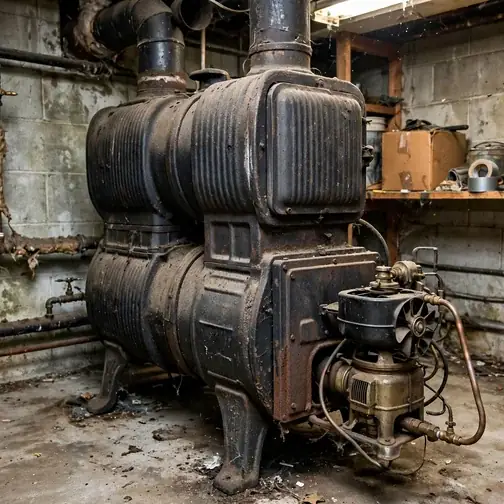
Most pages on this site lead with gas, because Trenton leads with gas. These are some of the oldest burners in the city: cast-iron blocks with decades on them, basement tanks older still, fuel lines that have been in the ground since the street was laid.
Oil faults speak a different language than gas. Where a gas call starts at ignition and flame sensing, an oil call starts at the tank: the gauge reading, the filter condition, the age of the lines. Burner faults follow — nozzles, electrodes, ignition transformers, pumps — and chamber issues that repeated resets make worse. If you heat with oil in Trenton, say so first on the call: the triage questions change completely, and a gas-trained eye asks the wrong questions.
Oil burner problems can involve fuel supply, filters, ignition components and the condition of the tank. Describe your symptoms and system when calling. Related information: Trenton heating guide.
What fails on the oldest burners in the city.
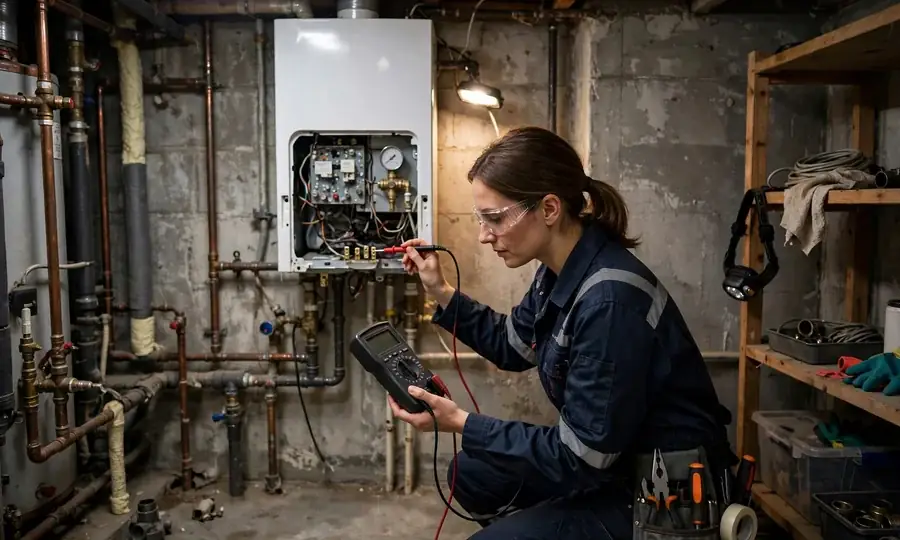
The boiler gets the attention; the tank gets the years.
Trenton's oil holdouts include basement tanks with 30, 40, even 50 years on them. Sludge buildup, water contamination from humid basements, and corrosion at the bottom of the tank are the quiet killers — they starve the burner intermittently, which reads as a burner fault when the real problem is fuel quality. Annual burner service is the moment a pro eyes the tank, the lines, and the filter setup honestly.
A tank that is weeping, heavily corroded, or sitting in standing water is not a repair question — it is a replacement question. A tank that is simply old but sound is a maintenance question. Call and describe what you see; we will tell you honestly which it is. And if the block itself is finished rather than the tank, the installation and replacement page walks through fuel-choice math in a city where gas is almost always available.
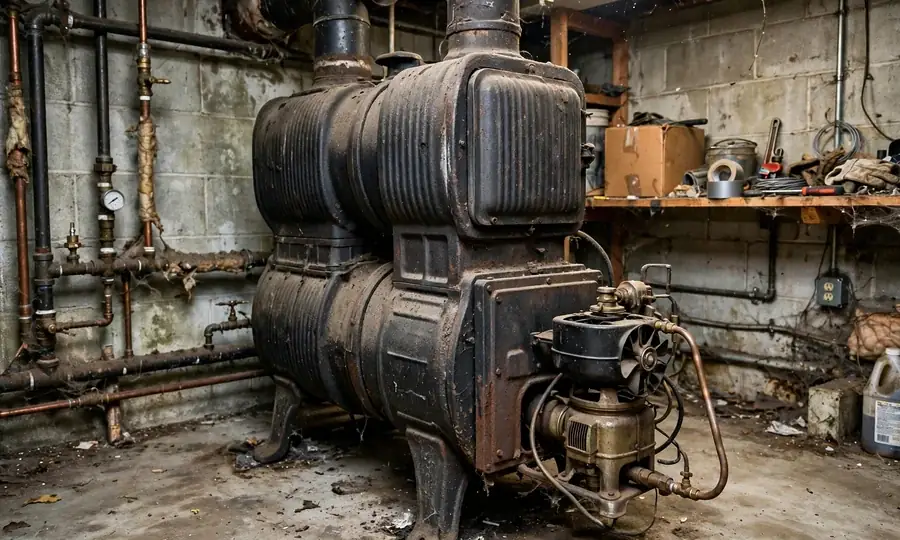
The single most useful oil triage step.
Check the gauge. An empty or near-empty tank turns a "boiler failure" into a fuel delivery problem — the boiler is innocent, the tank is empty, and no technician can fix that with a wrench. If the tank has fuel, the fault is downstream: filter, lines, or burner. That one reading saves twenty minutes on the call and routes you to the right help immediately.
For oil-specific guidance beyond Trenton, oil boiler repair covers the national fault family. For general symptoms that are not oil-specific, the diagnosis page applies.
Straight answers before you call.
You are a small minority but a served one. Just say oil first when you call (888) 766-1474 so you get burner questions, not ignition questions.
A full restoration service: nozzle, electrodes, filter, and a combustion check — plus whatever a decade of neglect reveals. Expect heavy sooting and efficiency far below what the unit can deliver. Be upfront about the gap on the call so the visit is scoped as a restoration, not a quick tune.
When it shows the signs: weeping seams, rust at the legs, or a persistent oil smell with no visible drip. Basement tanks are inspectable — walk yours each heating season. Mention the age and condition on the call; at 35 years, replacement planning is prudent even if it looks sound.
Your street already has gas, so yes — this is one of the most straightforward conversions possible. The utility runs the lateral, the oil burner and tank come out, and a gas unit goes in. Conversion ends deliveries, tank monitoring, and run-dry risk permanently.
Running low pulls air and sludge into the line — the filter clogs, the nozzle fouls, and the burner loses prime. It needs the filter changed, the line bled, and the burner reprimed. Do not make a habit of it; order at a quarter tank, especially before a cold snap.
Yes — an oil smell on firing usually means delayed ignition: the fuel charge lights late and burns incompletely, sooting the chamber. It wastes oil and will eventually lock the burner out. Do not keep running it; the burner needs electrodes, a nozzle, and a combustion check promptly.
Related pages for oil-heated Trenton homes.
Non-fuel-specific symptoms belong on the diagnosis and repair page. A dead unit on a freezing night belongs on the emergency page. When the block is finished, the installation and replacement page covers fuel-choice math — including whether conversion to gas makes sense in a gas-served city. Nationally, oil boiler repair covers the full fault family.
Call (888) 766-1474 — check the tank gauge first, then describe the fault.