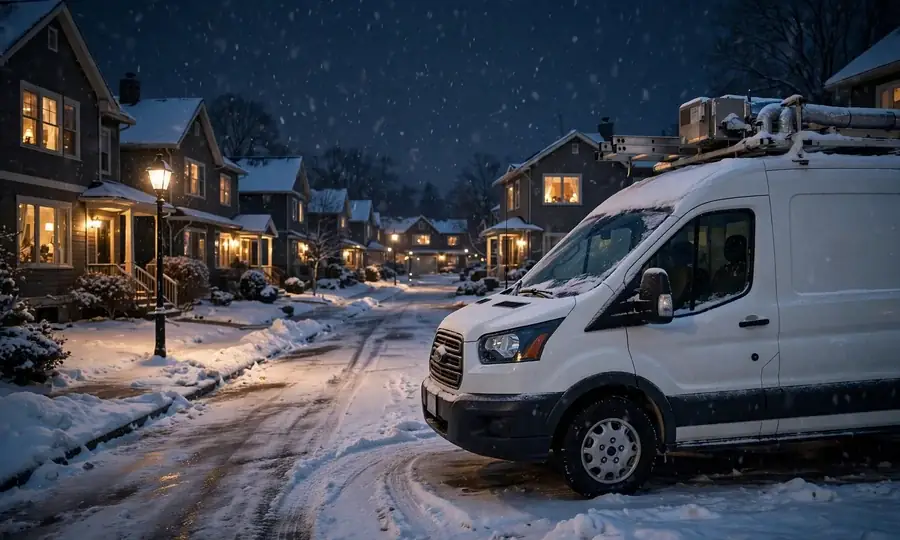
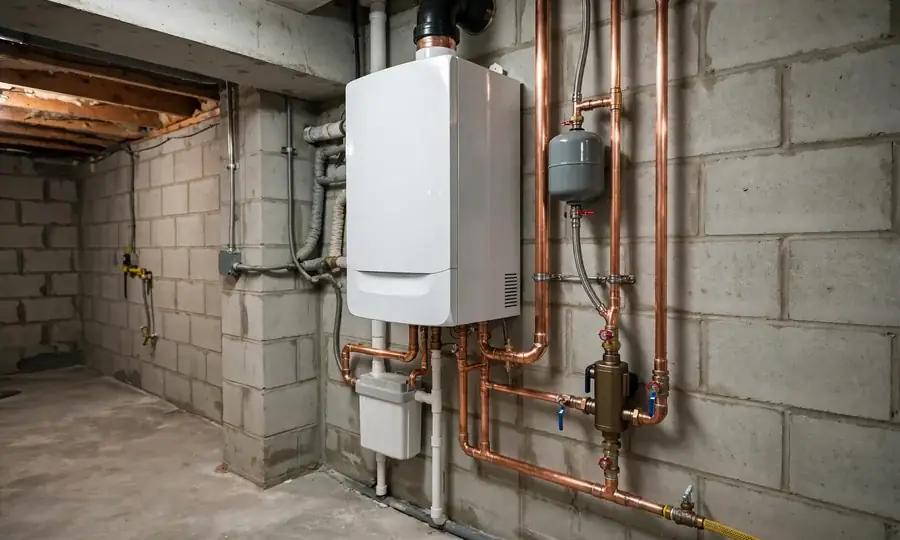
We have a gas boiler but no gas mains on our road. What is it really?
Propane, in all likelihood: a tank in the yard and a delivery truck instead of a utility main. Tell the triage what fuel actually feeds the unit; the triage diverges immediately.
Gas boiler in Upper Marlboro? Here's the honest guide to gas, propane, and conversion questions.
General inquiries: 7 AM–7 PM · Emergency calls: 24/7 · (888) 766-1474
The question that starts every call here.
In Upper Marlboro, most callers who say "gas" mean propane — and that's fine, but the triage needs the truth. Natural gas arrives by utility main and meter; propane arrives by truck into a tank you own or lease. Check the tank: a propane tank with a regulator is propane, full stop.
Why it matters: propane burns hotter per unit, runs at different pressures, and its cold-weather behavior is completely different — vaporization slows in deep cold, especially with a low tank. A "gas boiler problem" that only appears below 15°F is almost always a propane supply problem, not a boiler problem. Say which fuel you have on the call and the diagnosis starts in the right place.
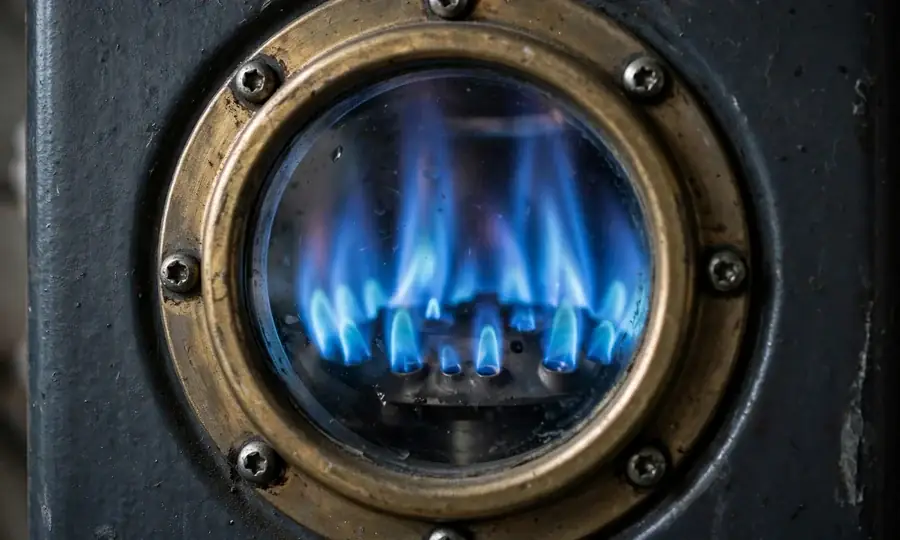
What actually fails here.
For the full technical breakdown of gas-type boiler systems, see our national gas boiler repair guide — the ignition and control diagnostics transfer directly; only the fuel-supply side differs.
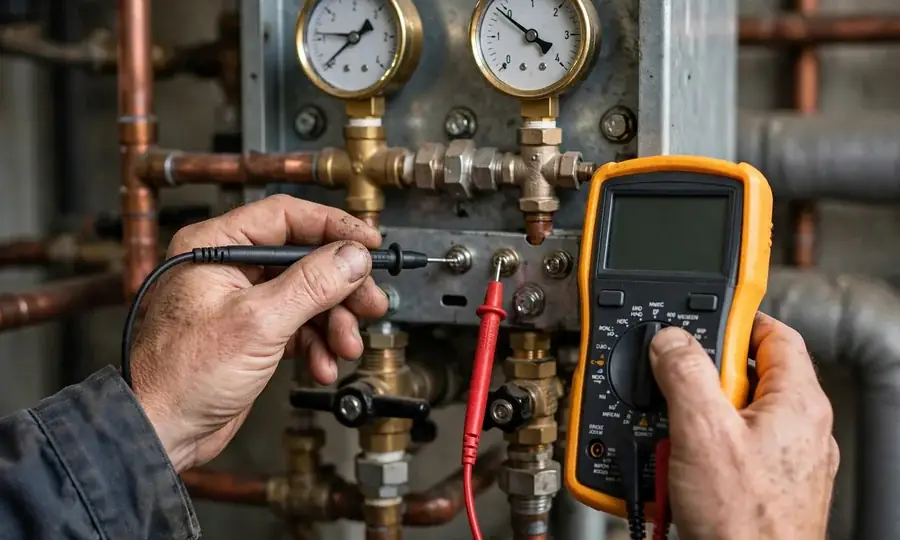
If you actually have a gas main.
The few Upper Marlboro homes on natural gas — mostly near town center — run the standard gas fault profile: ignition-component wear (cracked igniters, oxide-coated flame sensor rods, drifting pressure switches) and, on high-efficiency units, condensate freeze-ups when exterior condensate drains freeze on the coldest nights. A unit that gurgled before dying on a freezing morning is telling you the diagnosis.
One caution for this small group: because gas is rare here, verify any gas odor immediately with your gas utility's emergency line or 911 from outside — don't assume it's a minor boiler issue. After the building is cleared, the boiler needs inspection before restarting.
Oil or propane to gas — when it's real.
With gas mains scarce, conversion to natural gas is rarely on the table in Upper Marlboro — and any honest assessment starts there. Where a main does serve the street (ask the utility, not a salesperson), end-of-life is the moment to evaluate it: no tank, no deliveries. Everywhere else, the real fuel decision is oil vs. propane at replacement time.
That oil-vs-propane choice is worth making deliberately: propane burns cleaner and needs no large indoor tank, but fuel runs on price and supply; oil keeps the existing infrastructure but keeps the tank and delivery logistics. Make the call once, at replacement, with the whole picture — not mid-life on a working system.
Straight answers before you call.
Propane, in all likelihood: a tank in the yard and a delivery truck instead of a utility main. Tell the triage what fuel actually feeds the unit; the triage diverges immediately.
Regulator placement and protection, and making sure the tank sizing supports vaporization at low temperatures. Icing is a supply-side pattern: the regulator and the tank's ability to vaporize in the cold. The triage will ask about tank size, fill level, and regulator location; the fix is sized to those facts.
Only if the mains ever reach you, and across most of the area they have not and are not planned to. The honest answer for most rural properties is to optimize the propane setup: right-sized tank, protected regulator, proper vaporization margin. The triage will give you the street-level reality, not a hypothetical.
The triage sorts that on the call: tank level, regulator condition, and recent weather point at supply; the ignition sequence points at the unit. Propane no-heat calls start with supply questions because supply faults are so common here. Have the tank level ready when you call.
Mostly that your fuel questions are simpler: utility gas, no tank, no regulator icing. The boiler faults themselves are the standard gas list: ignition, flame sensing, pressure. Mention the town-center gas service on the call so the triage skips the propane question set.
Related services in the Upper Marlboro area.
Call (888) 766-1474 — say which fuel you have for fast triage.