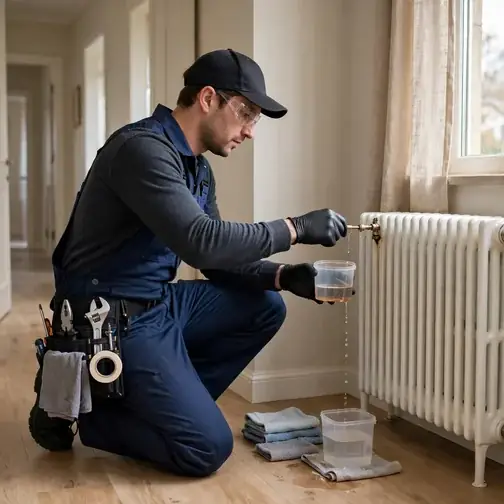
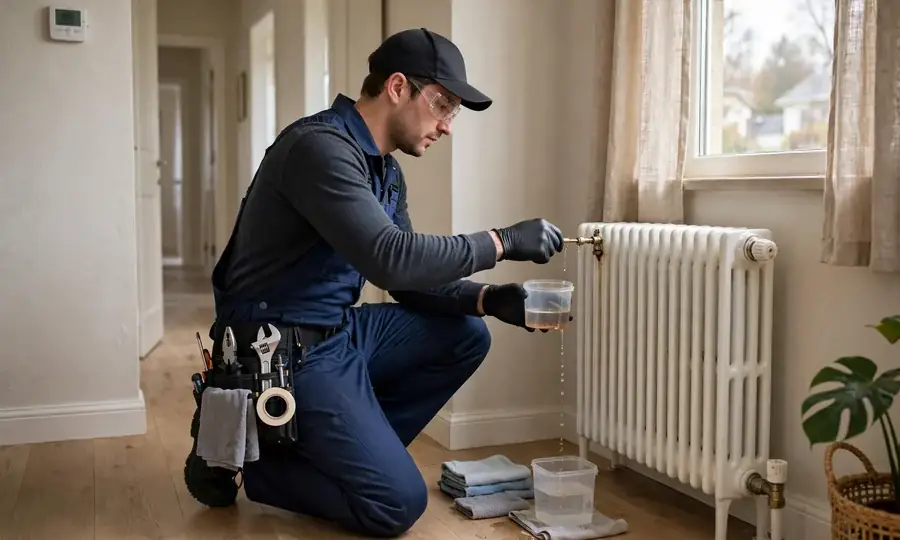
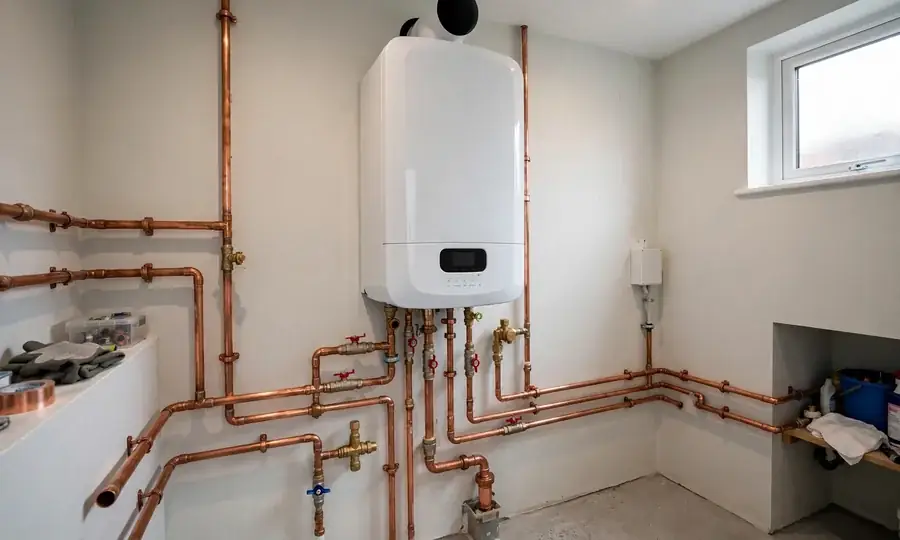
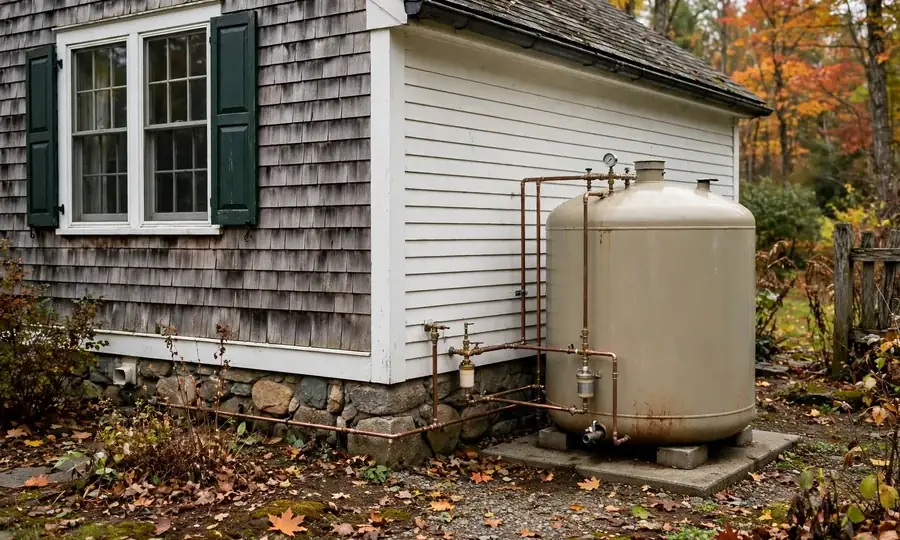
A proper visit opens with the symptom history — when it started, what changed, what you’ve tried — then works the system in order: fuel supply (gas pressure; oil tank level, filter condition, and line exposure; propane tank level and regulator), ignition and flame (sensors, igniters, electrodes, nozzle spray pattern), water side (pressure against 12–15 psi cold, expansion tank charge, auto-fill valve function, air), and distribution (zone valves, circulators, radiator balance). In Marshfield the fuel-supply step carries extra weight — tanks, lines, and vents live harder lives here.
Expect findings explained before any work is authorized: what failed, why it failed, and what the options are. That is the standard for a diagnosis visit — testing first, parts second, and no pressure to decide on the spot.