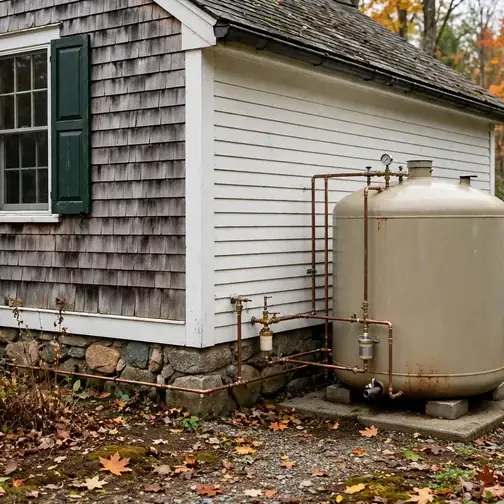
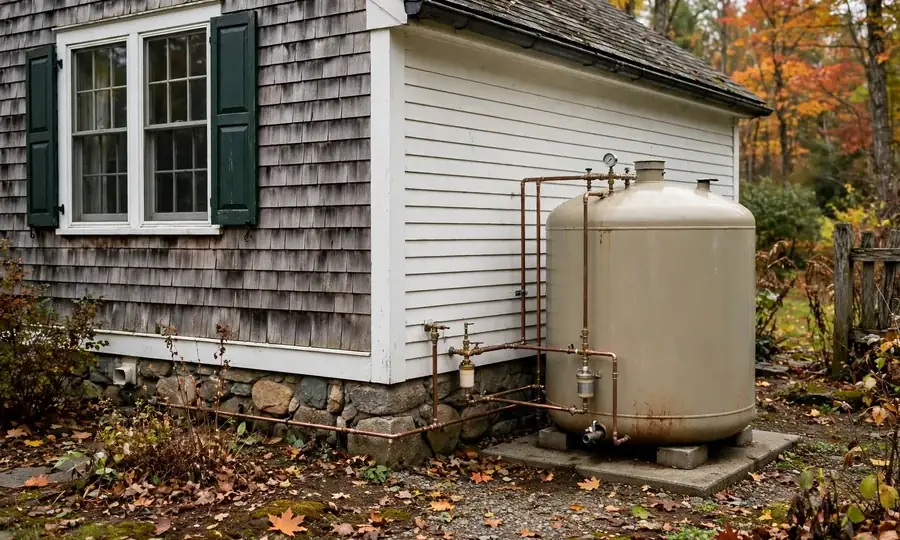
Above-ground outdoor tanks near the shore are the hardest-working fuel equipment in town. Salt air attacks the legs and seams; a tank that looks fine from the driveway can have soft spots at the bottom seam where water collected. Surface rust on the shell is cosmetic — soft spots, weeping seams, or legs that flex under load are replacement signals, and they are worth having assessed before heating season, not during it.
Basement tanks have their own failure mode: condensation. A half-empty 275 in a damp Marshfield basement sweats inside, and water sinks to the fuel pickup. The result is a burner that sputters and locks out on water, not a lack of oil. Keeping the tank reasonably full through the season and changing the filter yearly are the two cheapest insurance policies an oil homeowner has.
Storm exposure ties it together. Nor'easters bring the deliveries to a halt and knock out power — and oil burners need electricity. An empty or near-empty tank going into a storm week is the most preventable no-heat call in Marshfield. Check the gauge before the forecast turns.