FITCHBURG BOILER SERVICE

Boiler Repair & Diagnosis in Fitchburg, MA

A Fitchburg boiler that misbehaves — lockouts you can reset, a top floor that never warms up, pressure sinking week after week — usually fails in one of three places: the burner and tank, the water side, or the distribution across the floors. This page helps you figure out which of the three you are looking at before the technician arrives, with the mill-city specifics that matter: tank-first protocol on oil, floor-by-floor balancing in triple-deckers, and the water-side numbers worth checking. Testing before parts — and a phone conversation about symptoms to point you at the right one.

✓ Three-place fault map✓ Tank-first oil protocol✓ a phone conversation about symptoms

General inquiries: 7 AM–7 PM · Emergency calls: 24/7 · (888) 766-1474

Figure out which third of the system is failing

Burner and tank, water side, or distribution.

Most Fitchburg repair calls land in one of three places, and naming the right one before the technician arrives changes the whole visit. The water side — pressure sinking week after week, air in the radiators, a relief valve weeping — is the sealed-system story. Distribution — cold rooms and cold floors with a burner that is clearly firing — is the triple-decker story.

The three get confused constantly. A cold top floor gets blamed on an undersized boiler when the real fault is a stuck zone valve. A lockout gets blamed on the burner when the tank ran low. This page walks each third in turn so the call arrives with useful information — and the visit starts with testing, not guessing.

Boiler Repair in Fitchburg, MA

Oil burner lockouts: check the tank before the burner

The tank-first protocol, in order.

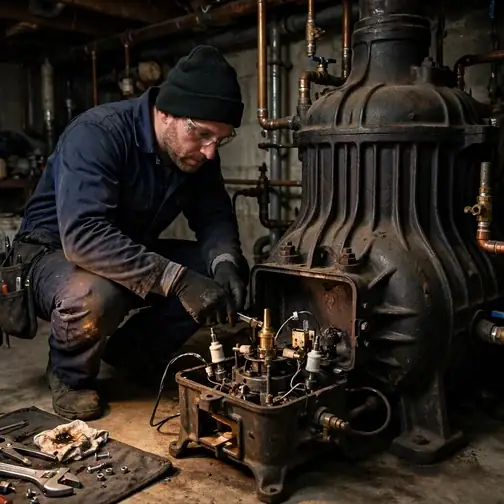
Heating technician servicing an oil burner on a cast-iron boiler in a Fitchburg basement

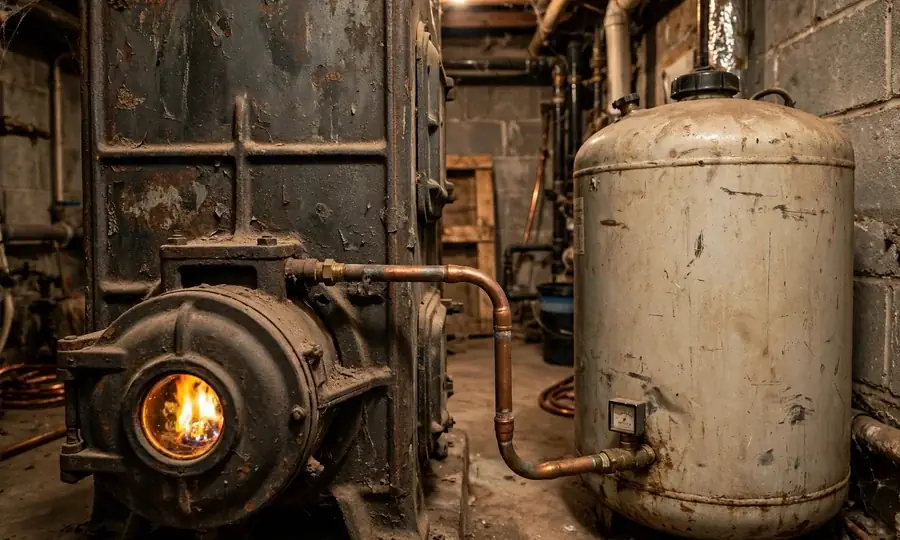
On Fitchburg’s oil stock, diagnosis runs a fixed order and the burner comes last, not first. First the tank: gauge reading, tank age and location — indoor or outdoor — water from condensation, sludge from years of settling, and the last fill date. Then the line and filter: low tanks stir sludge into the line, and a filter past its change date starves the nozzle. Then the burner itself: nozzle spray pattern, electrode gap and position, pump pressure and cutoff.

A neglected oil burner usually fails in several of these places at once, which is why a proper visit is a full burner service rather than one swapped part. And the standing warning: the reset button is not a maintenance plan. Every lockout is the safety chain doing its job, and each failed start leaves unburned fuel in the chamber — call for diagnosis instead of pressing it again.

Boiler Repair in Fitchburg, MA

Triple-decker floors: balancing heat across three stories

The most blamed part of the system.

One boiler, three apartments, three floors of radiators and piping — and very often, three floors that were never balanced against each other. Heat rises through the building envelope as well as the pipes, so the classic triple-decker complaint writes itself: the bottom floor roasts, the middle is fine, and the top floor never quite gets warm. The burner is innocent; the distribution was never tuned as a system.

The usual suspects, in the order a technician checks them: air trapped in the top-floor radiators — the cheapest fix there is, and the first thing to try yourself; zone valves stuck half-open on one floor’s loop; circulators too tired to push water to the third floor; and balancing valves never set after decades of piecemeal radiator swaps. A proper visit tests the whole path floor by floor, not just the burner in the basement.

When you call, describe the pattern floor by floor — which floors are warm, which are cold, whether it changed suddenly or crept in over seasons. That pattern tells the triage whether it is a distribution visit before the technician leaves the shop.

Boiler Repair in Fitchburg, MA

The water side: pressure, tanks, and air

The numbers worth checking before you call.

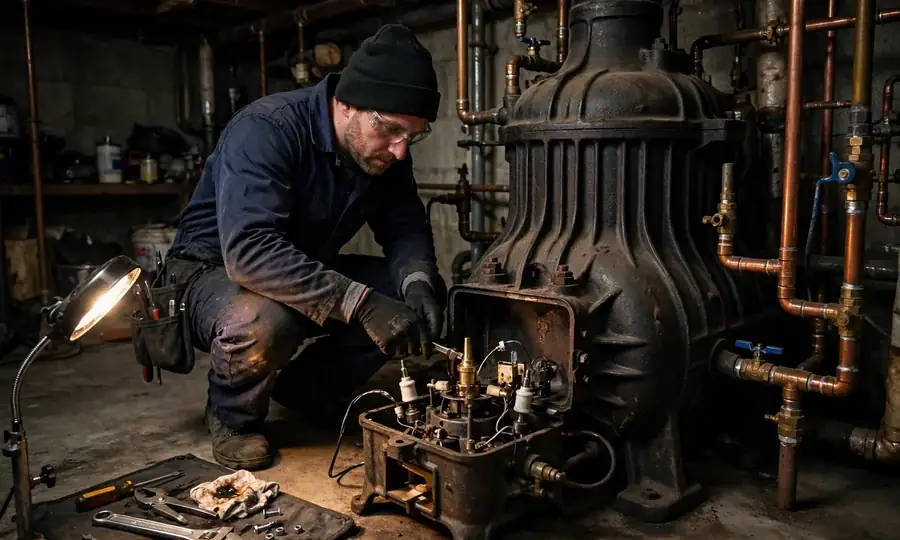
Sealed hot-water systems live or die by pressure, and the healthy number is worth memorizing: 12–15 psi cold, read with the system off for at least an hour. A gauge that sinks over days or weeks points at the expansion tank losing its charge, the auto-fill valve not making up the loss, or a fitting weeping somewhere out of sight. Near-zero readings or visible leaking water move the call up the priority list; slow drift is a repair visit, not an emergency.

Air is the other water-side regular. Radiators that gurgle or heat only halfway up are air-bound — bleeding them is homeowner-level work, and it should come before any talk of new parts. In Fitchburg’s big downtown buildings, the steam leftovers play by different rules: one-pipe steam systems bang from failed air vents, not from air in the water, and those vents are a technician’s job, not a homeowner’s.

Boiler Repair in Fitchburg, MA

Frequently Asked Questions

Straight answers before you call.

01

My oil burner locks out every few days and the reset fixes it. Do I need a visit?

Yes — treat every lockout as a warning, not a nuisance. Resetting masks the cause, and on oil each failed ignition attempt leaves unburned fuel in the chamber. A worn nozzle, weak electrodes, a clogged filter, or water in the tank is still in there waiting. Call for diagnosis instead of pressing the button again.

02

How do I check the tank gauge, and can I trust the reading?

Read the gauge at eye level and note the number — then take it with a grain of salt, because old gauges stick. A low reading matters doubly: it means a possible run-out and it stirs settled sludge into the fuel line. Tell the triage the reading and the last fill date before anything else.

03

The bottom floor is warm and the top floor is freezing. Is the boiler too small?

Almost never — it is almost always distribution. In a triple-decker, air-bound radiators, a stuck zone valve, a tired circulator, or three floors that were never balanced against each other produce exactly this pattern with a perfectly healthy burner. Bleed the radiators first, then describe the floor-by-floor pattern when you call.

04

What should the pressure gauge read?

On a sealed system in a typical two-to-three-story home, 12–15 psi cold is the healthy range — read it with the system off for at least an hour. A reading that sinks over days or weeks points at the expansion tank or a weeping fitting; a near-zero reading or visible leaking water moves the call up the priority list.

05

Can a pro work on a boiler nobody has serviced in ten years?

That is closer to the norm than the exception in Fitchburg's oil stock. A full burner service on a neglected unit often finds several worn parts at once — nozzle, filter, electrodes — and addressing them together is the fix. The real limit is parts availability on very old equipment, not the years since the last service.

06

Can I bleed the radiators myself?

On hot-water radiators, yes: a radiator key or screwdriver, something to catch drips, open the vent until water runs steady, then close it and re-check the boiler pressure afterward. Leave steam-system air vents alone beyond reporting the banging — steam distribution is a different job with different rules.

More Fitchburg repair resources

Fuel-specific and process help.

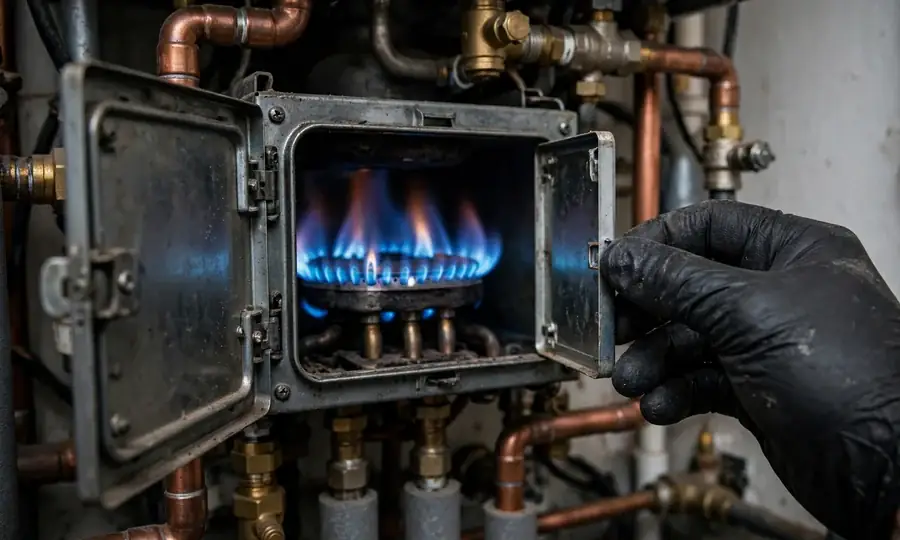
If the fault turns out to be fuel-specific, the oil boiler page goes deep on burners, nozzles, filters, and tank problems — fuel-specific faults relevant to properties using oil heat in Fitchburg — and the gas boiler page covers ignition, flame sensing, and condensate. A dead unit on a freezing night belongs on the emergency page instead. When diagnosis shows the block is finished, see the installation and replacement page. Nationally, boiler leak and pressure repair and hot-water hydronic repair cover these fault families in general terms, and how it works explains the process from call to visit.

Boiler misbehaving in Fitchburg?

Call (888) 766-1474 — describe which third of the system is failing and get connected to a local pro.

☎   Call (888) 766-1474