/>
FITCHBURG BOILER INSTALLATION

Boiler Installation & Replacement in Fitchburg, MA

This page walks through the replacement signals, sizing, and fuel choice — honestly, with no pressure either way.

✓ Replacement signals & math✓ Triple-decker sizing✓ Honest fuel-choice guidance

General inquiries: 7 AM–7 PM · Emergency calls: 24/7 · (888) 766-1474

When replacement is the honest answer

Signals, not scare tactics.

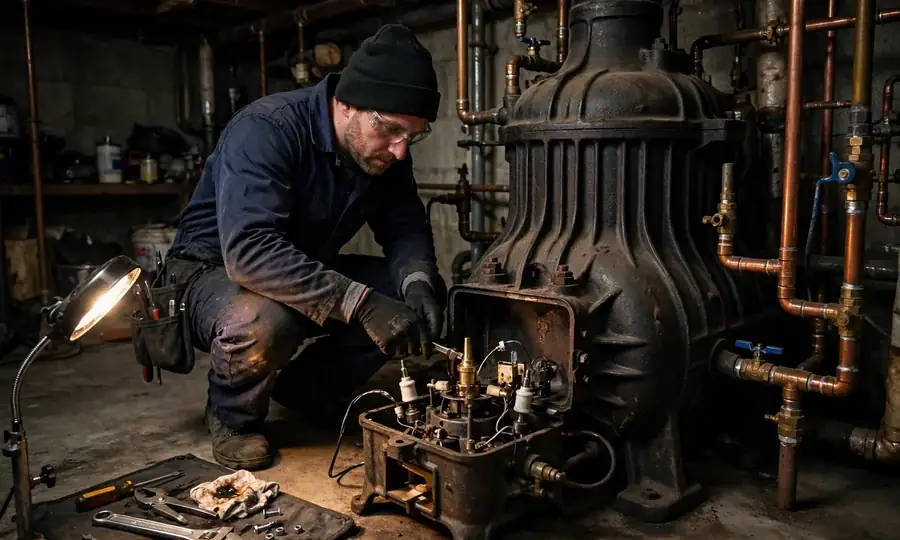
Age alone does not retire a boiler. A sound cast-iron block with a fresh burner can be the right call for years — Fitchburg is full of coal-era blocks still doing their job. What retires a boiler is the block itself failing: sections that weep or crack, seals that keep opening after repair, or a heat exchanger that inspection shows is finished. The second signal is repair futility: a burner that needs constant attention after proper service, controls that keep failing, or parts that are simply no longer available for the unit.

The third signal is efficiency stuck in the past. When fuel bills climb year after year while the heat stays the same, and a proper service does not move the needle, the math starts favoring replacement — especially in a triple-decker where one boiler's fuel bill is multiplied across three households. The diagnosis visits on the repair page are the right way to confirm which side of the line you are on; replacement should follow a real diagnosis, not a guess.

Boiler Installation & Replacement in Fitchburg, MA

Sizing for Fitchburg housing

The most common installation mistake is matching the old boiler.

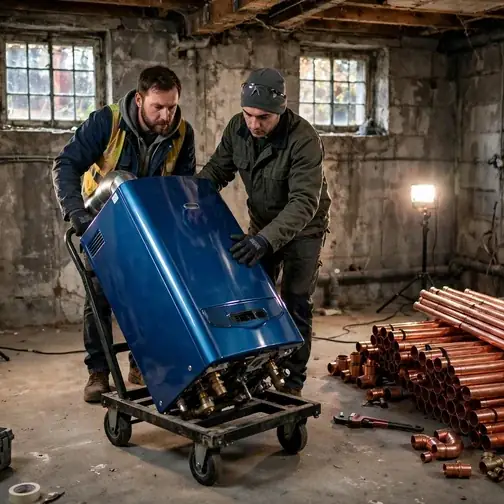
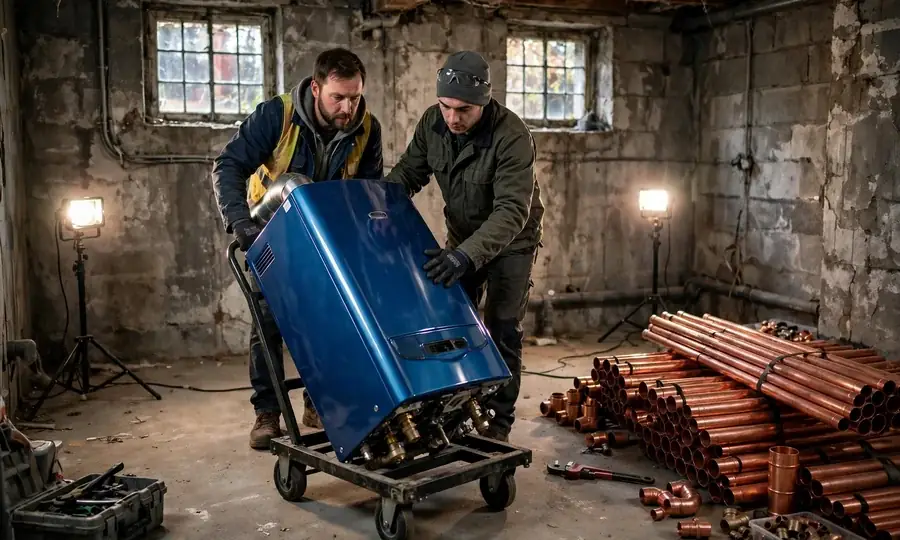
Workers positioning a new boiler in the basement of an old Fitchburg house during installation

Triple-deckers were routinely oversized. The old boiler in a Fitchburg three-decker was often sized by rule of thumb for a draftier era — and then the building got insulated windows, storm doors, and better air sealing. Sizing the replacement to the old rating repeats the oversizing. A proper replacement starts with the actual heat load: the installed radiation measured radiator by radiator, the building's real heat loss, and zoning that serves each of the three floors as its own zone rather than one thermostat guessing for all of them.

Downtown and mill-worker homes have their own sizing trap: buildings where half the radiators were removed decades ago, or where an addition changed the load. The replacement should be sized to what is actually there now, with near-boiler piping done correctly — expansion tank sized to the system, auto-fill valve set right, air separation that works. Good near-boiler piping is where installations succeed or fail, and it is invisible once the job is done.

Boiler Installation & Replacement in Fitchburg, MA

Fuel choice: oil or gas?

A fuel-choice question for Fitchburg homeowners.

Start with availability, not preference. Many of Fitchburg's oil streets kept oil because the gas mains never reached them — and running a new gas service to a street without one can be a project measured in months, not days. If gas is at your curb, the math for switching usually works in gas's favor over the boiler's life, and the gas page shows what that ownership looks like. If gas is not available, a modern oil-fired system with a current burner is an efficient, sound decision — the oil page covers what good oil ownership requires.

Either way, keep the radiators. Fitchburg's cast-iron radiation outlasts boilers by generations and delivers the most comfortable heat a hydronic system can make. The replacement is the boiler, the burner or gas train, and the near-boiler piping — the radiators stay, and they make the new boiler look good.

If the building still runs steam — some downtown Victorians and big old buildings do — that changes the conversation: see steam vs. hot-water boilers for the honest trade-offs before deciding anything.

Boiler Installation & Replacement in Fitchburg, MA

Frequently Asked Questions

Straight answers before you call.

01

How do I know it is time to replace instead of repair?

The signals that matter: sections that weep or crack, a burner that needs constant attention after proper service, efficiency visibly stuck low while fuel bills climb, and parts that are no longer available. Age alone is not the deciding factor — a sound 30-year block with a fresh burner can be the right call, and a cracked 15-year block is not worth saving.

02

Should I switch from oil to gas when I replace?

Only if gas is actually available at your street and the numbers work. Many Fitchburg oil streets kept oil because the mains never reached them, and running a new line can be a project of its own. If gas is at the curb, the math usually favors the switch; if it is not, a modern oil system is a sound, efficient choice.

03

How is a triple-decker boiler sized differently?

By the actual heat load of three units, not by matching the old boiler's rating. Old triple-decker boilers were routinely oversized; a proper replacement starts with measuring the radiation and the building's heat loss, then sizes the boiler to the load — often smaller than what is sitting there now — with zoning that serves each floor properly.

04

Can I keep my radiators with a new boiler?

Almost always, yes. Fitchburg's cast-iron radiators outlast boilers by generations, and keeping them is usually the right call — they are the most comfortable heat emitters you can own. The replacement is the boiler, the burner or gas train, and the near-boiler piping; the radiators stay.

05

How long does a replacement take?

A straightforward like-for-like replacement is typically a multi-day job once the equipment is on site — removal, setting the new unit, near-boiler piping, controls, and startup testing. Conversions that change fuel, or triple-deckers that need re-zoning, take longer. You will ask about actual appointment availability on the call once the situation is understood.

06

What should I ask for on the call?

Describe the current setup: fuel, approximate age, whether it is one boiler for multiple units, and what is actually failing. Photos of the boiler and the pressure gauge help. The triage will tell you honestly whether you are looking at a repair visit or a replacement conversation — no commitment either way.

Related Fitchburg services

Before and after the decision.

Not sure the block is actually finished? A diagnosis visit confirms it before you commit to replacement. If the unit quit in freezing weather, start with the emergency page. The fuel-specific pages — oil and gas — describe what ownership of each fuel looks like in Fitchburg housing. The Massachusetts hub and how-it-works page cover the process from first call to finished installation.

Considering a replacement in Fitchburg?

Call (888) 766-1474 — describe the current setup and get an honest read on repair vs. replace.

☎   Call (888) 766-1474