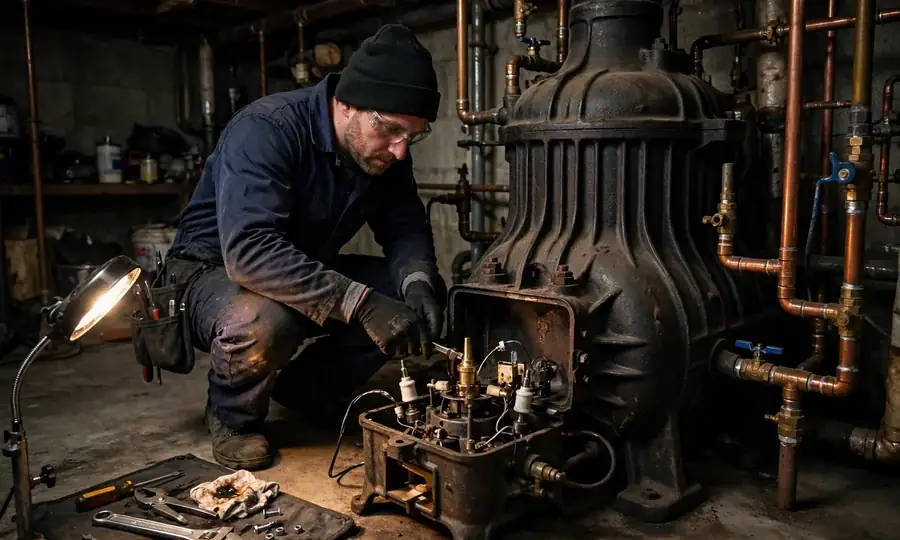
/>
FITCHBURG OIL BOILER SERVICE

Oil Boiler Repair in Fitchburg, MA

That makes oil-burner expertise central here: burners, nozzles, filters, tanks, and fuel lines that are all aging together. This page covers the whole oil fault family, from annual service to winter no-heats.

✓ Burner, nozzle & filter service✓ Tank & fuel-line faults✓ a phone conversation about symptoms

General inquiries: 7 AM–7 PM · Emergency calls: 24/7 · (888) 766-1474

Why oil is still Fitchburg's story

Fuel type varies by property. Check whether the boiler uses gas, oil, propane, or electricity before calling; the fuel source affects the appropriate diagnostic steps.

Fitchburg kept oil longer than most Massachusetts cities because the housing made it easy to stay: triple-deckers with basement oil tanks, mill-worker streets where the original oil-fired boiler simply kept running, and pockets where piped gas never arrived. The result is a city where the tanks and burners are aging together — indoor tanks installed decades ago, burners that have not seen a nozzle change in years, and fuel lines running through cold basements.

That aging is the whole story of oil service in Fitchburg. An oil burner is a precision instrument — nozzle spray pattern, electrode gap, pump pressure, clean fuel — and every year without service drifts it further out of tune. The homes with the fewest winter emergencies are not the ones with the newest boilers; they are the ones that get serviced every fall before the cold arrives.

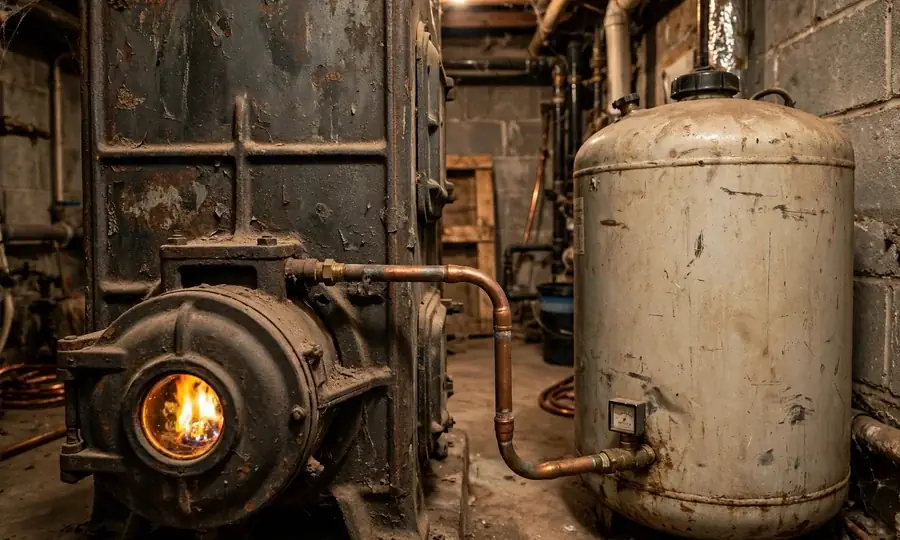
Oil-fired cast-iron boiler with visible burner and copper fuel line running to an indoor oil tank in a Fitchburg basement

The oil fault family

Burner, fuel, and tank — in the order they fail.

  • Worn nozzles and tired electrodes — the classic lockout pair: degraded spray pattern and weak spark, worst after years without service
  • Clogged filters and sludge — sediment in the tank migrates to the filter; low tanks after a delivery stir settled sludge into the line
  • Water in the tank — condensation in half-empty tanks and outdoor tanks; sputtering combustion and repeat lockouts after idle periods
  • Fuel run-outs — the most common winter no-heat in the oil stock; the restart needs line bleeding and a filter change, not just delivery
  • Aging tanks — weeping seams, rust blisters, damp smells: tanks fail from the inside out, and outdoor tanks age faster in freeze-thaw
  • Cold fuel-line issues — lines through unheated spaces thicken fuel flow and starve the burner on the coldest nights
Oil Boiler Repair in Fitchburg, MA

What a proper burner service includes

The annual work that prevents the winter calls.

A real oil-burner service is not a glance and a reset. It replaces the nozzle and oil filter, cleans or replaces the electrodes and sets their gap and position, checks pump pressure, inspects the fuel line from tank to burner, and verifies combustion with instruments — not by eye. On Fitchburg's older stock, where burners have sometimes gone years without attention, the first service in a long time usually finds several worn parts at once; that is normal, and fixing them together is what restores reliable heat.

Timing matters: September and October are the months. A burner serviced before heating season starts will not be the one locking out at 2 AM in January. The national oil boiler repair page describes the service in general terms, and the signs your boiler needs repair guide helps you spot a burner drifting out of tune before it quits.

Oil Boiler Repair in Fitchburg, MA

Tank and fuel-line realities

The half of the oil system nobody sees.

The burner gets the attention, but the tank decides the burner's fate. Indoor basement tanks — the standard in Fitchburg triple-deckers — last a long time when dry and maintained, but they still corrode from the inside out; weeping seams and a damp oil smell around the tank are the warnings. Outdoor tanks face Fitchburg's freeze-thaw directly and age faster, collecting condensation that ends up as water in the fuel.

When you call about an oil problem, have three numbers ready: the tank gauge reading, the tank's approximate age and location (basement or outdoor), and when it was last filled. With those three, triage can tell whether you are looking at a burner fault, a fuel fault, or a tank fault — and a run-out is always reported as a run-out, because the restart is a different visit from a simple delivery.

If the no-heat is happening right now in freezing weather, skip ahead to the emergency page — the line is answered 24/7. And if the block itself is finished rather than the burner, the replacement page walks through fuel choice honestly, including whether gas is even available on your street.

Oil Boiler Repair in Fitchburg, MA

Frequently Asked Questions

Straight answers before you call.

01

What does a full oil-burner service actually include?

A proper burner service replaces the nozzle and oil filter, cleans or replaces the electrodes and sets their gap, checks pump pressure, inspects the fuel line, and verifies combustion with instruments. On Fitchburg's older stock, where burners have sometimes gone years without attention, it also means finding the deferred wear — fouled sensors, tired electrodes, sludge in the line — before it becomes a lockout.

02

How do I know if there is water in my oil tank?

The clues: a burner that locks out after sitting idle, sputtering combustion, or repeated filter clogs. Condensation forms in tanks that are often half-empty, and outdoor tanks are the worst for it. A technician can test for water and draw it off — but if the tank is badly corroded inside, replacement is the honest answer.

03

My tank ran dry. Will a delivery be enough to get heat back?

Usually not by itself. Running dry pulls air and settled sludge into the fuel line and filter, so the burner often needs the line bled and the filter changed before it will fire and stay lit. When you call, say the tank ran dry — the visit is set up as a restart, not a simple delivery handoff.

04

How often should an oil burner be serviced?

Once a year, before heating season. Oil burners are precision instruments — nozzle spray degrades, electrodes wear, filters load up — and a year of Fitchburg winters is enough to take a burner out of tune. The homes with the fewest winter lockouts are the ones that get serviced in September and October.

05

Is my old oil tank safe to keep using?

Tanks fail from the inside out, so age matters: weeping seams, rust blisters, or a damp smell around the tank are warning signs. An indoor tank that has been dry and maintained can last a long time; an outdoor tank in Fitchburg's freeze-thaw cycles ages faster. If you are unsure, ask for a tank assessment on the call.

06

Should I switch from oil to gas instead of repairing?

It depends on whether gas is actually available at your street — many of Fitchburg's oil streets kept oil precisely because the mains never reached them. If gas is available, the replacement page walks through the fuel-choice math honestly, including the cost of running the line. If it is not, a well-maintained oil system is a sound decision.

Related Fitchburg services

The rest of the heating picture.

For gas-heated Fitchburg homes, the gas boiler page covers ignition and flame-sensing faults. A dead burner in freezing weather belongs on the emergency page, and a boiler that runs but misbehaves across fuel types belongs on the diagnosis page. When burner and tank are done, the replacement page covers sizing and fuel choice for Fitchburg housing. The Massachusetts hub has the statewide picture.

Oil burner trouble in Fitchburg?

Call (888) 766-1474 — have your tank gauge reading ready and get connected to a local pro.

☎   Call (888) 766-1474