
/>
NEW HAVEN BOILER SERVICE

Boiler Repair & Diagnosis in New Haven, CT

Diagnosis in New Haven has a coastal accent. Start with the storm: if heat died during or right after a nor'easter, the fault tree looks different — power-flicker lockouts, oil burners that lost prime, wind-pressured vents — than a fault that crept in over weeks. Then the building: shared multifamily systems fail as distribution problems as often as boiler problems, and Fair Haven's oil pockets ask different triage questions than Westville's gas colonials. This page walks through how repair calls actually run here — restart diagnosis after outages, wind effects on venting, multifamily distribution checks — so your call carries useful information from the first sentence.

✓ Storm and outage restart checks✓ Multifamily distribution diagnosis✓ a phone conversation about symptoms

General inquiries: 7 AM–7 PM · Emergency calls: 24/7 · (888) 766-1474

After the lights flicker: restart diagnosis

Outages strand every fuel type.

Here is the thing about power flickers: every modern boiler needs electricity. Gas units need it for ignition, fans, and controls; oil burners need it for the burner motor and the control stack. When the grid blinks during a nor'easter, both fuels strand equally — and the restart is not always clean. Controls lock out on the interruption, oil burners lose prime, and some units sit dead with no fault code at all.

The restart checklist is short: confirm the boiler's circuit is actually live, check the thermostat is calling, try one careful reset, and note any error code or behavior. If the breaker trips again or the unit faults the same way twice, stop resetting and call — repeated resets on a faulted system mask the real problem. Tell the triage there was an outage; post-storm restarts get routed as their own fault family, and a unit dead after a storm is triaged differently than a slow-developing fault.

Boiler Repair in New Haven, CT

Coastal wind and the vent termination

When the weather is the fault.

Sidewall venting is common on New Haven's condensing units, and coastal wind is its nemesis. Gusts pressurize the termination, the pressure switch opens, and the boiler locks out — protecting itself, not broken. The giveaway is the pattern: faults only on the windiest nights, sometimes with a whistle from the termination. Wind-driven snow can also block the intake, which reads as the same fault.

A technician checks termination placement and condition, the pressure-switch tubing, and whether the intake is clear — and whether salt corrosion has eaten the termination itself, which the shoreline streets show early. If your boiler only misbehaves in high wind, say so on the call: it points at venting, not the burner, and it changes what the visit brings.

Boiler Repair in New Haven, CT

One boiler, many apartments: the distribution check

Shared systems fail sideways.

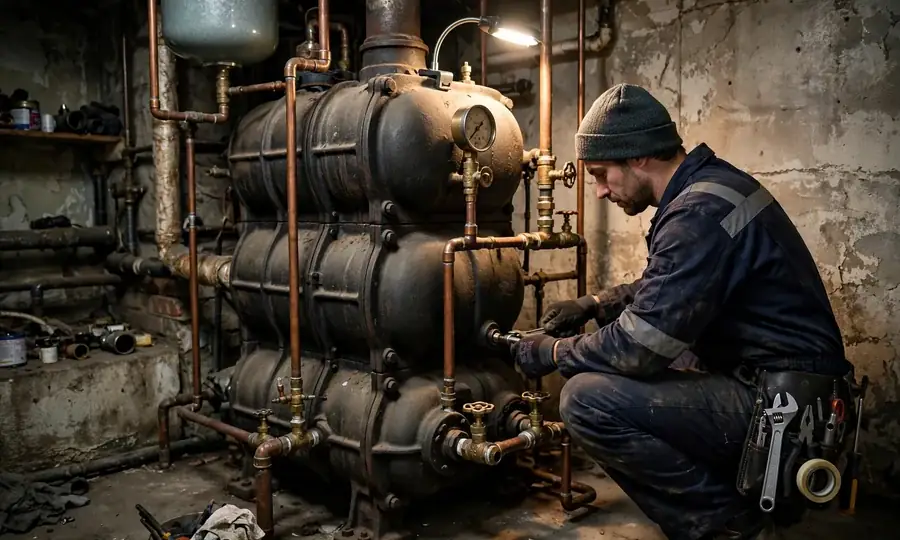
Heating technician servicing a large boiler in a multifamily apartment building basement in New Haven, Connecticut

Much of New Haven's repair work is distribution work wearing a boiler's clothes. In two- and three-family houses and downtown apartment blocks, a single boiler feeds multiple units — and the fault is as often in the delivery as in the heat plant: a stuck zone valve starving one apartment, a weak circulator, air collected at the top of the building, loops never balanced across floors. The boiler fires fine; the heat never arrives.

The useful call describes the pattern per unit: which apartments are cold, which floors, sudden or gradual, and what the boiler display shows. A whole building cold points at the boiler; scattered cold units point at distribution. The hot-water hydronic repair guide covers these systems in general terms, and the Connecticut hub has the statewide picture.

Fair Haven oil: a different set of questions

The oil minority's fault tree.

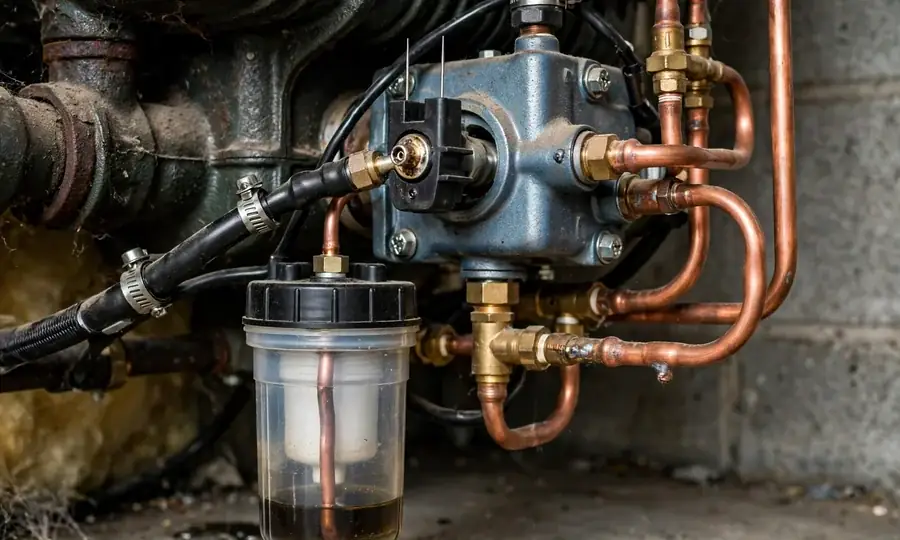
Nozzle condition, filter state, electrode gap, tank level, and whether the burner lost prime in an outage: that is the oil fault tree, and none of it overlaps with gas ignition work.

Soot, delayed ignition, and lockouts that follow outages are the common oil complaints here. If you know you are on oil, say so first — the gas boiler repair page covers the majority's ignition and condensate faults, while the oil boiler repair page covers burner and fuel-supply service in depth.

Boiler Repair in New Haven, CT

New Haven boiler repair services

Related services in the New Haven area.

Storm-dead units go to the emergency page first — no-heat after a nor'easter jumps the queue. Fuel-known callers can skip ahead: the gas boiler page covers ignition, flame, and condensate faults, and the oil boiler page covers burner and fuel-supply work in the oil pockets. A finished block points to the installation and replacement page. Nationally, boiler leak and pressure repair and steam boiler repair cover these fault families in general terms.

Frequently Asked Questions

Straight answers before you call.

01

One wing of our East Rock colonial is cold while the rest of the house is fine. Boiler or something else?

Something else — if the boiler fires and most of the house heats, the burner is doing its job. A cold wing points to a stuck zone valve, air trapped in that loop, or a balancing problem. Check whether that zone's valve opens on a call for heat and report it on the call; distribution fixes are far cheaper than boiler work.

02

My Fair Haven oil burner is original to the house. Is it still serviceable?

Often yes — New Haven's oil pockets hold some of the city's oldest burners, and common designs have long parts support. Nozzles, electrodes, filters, and pumps are routine. What retires a unit is a cracked section or heat-exchanger failure, not age alone. Give the triage the approximate age and the symptoms.

03

The boiler in my Wooster Square three-family runs constantly. Is it undersized?

Maybe — or it is fighting distribution losses, air-bound radiators, or thermostat wars between units. Constant running with the house reaching temperature is just a hardworking boiler; constant running while units stay cold is a problem. Note which units are cold and when you call (888) 766-1474.

04

My Prospect Hill radiators bang when the heat comes on. What is that?

If they are steam radiators, it is usually failed air vents or improper pitch — classic one-pipe steam complaints. If hot water, it is air in the lines or expansion noise. Either way it is distribution-side, fuel-agnostic, and fixable without touching the burner. Describe the bang pattern on the call.

05

The power flickers in every storm and my boiler needs resetting each time. Can that be fixed?

The flickers themselves are the grid's, but the sensitivity can be reduced — control boards dislike brownouts, and repeated hard resets wear on the ignition sequence. A technician can check the control wiring and discuss surge protection. If lockouts after flickers are getting frequent, the controls deserve an assessment.

06

My Westville colonial has a mix of radiators and baseboard from different eras. Does that complicate repairs?

Not really — mixed emitter systems are common in New Haven's older colonials, and each type just needs its own bleeding and balancing approach. The key detail for the triage is which emitters are misbehaving: radiators that stay cold at the top want bleeding, while a cold baseboard run points to flow. Mention the mix when you call (888) 766-1474.

Boiler struggling after the storm?

Call (888) 766-1474 — mention the outage, the building type, and the fuel, and get connected to a local pro for real diagnosis.

☎   Call (888) 766-1474