/>
NEW HAVEN INSTALLATION

Boiler Installation & Replacement in New Haven, CT

Replacing a New Haven boiler means matching the unit to the building: a colonial in East Rock, a two-family in Fair Haven, a downtown apartment block. This page covers the signals that say replace, the sizing math that says what, and the fuel-choice question that says which — so you walk into the conversation informed.

✓ Heat-loss sizing✓ Fuel-choice guidance✓ Multifamily project planning

General inquiries: 7 AM–7 PM · Emergency calls: 24/7 · (888) 766-1474

Replacement signals

When repair stops being the smart money.

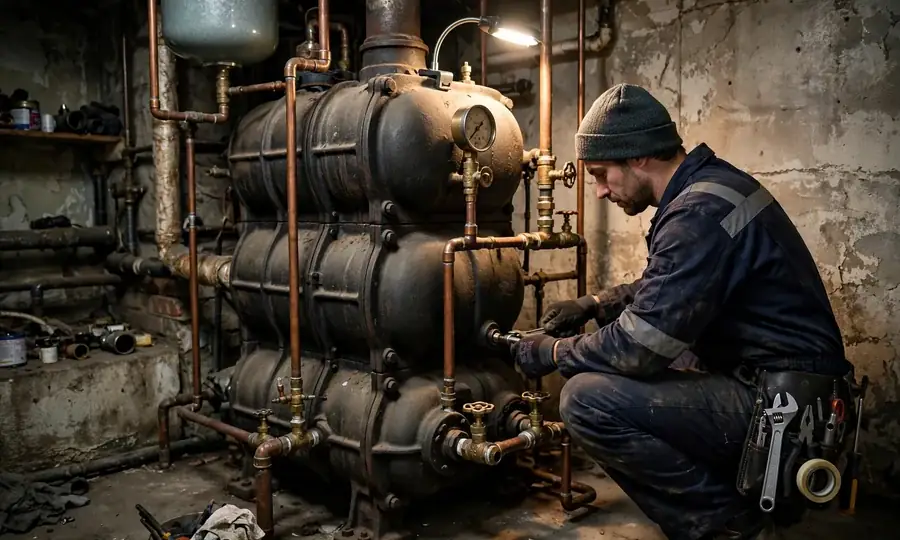
Age alone does not condemn a boiler — the signals that matter are physical. Section weeps or cracks in a cast-iron block: water where it should not be, rust streaks, a block that needs topping up. A burner that needs constant attention: lockouts every few weeks, parts replaced season after season. Efficiency stuck low while fuel bills climb: a unit from the atmospheric era cannot be tuned into a modern one. And parts drying up: when the control or gas valve for your unit is obsolete, every future repair is a gamble.

One signal at a time is a repair. Two or three together is the replacement conversation — and it is better had in October than in January. The signs-your-boiler-may-need-repair guide walks through the full checklist nationally, and the diagnosis page is the place for a second opinion before you commit.

Boiler Installation & Replacement in New Haven, CT

Sizing: the heat-loss math

Bigger is not better — it is worse.

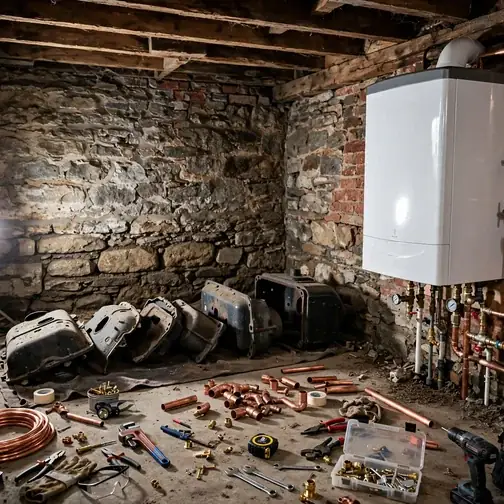
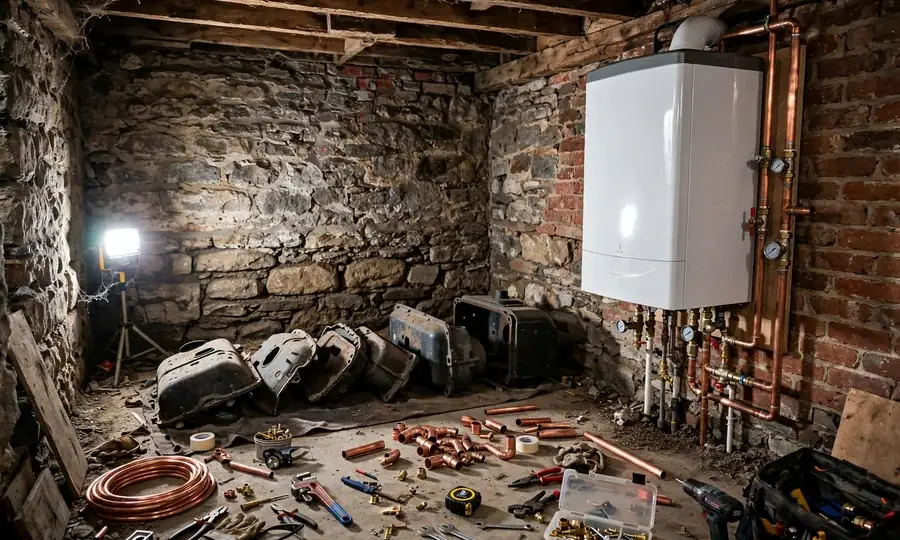
New boiler being installed in a historic New Haven, Connecticut home basement beside the old cast-iron unit

The right boiler size comes from a heat-loss calculation: how much heat the building actually loses on the coldest design day, room by room. New Haven's stock punishes rule-of-thumb sizing in both directions. An East Rock colonial with original windows and minimal insulation loses heat fast — but the radiators were sized for a coal era, so the boiler and the emitters need separate math. A Fair Haven two-family with one boiler and two zones needs the zones balanced against the real loads, not the old unit's nameplate.

An oversized boiler short-cycles — firing in bursts, wearing itself out, and never reaching steady efficiency. An undersized one runs flat-out on the coldest nights and still falls behind. The number on the old boiler's plate is a starting rumor, not an answer: buildings change — insulation added, windows replaced, additions built — and the replacement should be sized to the building as it is today.

Boiler Installation & Replacement in New Haven, CT

Fuel choice in New Haven

Gas where the mains reach, oil where they don't.

For most of New Haven the fuel question answers itself: gas where piped gas serves the building, which is most of the city. Converting from oil to gas means a service line, a meter, and utility coordination — worth pricing against staying oil when the tank and lines are sound. Staying oil makes sense where the mains never reached and the tank has years left; the oil page covers what that commitment looks like, and the gas page covers the majority fuel's replacement angles.

The other choice is system type. New Haven's older stock still holds one-pipe steam systems — and the honest question is whether to keep steam or convert to hot water. Steam keeps the radiators and the simplicity; hot water buys efficiency and zoning. Steam vs. hot-water boilers lays out the trade-offs without a sales pitch, and the national steam boiler repair page covers the steam side of the decision.

Boiler Installation & Replacement in New Haven, CT

Multifamily and landlord projects

Replacing a boiler other people depend on.

In New Haven, replacement often means a building with tenants — a Fair Haven three-family, a downtown apartment block — and that changes the project. Timing matters: shoulder season beats January, and tenants need notice. Access matters: the old block comes out in pieces down the same stairs the new one goes down, and someone needs to be there. Zoning is the opportunity: a replacement is the moment to fix the distribution complaints — the cold third-floor unit, the overheated first floor — with proper zone valves and balancing, covered nationally under hot-water hydronic systems.

If you own the building, the replacement conversation should include the distribution system, not just the boiler — the best new block in the world cannot fix unbalanced loops. Say "multifamily" on the call and the triage routes accordingly. The Connecticut hub has the wider state context.

Boiler Installation & Replacement in New Haven, CT

New Haven installation resources

Related pages before you decide.

Start with the diagnosis page if you are not sure the unit is done — a second opinion on "replace it" is always worth the call. The gas page and oil page cover what each fuel's replacement involves. Nationally, leak and pressure repair explains the water-side faults — expansion tanks, auto-fill valves, weeping fittings — that sometimes masquerade as end-of-life.

Frequently Asked Questions

Straight answers before you call.

01

My East Rock colonial's boiler is 30 years old but runs. Replace now or wait for it to die?

Proactive replacement beats a midwinter failure — you get to plan the venting, choose the unit, and schedule in mild weather instead of paying emergency premiums in January. If the unit is reliable, a consult now lets you plan on your timeline. Call (888) 766-1474 with the age and service history for a straight read.

02

How is a replacement sized for a three-family with one shared boiler?

By a whole-building heat-loss calculation — every unit's exposure, the common areas, and domestic hot-water demand if the boiler makes it. One shared boiler must carry the entire building through design cold. The distribution condition matters too: new capacity cannot fix air-bound or unbalanced loops.

03

Should I replace my steam boiler with a hot-water system?

If the steam distribution is sound — proper pitch, working air vents — a modern steam boiler is the simpler, cheaper job. Converting to hot water means repiping the building. Unless the steam piping is failing, keeping steam usually wins; get an on-site assessment of the distribution before deciding.

04

My Yale-area building needs a new shared boiler. Who decides and how is it planned?

The owner or management company decides and authorizes — this is not a tenant-level project. Multi-unit replacements are best planned off-season with proper sizing, and may need an engineer's input for larger buildings. Start the conversation with a consult call, not a failure.

05

Will a new boiler fix my uneven heat?

Only if the boiler was actually the cause. Uneven heat from air, balancing, or failed zone valves survives a boiler replacement completely intact — the new unit inherits the old distribution complaints. Diagnose the distribution first; replace the boiler for boiler reasons like age, efficiency, or repeated burner failures.

06

How long does a boiler replacement take in a New Haven multifamily building?

Most residential replacements finish in a day or two of on-site work, but multifamily buildings add coordination: tenant notices, parking, and sometimes phased work so no unit goes without heat overnight. The consult call scopes the logistics — mention the building size and access when you call (888) 766-1474.

Planning a replacement in New Haven?

Call (888) 766-1474 — talk through the signals, the sizing, and the fuel choice with someone who has seen New Haven's housing.

☎   Call (888) 766-1474