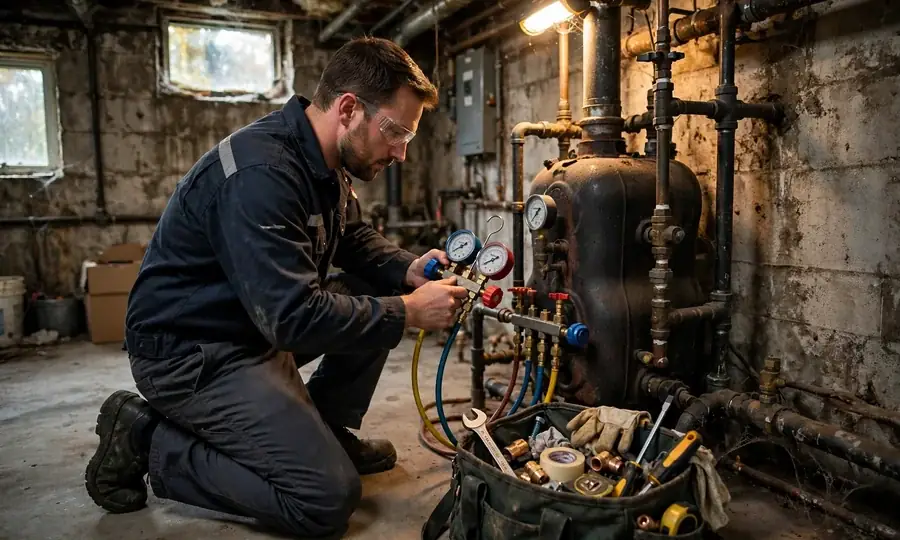
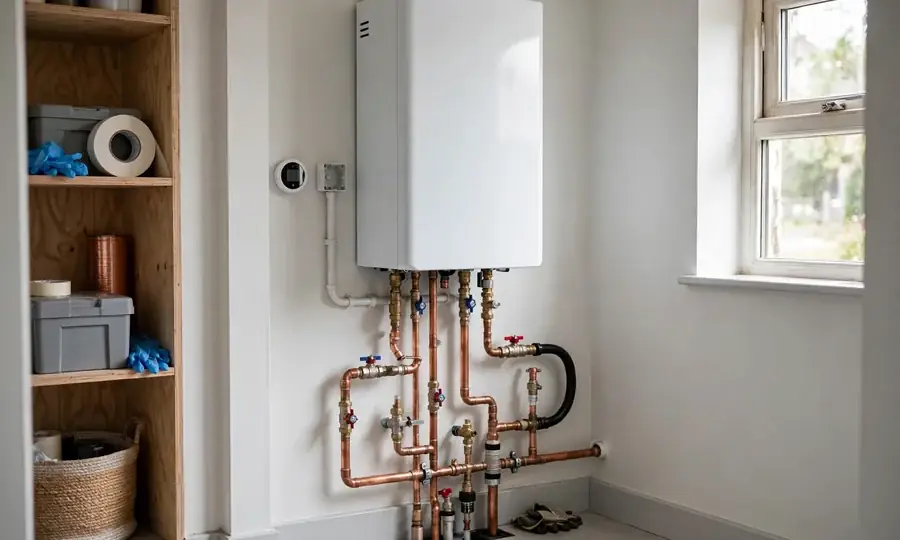
On any Palmyra no-heat or poor-heat call, the gauge gets read before the burner gets touched. Empty or near-empty tanks explain more failures than all burner components combined, and dry-firing damages the nozzle and electrodes — converting a delivery into a repair. Low-but-not-empty tanks explain the subtler failures: sludge pickup, air in the line, starvation on cold mornings. Fuel status isn't a preliminary; it's the first branch of every diagnosis here.
Past the tank, the sequence is standard and non-negotiable: burner components tested, combustion verified, water side measured, distribution checked. The Palmyra heating guide profiles the twin-and-edge housing behind the pattern. A proper diagnosis visit tests the distribution system too, not just the boiler. Across Pennsylvania, these middle-ground diagnosis calls outnumber true emergencies several times over. Across Pennsylvania, these middle-ground diagnosis calls outnumber true emergencies several times over.