
/>
PALMYRA OIL BOILER SERVICE

Oil Boiler Repair in Palmyra, PA

This is the oil page for an oil town. In Palmyra, oil burner service isn't a specialty — it's the core trade, practiced on thousands of near-identical systems: gun burners on cast-iron blocks in twins and older singles, basement tanks of venerable age, and winters that test fuel discipline every January. The faults here are well-mapped because they're well-traveled. This page maps them for the homeowner: burner, tank, fuel, and the winter habits that separate reliable oil heat from January emergencies.

✓ Burner, nozzle & filter faults✓ Tank & gauge checks✓ a phone conversation about symptoms

General inquiries: 7 AM–7 PM · Emergency calls: 24/7 · (888) 766-1474

The Palmyra burner's usual failures

A deep pattern library, itemized.

  • Nozzle wear — the annual consumable — spray patterns degrade on schedule; skipped replacement shows up as soot and rising fuel use
  • Electrode gap drift — erosion widens the gap yearly; rumbling light-offs progress to morning lockouts on a predictable curve
  • Filter and strainer loading — old-tank sludge migrates all winter; the filter is the tank's biography in miniature
  • Cad cell aging — the flame eye dims; false no-flame lockouts on burners firing perfectly well
  • Retention head and blast tube wear — air patterns decay; combustion goes rich and smoky at the edges
  • Primary control fatigue — decades of cycling wear the control itself; intermittent lockouts with no burner cause

Tank stewardship

The borough's oldest tanks need a management plan.

Palmyra's basement tanks skew old — many installed with the burner, some older. Stewardship has four parts: gauge discipline (monthly reads, stick-verified when doubtful), sludge awareness (filter contents tell you the tank's trajectory), corrosion watch (legs, seams, and bottoms in damp basements), and fill-pipe maintenance (clear, visible, iced never). A tank managed this way lasts; a tank ignored fails expensively.

Farm-edge outdoor tanks add weather to the list: sun, frost, and condensation cycling. Their lifespan is shorter and their failure modes more dramatic. The Palmyra heating guide maps where the outdoor tanks cluster; on those streets, tank assessment belongs in every service visit.

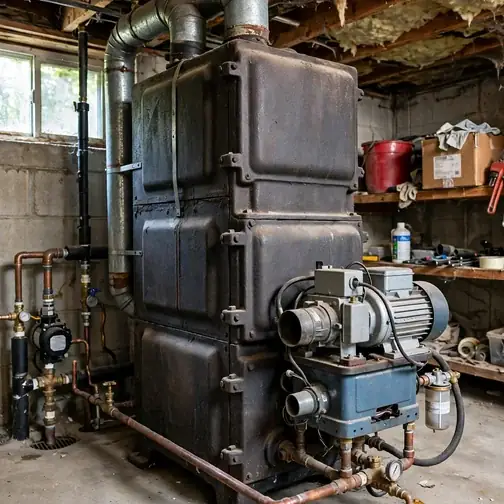
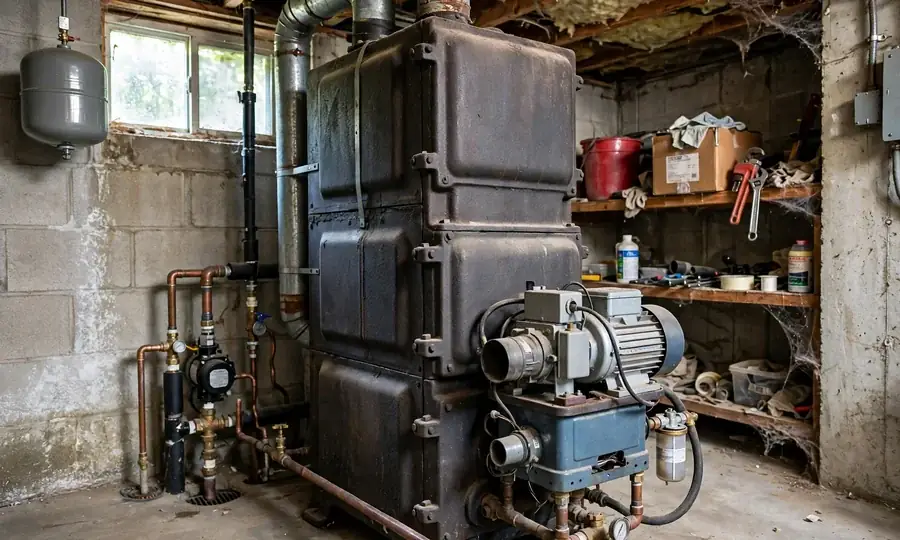
Vintage basement oil tank beside a boiler in Palmyra Pennsylvania
Oil Boiler Repair in Palmyra, PA

The tune as fuel economics

Combustion numbers are money.

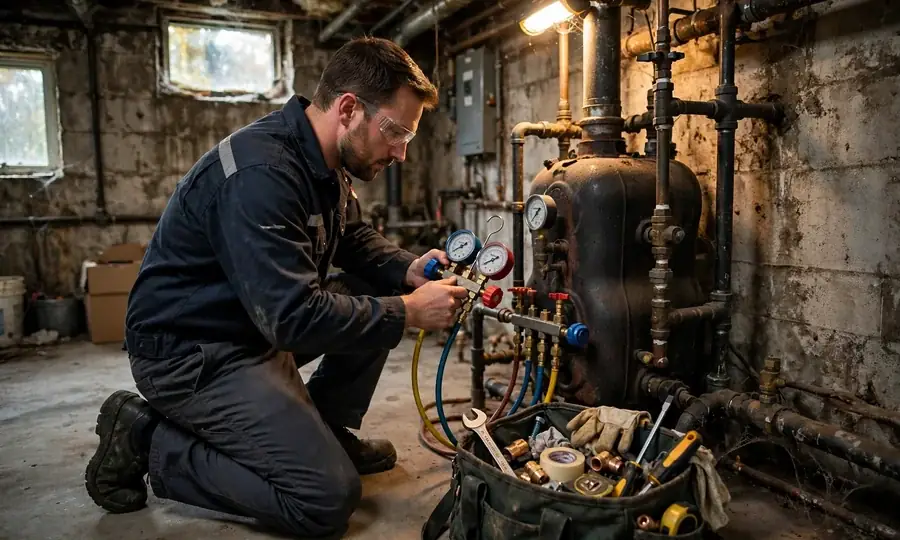
An oil tune's value is measurable in gallons: nozzle, filter, electrodes, chamber cleaning, then combustion tuned to instruments — CO2, smoke number, draft, stack temperature. The before-and-after numbers translate directly to fuel saved per winter. On Palmyra's long heating seasons, the tune's payback is measured in months, not years.

What the tune prevents is equally measurable: the midwinter lockout, the emergency visit, the dry-fired nozzle from a surprise empty tank discovered at midnight. The borough's reliable oil households share one trait — the tune happens every fall, without drama, without skipping.

Oil Boiler Repair in Palmyra, PA

Oil's permanent address in Palmyra

Oil burner problems can involve fuel supply, filters, ignition components and the condition of the tank. Describe your symptoms and system when calling.

Palmyra's oil share isn't a legacy fading out — it's infrastructure: delivery routes optimized over decades, technicians who've serviced the same streets for careers, parts stocked locally because the demand never left. The borough's heating economy runs on oil the way a mill town ran on the mill. Across Pennsylvania, the Lebanon County belt — Lebanon proper, Hummelstown across the line — shares the structure and the service vocabulary.

Converted gas households use the gas page; everyone else, this is home.

Oil Boiler Repair in Palmyra, PA

Frequently Asked Questions

Straight answers before you call.

01

What does a failing oil burner sound like?

Learn the vocabulary: a deep rumble on startup means delayed ignition, a chattering or surging means fuel delivery trouble, and a burner that starts and stops every few minutes is short cycling. Normal is a smooth roar that settles in seconds. If your burner has developed a new sound this winter, describe it when you call — the sound often diagnoses the fault.

02

How do I take care of my oil tank?

Keep it from running dry, keep water out of it, and know its age — those three cover most tank trouble. Indoor basement tanks last decades but still corrode from the inside; outdoor tanks face weather and condensation. A tank that is weeping, blistered, or older than you are deserves a professional look before January, not during it.

03

Does the annual tune-up actually save fuel, or is that a sales pitch?

It saves fuel — a sooted heat exchanger and a worn nozzle burn more oil for the same heat, and the waste is invisible until the delivery bills stack up. The tune is fuel economics disguised as maintenance: nozzle, filter, cleaning, and a combustion test that proves the burner is adjusted right.

04

What gauge reading means order oil now?

A quarter tank in winter — earlier if a cold snap is forecast or your driveway is hard for trucks. The gauge is your fuel gauge the way a car's is: running it to empty is not thrifty, it is a service call, because run-outs stir sludge into everything downstream. Weekly checks from December through February are the Palmyra discipline.

05

Why is there soot around my boiler?

Soot means incomplete combustion — the burner is not getting the fuel-air mix right, usually from a worn nozzle, wrong electrodes, or a draft problem. Some soot inside the unit between annual services is normal; soot puffing into the basement is not. Do not just wipe it and wait — the cause is still burning wrong, and it gets worse.

Palmyra oil boiler services

Related services in the Palmyra area.

Cross-fuel: general diagnosis. Midnight fuel crisis: emergency repair. Converted gas: gas page. Retired block: installation. Nationally: oil boiler repair and the warning-signs guide.

Oil burner trouble in Palmyra?

Call (888) 766-1474 — gauge reading first, then the symptom.

☎   Call (888) 766-1474