LITITZ BOILER SERVICE

Boiler Repair & Diagnosis in Lititz, PA

A boiler that misbehaves is talking to you, and in Lititz it speaks three languages — sounds, gauges, and smells. Downtown gas units in low stone cellars murmur about ignition and draft; township oil and propane burners complain through the fuel supply; sealed subdivision systems show their trouble on the pressure gauge weeks before they quit. This page teaches you to read those signals the way a technician does, so your call carries useful detail and the visit starts with testing instead of guessing.

✓ Testing before parts✓ Gas, oil & propane triage✓ a phone conversation about symptoms

General inquiries: 7 AM-7 PM · Emergency calls: 24/7 · (888) 766-1474

Read it with your senses

Sounds first, then gauges, then smells.

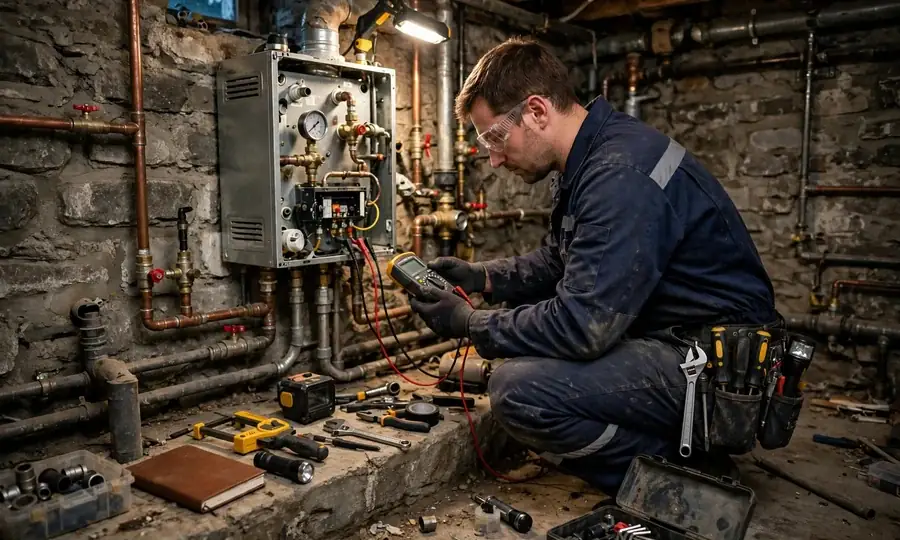
Technician testing a residential boiler with a multimeter in a Lititz basement

Start with your ears, because the unit’s noises are the earliest warning you get. Kettling — a rumbling like a kettle coming to a boil — means scale is building inside the heat exchanger and the water is flashing to steam where it should not. Banging radiators on a one-pipe steam system mean dead air vents, not a dying boiler. Short-cycling — firing for minutes, then quitting, then firing again — means flame-sensing trouble on gas or a starved burner on oil and propane. And a circulator that has gone noisy overnight is telling you its bearings are done.

Then look at the gauge, cold, before the system has fired. Twelve to fifteen psi is the healthy baseline for a sealed system, and one reading matters less than the trend: a needle that ends every month lower than the last is pointing at the expansion tank, the auto-fill/feed valve, or a fitting that weeps only when the system is hot. While you are looking, scan for the other visual evidence — a drip pipe under the boiler feeding a bucket, fresh soot around the burner door, a zone valve whose lever no longer moves.

Smell is the sense homeowners use least and should use most. An oil smell around the tank or the burner means a fuel-side problem — fittings, lines, the tank itself — and it is not a burner fault at all; the nose gets there before the meter does. A musty cellar that has stayed damp for months is the other signal: stone foundations wick moisture, and decades of it corrode ignition components and wiring until faults start tracking the weather.

One symptom, three different causes

Why the fuel question comes first.

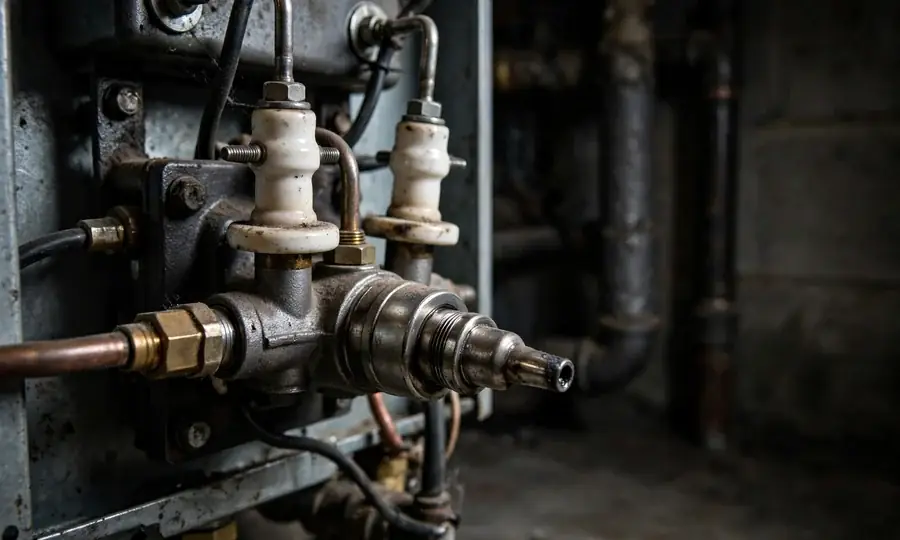
No heat, downtown Lititz, atmospheric gas unit in a stone cellar: the ignition train is the suspect — a flame sensor that reads weakly after a humid summer locks the unit out on the first real cold snap, and the fix is at the burner controls. No heat, Warwick Township lane, oil burner: the tank gauge reads low, the filter has not been touched since spring, and the burner is starving — the fix starts at the tank, not the boiler.

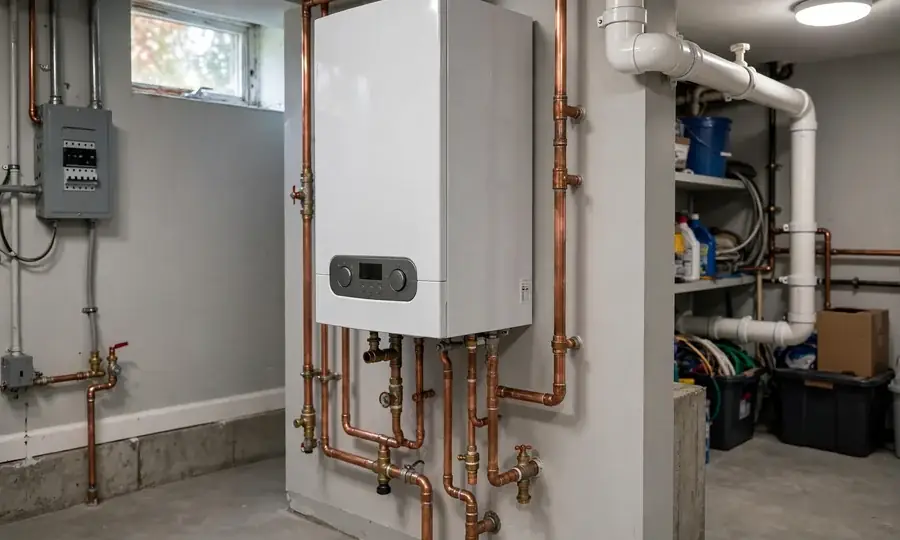
No heat, newer subdivision, sealed gas system: the gauge has been drifting below 12 psi cold for months, the expansion tank is waterlogged, and the low-pressure cutout has finally called a halt. Three identical symptoms, three different first tests, and each one wastes the other two’s visit. That is why the fuel type and the gauge reading open the call: they pick the fault family before the technician loads the truck.

Boiler Repair in Lititz, PA

Five minutes before you pick up the phone

The intake in five facts.

Read the gauge cold and note the number — and whether it has been drifting. Know your fuel, and on oil or propane read the tank percentage. Write down the symptom’s story: when it started, whether it follows the weather, what the unit sounds like, what you have already tried. Photograph the data plate if you can reach it safely, and note the headroom and the stairs of the cellar, because low stone cellars shape the visit before the boiler does.

That is the whole intake in five facts, and calls that open with them move faster than calls that open with “it just stopped working.” The pattern matters more than any single reading — weather-tracking faults, weekend-only lockouts, pressure that only drops when the system runs hard — so bring the history, not just the symptom.

Boiler Repair in Lititz, PA

What “testing before parts” actually means

Reproduce, isolate, confirm.

A proper visit is not a parts list; it is a sequence of questions the technician asks the system. First, reproduce: make the unit show the fault on the visit, because a fault that cannot be seen is a guess waiting to be sold. Then isolate: does the burner fail on its own, or only when the water side is calling for heat? Is the pressure loss the expansion tank, the feed valve, or a fitting? A meter on the flame sensor settles ignition; a pump and a gauge settle the expansion tank; a temperature reading across the radiators settles distribution.

Only after a test has named the fault does any part get discussed — what failed, why it failed, and what the options are. That is the standard; accept nothing less. If you are unsure whether what you are seeing counts as urgent, the signs your boiler needs repair guide helps sort routine from urgent.

Boiler Repair in Lititz, PA

Frequently Asked Questions

Straight answers before you call.

01

The gauge climbs when the system gets hot. Is that normal?

A small rise is normal — water expands as it heats — but a gauge that climbs sharply means the expansion tank has failed and the expanded water has nowhere to go. That is one of the most common repairs on systems around eight to fifteen years old. It will not fix itself, and the relief valve will start dumping water each cycle until it is addressed.

02

I smell oil near the tank but the boiler runs fine. Does that need a visit?

Yes — an oil odor with a running boiler often means a weeping fitting, a sweating tank seam, or a filter housing starting to fail, and “runs fine” does not mean “safe.” Ventilate the area and schedule a visit promptly. On the township lanes where tanks sit for decades, smells are the early warning system; do not wait for a visible leak.

03

Where do I find my boiler's make and model?

On the nameplate — a metal tag or sticker on the boiler jacket, usually on the front or side, listing the manufacturer, model, and serial number. On older units it may be under a layer of dust or behind a removable panel. Having it ready when you call lets triage check parts availability before the tech rolls, which matters for the older oil units on the township lanes.

04

Radiators are hot upstairs but cold downstairs. Is the boiler the problem?

Probably not — heat rising past the downstairs radiators points to air trapped in the lower loop, a zone valve not opening, or a circulator too weak to push water down and around. If the boiler fires normally, the fault is distribution. In Lititz's stone-cellared downtown homes, the downstairs loop runs through the coldest part of the house, which makes airlocks more likely there.

05

The little pipe under the boiler is dripping. What should I do?

That is usually the relief valve's discharge pipe, and dripping means the valve is doing its job — releasing pressure the system cannot contain, most often because the expansion tank failed. Put a bucket under it and do not cap or plug the pipe, ever. Then schedule a visit: the dripping is a symptom, and the failed tank behind it needs replacing.

06

My boiler is dead and it is 15 degrees out. Should I call now or wait for morning?

Call now — at 15 degrees, pipes in exterior walls and unheated spaces start freezing within hours, and a dead boiler overnight is how freeze damage happens. While you wait, open cabinet doors under sinks on outside walls and let faucets drip. No-heat at 15 degrees is triaged as an emergency; do not gamble the plumbing to save a call.

Related Lititz boiler services

Where to go next from a diagnosis.

If testing points at the ignition train, the gas boiler page takes that fault family further — flame sensing, draft, and condensate behavior on the borough’s gas units — while the oil boiler page follows the township fault line: tank, filter, nozzle, electrodes. A unit that is dead when it is freezing belongs on the emergency page rather than here, and a block that testing has condemned moves to the installation and replacement page. The national boiler leak and pressure repair and hot-water hydronic repair guides cover the same fault families in general terms.

Lititz boiler acting up?

Call (888) 766-1474 — lead with your fuel type and what you heard, saw, or smelled, and get real diagnosis from a local pro.

Call (888) 766-1474