LITITZ INSTALLATION SERVICE

Boiler Installation & Replacement in Lititz, PA

Replacing a boiler in Lititz is a sizing and fuel-choice decision shaped by the house: stone colonials with thermal mass downtown, tighter subdivisions in Warwick Township, and farm lanes beyond the gas mains choosing between oil and propane. This page covers the honest replacement signals, how proper sizing works, and which fuel fits where.

✓ Heat-loss sizing✓ Gas, oil & propane options✓ a phone conversation about symptoms

General inquiries: 7 AM-7 PM · Emergency calls: 24/7 · (888) 766-1474

Replacement signals in Lititz homes

Repair or replace — the honest dividing line.

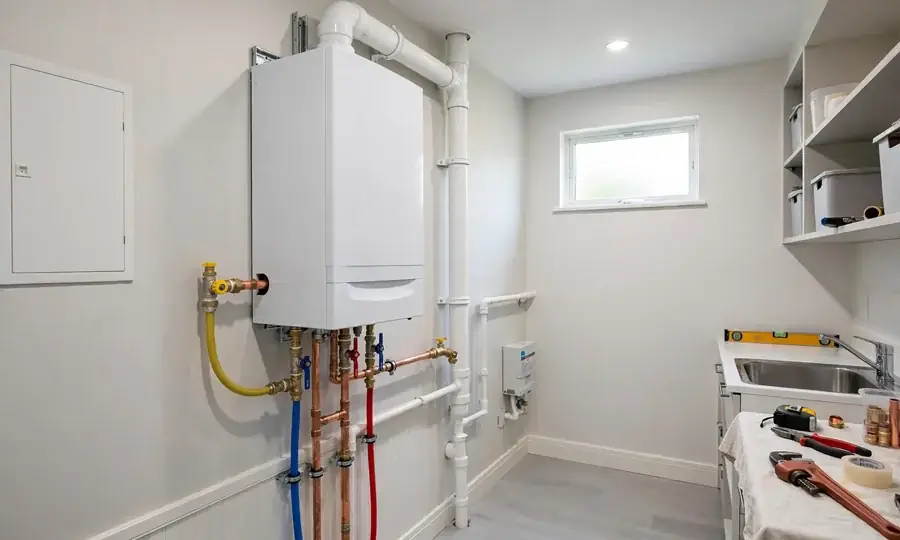
New boiler installation in progress in a Lititz utility room

One failed component on a sound block is a repair. A failing block with good components around it is a replacement. In Lititz the signals look like this: sections that weep or crack on downtown cast-iron units — water where it should never be; a burner that needs constant attention to stay lit, on oil or gas; parts that no longer exist for 30-plus-year atmospheric units in stone cellars; and efficiency stuck in the 70s while fuel bills climb year over year.

Age alone is not the signal. A 25-year-old cast-iron block with a sound heat exchanger and available parts can be the right repair; a 15-year-old unit with a cracked section is done regardless of its birthday. Diagnosis before dollars — the repair page covers how testing sorts this out.

Sizing for stone colonials and subdivisions

Smaller than most people guess.

Proper sizing comes from a heat-loss calculation on your actual house — insulation, windows, air leakage, and Lititz design temperatures — not from the old unit's rating plate or square footage. This matters doubly in Lititz: downtown stone colonials have enormous thermal mass but leaky old envelopes, while township subdivisions are tighter but vary wildly by era. Oversized boilers short-cycle, wasting fuel and wearing components; the installer should show the math, not just match the old size.

Existing radiation usually stays. Cast-iron radiators and baseboard outlast several boilers and often pair fine with a modern unit — sometimes running lower water temperatures, which condensing units love. Steam is the exception: a steam boiler must be replaced with steam, sized to the connected radiation, full stop. The steam vs. hot-water guide explains why.

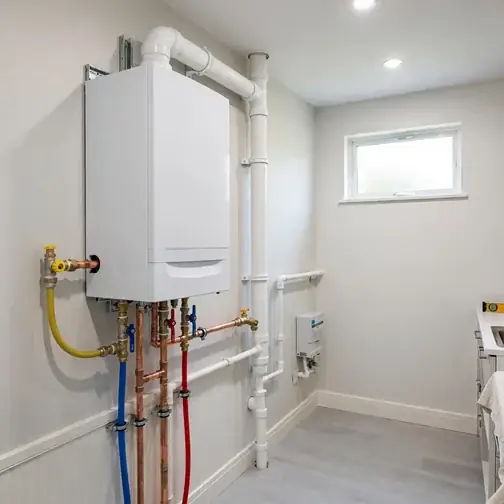
Installation in Lititz, PA

Fuel choice: borough vs. township

Where you are decides what is on the table.

Downtown Lititz: piped gas is at the curb, so gas replacement is the default — atmospheric or condensing depending on the house and budget. Oil-to-gas conversions happen here but need a service run from the main; get that scoped before committing.

Warwick Township and the farm lanes: the question is oil vs. propane where gas mains stop. Oil usually wins on heat per dollar but demands annual burner service and tank management; propane burns cleaner with less maintenance but costs more per unit of heat in most years. And where gas does reach a subdivision, condensing gas is the efficiency play — provided the condensate drain is routed where January cannot freeze it.

No universal right answer — it depends on the house, the lanes, and the existing equipment. Call and describe your setup for a straight read.

Installation in Lititz, PA

What a good installation includes

The scope questions to ask.

  • Heat-loss calculation — shown to you, not just claimed; the basis for every sizing decision
  • Chimney/flue verification — old stone chimneys and new venting have different requirements; liner condition checked, not assumed
  • Water-side cleanup — expansion tank, auto-fill valve, and air elimination addressed, not just the block swapped
  • Control setup — outdoor reset configured for the house, not left at factory defaults
  • Tank handling on conversions — old oil tanks pumped out and decommissioned or removed to code, in the written scope
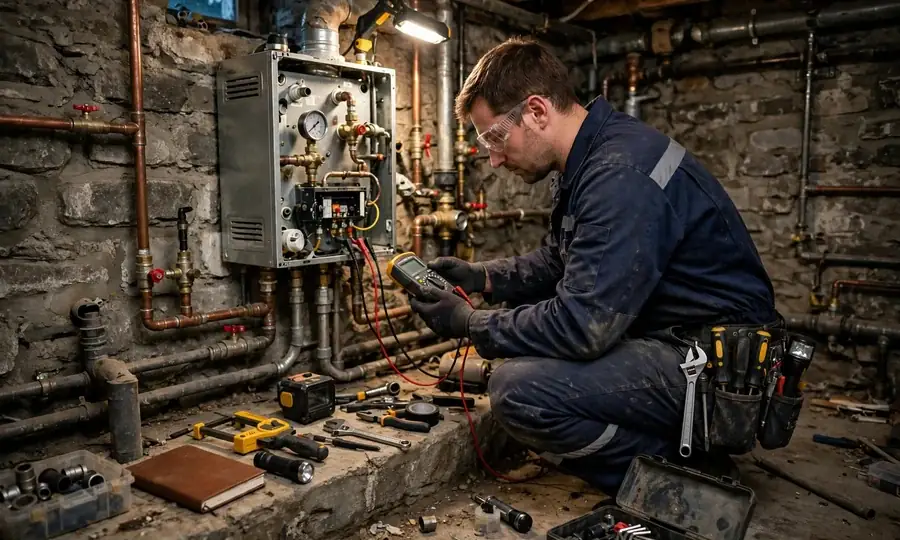
  • Startup and walkthrough — combustion set up with instruments, and you shown how the system runs before the tech leaves

Frequently Asked Questions

Straight answers before you call.

01

How do I know my boiler needs replacing rather than repair?

The block is the verdict: weeping or cracked cast-iron sections cannot be reliably repaired, and that ends the discussion. Short of that, weigh the burner's health and the repair pattern — constant attention, hard-to-find parts, and efficiency stuck low point toward replacement. One visit with a block inspection and combustion test gives you the honest answer.

02

Should I switch fuel when I replace — oil to gas, or propane to oil?

Only switch toward a fuel that is actually available and makes sense at your location: gas where the mains reach, and think twice about switching away from a fuel with working infrastructure. The equipment cost of the switch is real — new burner or boiler, venting changes, tank decommissioning. Do not let the replacement become two projects when one would do.

03

What size boiler does my home need?

Whatever a heat-loss calculation says — measured rooms, insulation, windows, and installed radiation, not the old boiler's nameplate. Lititz's housing ranges from downtown stone colonials to township farmhouses, and the right size varies enormously. An oversized boiler short-cycles for 25 years; a proper calculation is the most valuable hour of the whole project.

04

Can a new boiler use my existing radiators?

Yes — cast-iron radiators outlast boilers by decades and pair fine with any modern unit. The replacement changes the boiler, burner, and near-boiler piping; the radiators stay. In the downtown stone homes, keeping the radiators preserves the slow, even heat that suits thermal-mass construction.

05

What happens to my oil tank on a conversion?

It must be properly decommissioned — cleaned and removed, or cleaned and filled in place where removal is not practical, per local requirements. An abandoned tank with residual oil is a liability, especially the old buried ones on township lanes. Decommissioning is part of a legitimate conversion quote, not an add-on to discover later.

Lititz installation services

Related services in the Lititz area.

If the current unit might still have life in it, start with the diagnosis page instead of assuming replacement. A dead unit on a freezing night goes to the emergency page. For fuel-specific fault detail, see gas boiler repair and oil boiler repair. Nationally, hot-water hydronic repair covers the water-side work that surrounds every installation.

Thinking about replacing your Lititz boiler?

Call (888) 766-1474 — describe the unit's age and symptoms and get connected to a local pro.

Call (888) 766-1474