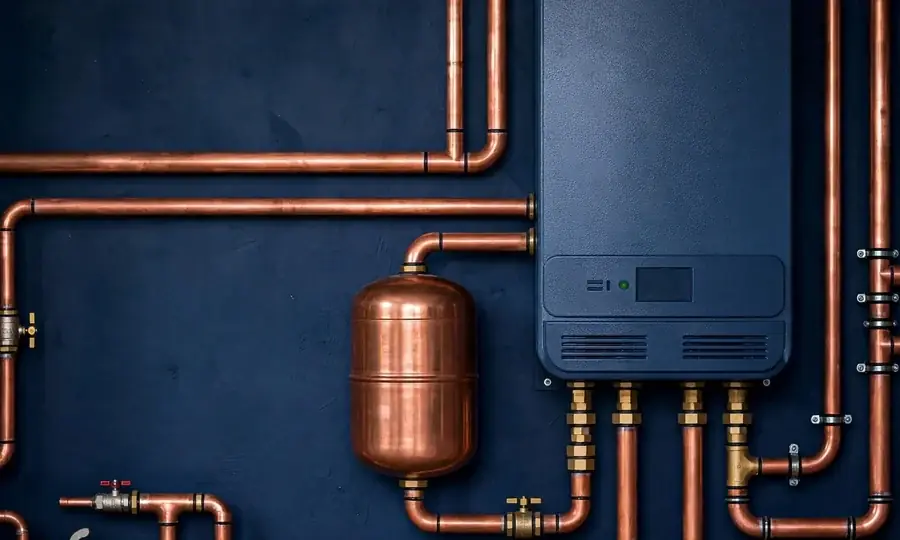
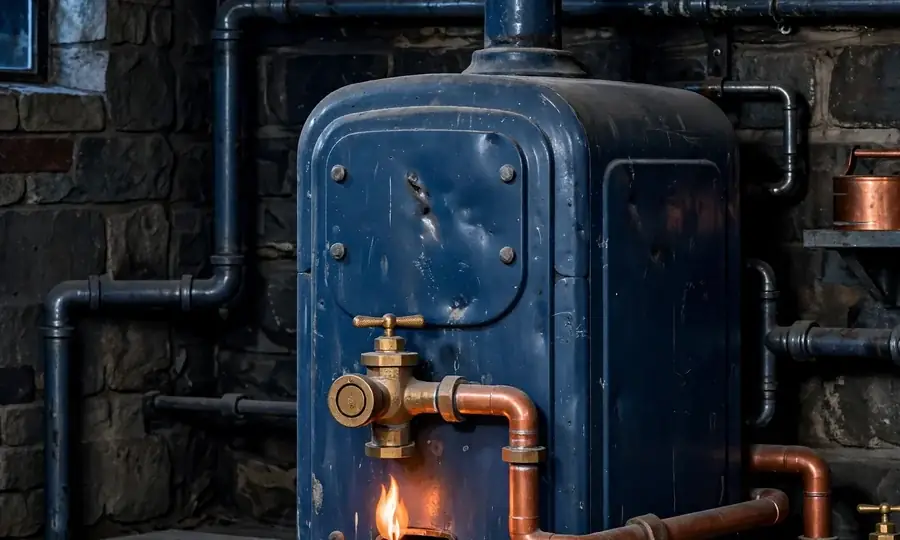
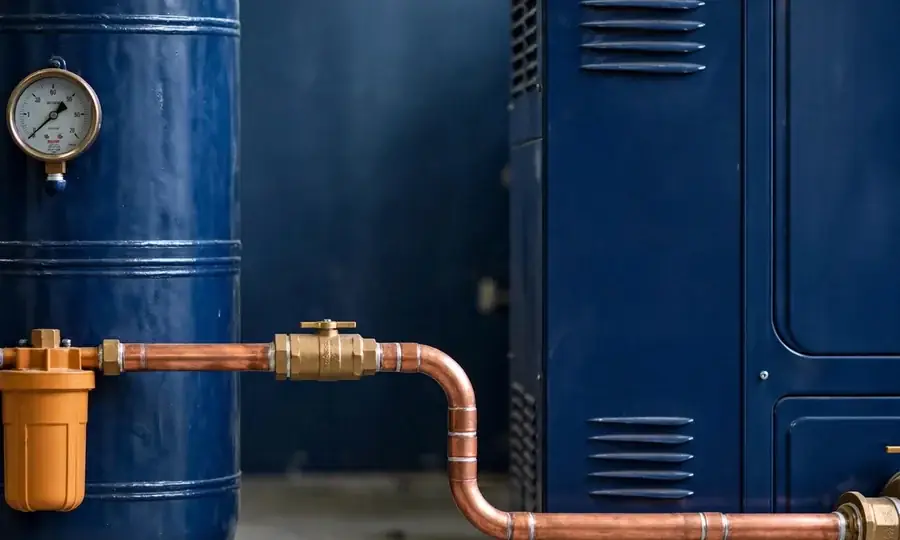
A standard replacement runs a predictable sequence: the old unit comes out of the tight basement (access planning matters in the rail-era houses), the new boiler goes in on a sensible footprint, and the near-boiler piping gets redone — feed valve, expansion tank, air elimination, and zone controls are part of a real install, not extras. Then startup: firing rate set, combustion checked, and the system balanced so every radiator or baseboard loop actually heats.
Expect the crew to spend real time on venting and condensate: a condensing gas unit needs a freeze-proof drain route and venting run to spec, and any unit using the old masonry chimney needs that chimney evaluated for a liner. If your replacement conversation started from a repair visit, the findings from our diagnosis page carry straight over — the same pros, the same system knowledge.