
/>
LANGHORNE BOILER INSTALLATION

Boiler Installation & Replacement in Langhorne, PA

Replacing a boiler in a stone colonial is a different engineering exercise from replacing one in a Manor ranch — and Langhorne contains both, sometimes on the same street. The colonial needs sizing that respects thermal mass, venting that respects a two-century-old chimney, and fuel logic that respects main availability. The ranch needs none of that and all of the standard discipline. This page works through the replacement decision for both Langhorne housing eras: when the old unit is done, and what should follow it.

✓ Honest repair-vs-replace math✓ Sizing for stone colonials✓ a phone conversation about symptoms

General inquiries: 7 AM–7 PM · Emergency calls: 24/7 · (888) 766-1474

When a colonial block retires

The signals that end the repair era.

  • Section weeping or cracking — cast iron's terminal diagnosis; no part, no sealant, no appeal
  • Annual burner crises — when every winter brings a multi-visit saga, the repair line has crossed the replacement line
  • Efficiency marooned low — tuned, cleaned, combustion-verified, still in the 70s; the fuel surcharge is structural
  • Parts archaeology — the search ends at 'no longer manufactured' with no substitute; the unit is unrepairable by definition
  • Chimney-block mismatch — the venting the block needs no longer exists or can't be remediated sanely
  • Conversion-exhaustion — a twice-converted unit whose seams all fail at once; the layers have collectively retired

Sizing for mass and suburb

Colonials size by mass; ranches size by load.

Colonial sizing must account for thermal mass: the heat-loss calculation still rules, but the control strategy matters as much as the capacity — long, steady burns that charge the stone, not short bursts that fight it. Oversizing is the classic colonial error, and it punishes twice: short-cycling wears the new unit, and the mass never charges properly.

Manor and Valley sizing is conventional: room-by-room heat loss on the current house, equipment matched to the number, no mass effects to model. Fuel follows the street — gas in the suburbs, oil-or-gas in the borough by main access. Steam stays steam; the steam vs. hot-water comparison explains the economics. Levittown and Morrisville present the same dual-era sizing challenge.

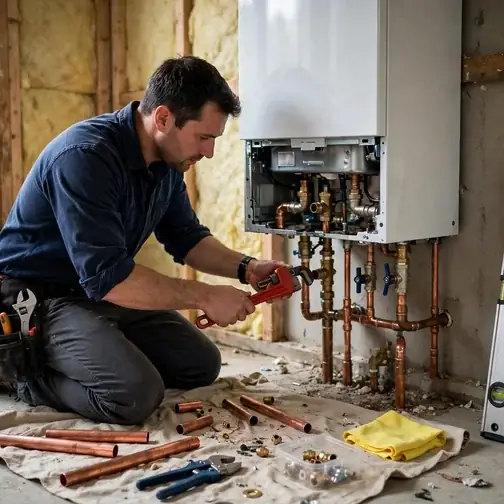
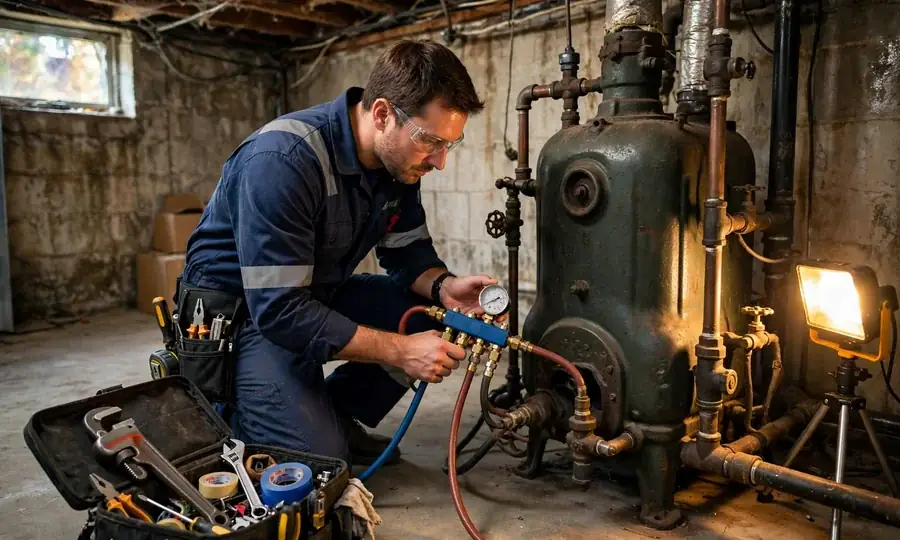
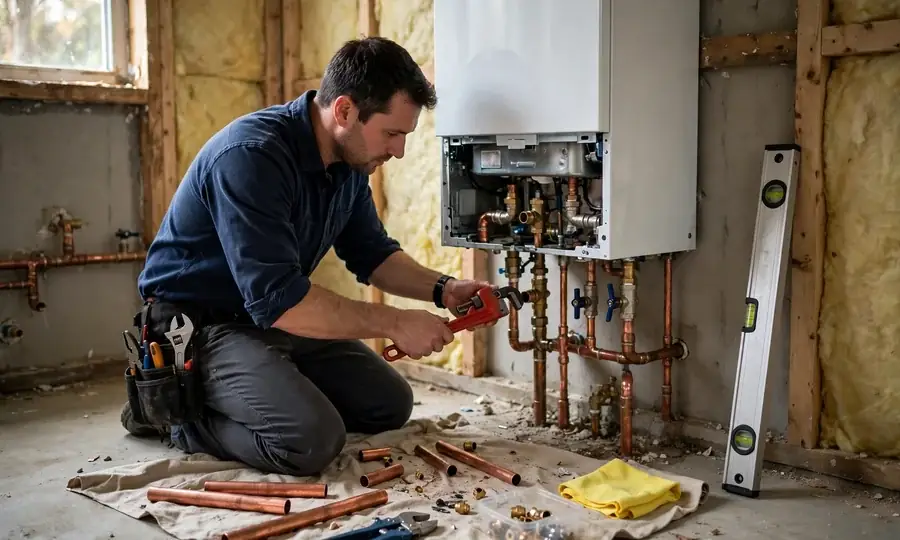
Boiler replacement planning in a Langhorne Pennsylvania stone colonial
Boiler Installation in Langhorne, PA

The colonial installation problem set

What makes these replacements genuinely difficult.

Access: boilers enter colonial basements in pieces or not at all — measure the stairs, the doorways, and the turns before specifying equipment. Venting: the chimney's condition determines the equipment choice as much as the load does; liner remediation or direct-vent alternatives belong in the plan, not as change orders. Distribution: century-old piping and radiators need assessment — the new block inherits all of it. Commissioning: combustion tuned with instruments, controls set for long mass-friendly cycles, every zone proven.

Suburban installations skip the archaeology but keep the discipline: heat loss, proper near-boiler piping, instrumented commissioning. The Langhorne heating guide profiles both housing eras; across Pennsylvania the installation sequence is constant.

Boiler Installation in Langhorne, PA

The replacement that disappoints

How good equipment produces bad outcomes.

The disappointed replacement is almost never the boiler's fault. It is the oversized unit short-cycling against stone mass. The distribution never assessed — unbalanced radiators, dead zone valves — inherited silently. The chimney never inspected, producing draft faults on the new unit by February. The controls left on factory defaults, fighting the thermal mass instead of working with it.

Each failure is a skipped step, and each skipped step was visible before the contract was signed. If rooms were ever the complaint rather than the boiler, the diagnosis page earns its visit first. The order — condemn on evidence, verify distribution, size to the house, commission with instruments — is what twenty-year installations are made of.

Boiler Installation in Langhorne, PA

Frequently Asked Questions

Straight answers before you call.

01

My colonial's boiler is 40 years old. Must it be replaced, or can it be rebuilt?

The block decides: if the cast-iron sections are sound, a 40-year-old boiler can often be kept alive with a rebuilt burner and new controls. But a weeping or cracked block is the end — sections cannot be reliably repaired, and money spent around a dying block is wasted. A tech can tell which you have in one visit by inspecting the block and firing the burner.

02

Can I convert from oil to gas in the borough?

If a gas main runs on your street — most of the borough has one, but verify — conversion is straightforward: a gas burner or new gas boiler, proper venting, and a chimney liner for the old stone flue. The oil tank must be properly decommissioned or removed. The liner is the part conversions skip most often, and it is the part that causes problems five years later.

03

Will a new boiler fit in my six-foot basement?

Usually yes, but dimensions drive the equipment choice in Langhorne more than anywhere — wall-hung condensing units solve tight clearances where a floor-standing cast-iron unit will not fit or cannot be carried down the stairs. The tech needs to see the basement before recommending a model. Measure the stairwell and ceiling height before the quote visit.

04

Should I keep my cast-iron radiators with a new boiler?

Yes — the radiators are the durable part of a colonial heating system and pair well with any modern boiler. Replacement is about the boiler, burner, and near-boiler piping; the radiators stay unless they are damaged. Keeping them also preserves the even, comfortable heat that makes these old systems pleasant to live with.

05

What time of year is best to replace a boiler in Langhorne?

Late summer into fall — you are not competing with no-heat emergencies for scheduling, and the new system is tested before the first cold snap. Replacing in January means doing it under pressure, often after the old unit has already failed. If your boiler is limping through spring, plan the replacement for September, not December.

Langhorne boiler installation services

Related services in the Langhorne area.

Undecided: diagnosis proves the block's status. End-of-life imitators: gas and oil fault pages. Midwinter failure: emergency repair. Nationally: installation and replacement and how it works.

Thinking about a new boiler in Langhorne?

Call (888) 766-1474 — talk through the colonial-specific variables with triage first.

☎   Call (888) 766-1474