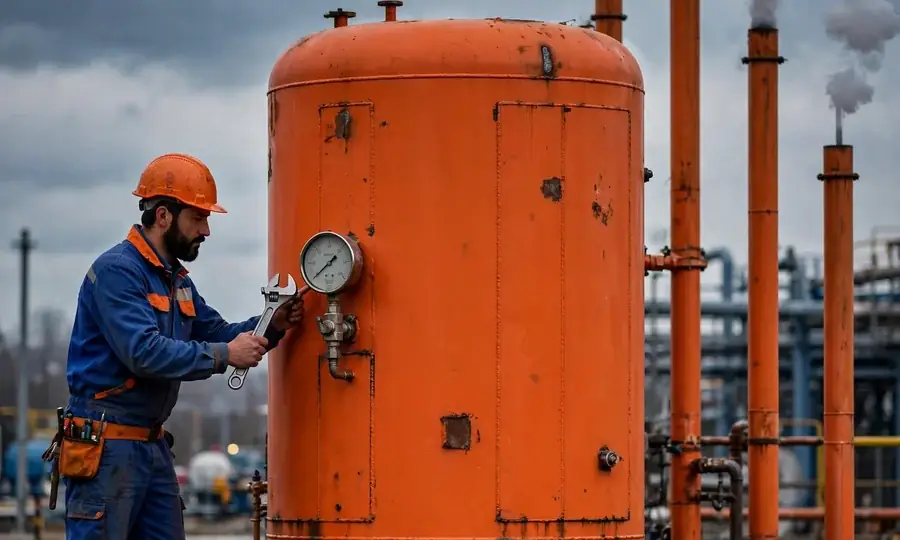
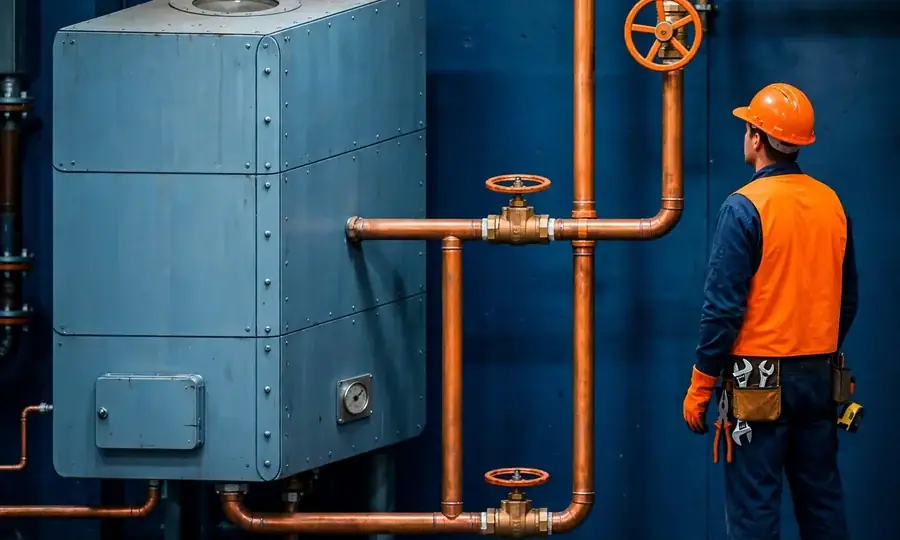
The visit starts where the triage left off. On a gas plant the tech checks flame rectification signal, igniter condition, and gas valve operation with instruments — not by swapping parts. On oil, it is nozzle spray, electrode gap, and cad-cell flame sighting, plus the filter and fuel line. On steam distribution — including district-steam buildings — trap testing, radiator venting, and condensate return condition come first, because half of all “boiler” complaints in high-rises are distribution problems. On hot-water plants, the expansion tank charge and the feed valve get checked against the gauge reading: a plant that keeps losing pressure has a leak or a waterlogged tank, and topping it up without finding the cause just buys days.
Findings are explained to the super, manager, or board contact before any work is authorized — what failed, what it costs to fix, and what the rest of the plant’s condition suggests. That is the whole point of diagnosis-first repair: the building decides with the facts in front of it. For background on warning signs, see our signs your boiler needs repair guide.