



STAMFORD INSTALLATION

Boiler Installation & Replacement in Stamford, CT

Replacing a Stamford boiler means navigating the city's split personality: HOA approvals and tight closets for townhouse unit boilers, heat-loss sizing for single-family homes, and the tank question for North Stamford oil. Here is how to plan it — and what to ask before anyone signs anything.

✓ Heat-loss sizing✓ HOA coordination✓ Confirm coverage by ZIP

General inquiries: 7 AM–7 PM · Emergency calls: 24/7 · (888) 766-1474

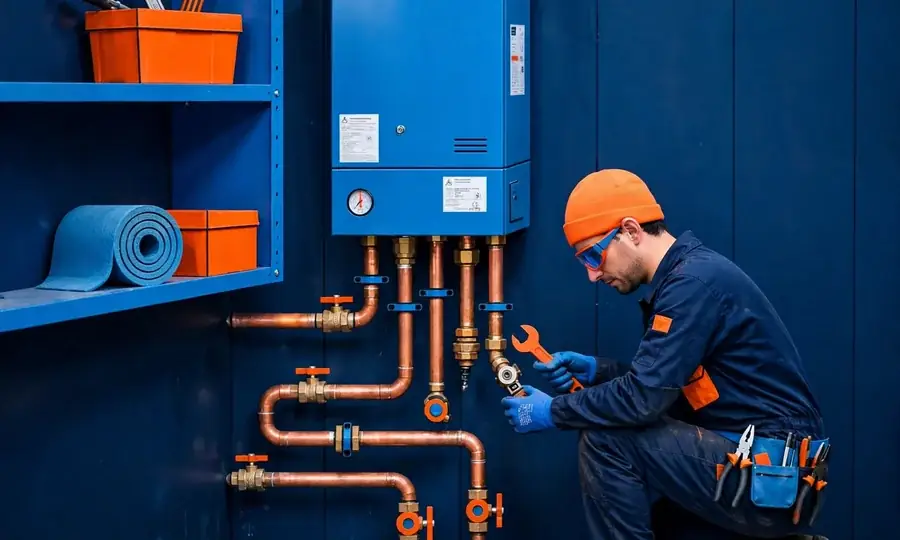
a technician installing a new boiler

Unit boilers: the HOA project

Replacing a boiler you own inside a building you share.

Townhouse condo unit boilers are the owner's system — but replacing one runs through the HOA. Start there, before the boiler forces the timeline: submit the equipment specs, the venting plan, and the work schedule for approval. Like-for-like replacements (same fuel, same venting path) clear fastest; fuel changes or new venting penetrations take longer and sometimes require an engineer letter.

Logistics matter as much as equipment: elevator booking for the old unit out and the new unit in, parking for the install crew, work-hour windows (many buildings restrict noisy work to mid-day weekdays). A good installer has done HOA jobs before — ask for specifics, not reassurances.

Boiler Installation & Replacement in Stamford, CT

Right-sizing for single-family Stamford

The old boiler is lying to you.

North Stamford colonials and the older Glenbrook/Springdale stock carry boilers sized by the "bigger is safer" era — often twice the home's actual heat loss. The right size comes from a heat-loss calculation — room by room, accounting for the actual envelope — and it is almost always smaller than what is sitting there now.

Smaller runs longer cycles, which is what hydronic heat wants: steady, even warmth instead of short bursts. On oil-to-oil replacements, right-sizing also means a smaller burner firing less often — less wear, less fuel, fewer January surprises. Our national boiler installation page covers the full replacement process; the Stamford single-family version is straightforward sizing done right.

Boiler Installation & Replacement in Stamford, CT

The North Stamford fuel question

Oil-to-oil, or oil-to-gas?

North Stamford's oil homes face the fuel question at every replacement. The honest answer is geographic: if the gas main reaches your street, conversion is a real option — some North Stamford streets have gas, some do not. Where it works, plan it as one project: service line and meter from the utility, new gas boiler, venting, permits, and the old oil tank properly closed.

Where gas is not available, modern oil boilers are the right answer — efficient, reliable, and a direct swap onto the existing distribution. Do not let anyone sell the fuel switch as a small add-on: it is a project with a project price, quoted in writing after a site visit, with the tank work itemized.

Boiler Installation & Replacement in Stamford, CT

Near-boiler piping: what "to spec" means

Where installations succeed or fail.

The boiler is the least interesting part of a replacement. What determines performance is the near-boiler piping: the primary-secondary loop on a modulating boiler, the air separator and expansion tank placement, the circulator sizing, the auto-fill valve set to 12–15 psi cold. On combi unit boilers, it is the condensate routing — acidic condensate needs proper drainage, and a bad condensate run is the most common "new boiler, new problem" call.

Ask the installer to walk you through the piping plan before the old boiler comes out. If the quote does not mention piping at all, get another quote. A new boiler on sloppy near-boiler piping heats worse than the old unit it replaced.

Boiler Installation & Replacement in Stamford, CT

What to ask any installer

Five questions that separate pros from box-swappers.

  • Will you do a heat-loss calculation? — "same size as the old one" is a no
  • Have you done HOA jobs before? — specifics on approvals, access, work windows
  • What is the near-boiler piping plan? — including condensate routing on combis
  • How do you handle the old oil tank? — removal, closure, or replacement
  • What is the labor warranty? — parts warranties are manufacturer; labor is the installer's promise
  • Who pulls the permit? — the answer should be "we do"

Timing a Stamford replacement

Do it on your schedule, not the boiler's.

The cheapest replacement is a planned one. A boiler replaced in September or October — after the assessment, with quotes compared and the installer scheduled — costs less in every way than the same boiler replaced in a January emergency. If your unit is 20+ years old and needed two repairs last winter, start the conversation this fall.

For condo owners, add the HOA timeline: approvals can take weeks, and work windows are narrow. Starting in late summer means the new unit boiler is in place before heating season — not mid-January with the HOA board's emergency session attached.

Boiler Installation & Replacement in Stamford, CT

Frequently Asked Questions

Straight answers before you call.

01

I am replacing the boiler in my condo. What does the HOA need from me?

Ask before scheduling: work-hour restrictions, parking for the service vehicle, elevator booking if equipment must move through the building, and any approval forms. Individual unit boilers are the owner's project, but the building's rules govern the logistics — sorting this first prevents a wasted visit. Mention the HOA requirements on the call.

02

My North Stamford colonial still burns oil. Should the replacement stay oil or convert to gas?

If the gas main reaches your street, you have a real choice; if not, modern oil is the answer. Today's oil units are dramatically more efficient than the aging burner they replace, and conversion only makes sense where the utility lateral is feasible. Get the main-availability answer, then compare on efficiency and fuel logistics.

03

How is a replacement sized for a two-zone colonial?

By a heat-loss calculation for the whole house — zones divide the delivery, they do not change the total load much. Insulation, windows, and air leakage drive the number. Rule-of-thumb sizing by square footage oversizes most colonials and causes short-cycling; the calculation is part of any competent plan.

04

My 25-year-old boiler works fine. Should I replace it before it fails?

A proactive consult costs nothing and a midwinter failure costs plenty — in emergency premiums and in a cold house while you wait. If the unit is reliable, you can plan on your timeline: venting, sizing, scheduling in mild weather. Call (888) 766-1474 with the age and service history for a straight read on remaining life.

05

Should I keep the old baseboards when I replace the boiler?

Usually yes — baseboard emitters and piping outlast boilers by decades. The replacement plan should still assess the distribution for air, sludge, and balancing issues, because a new boiler on neglected loops inherits the old complaints. But wholesale emitter replacement is rarely needed.

Planning a replacement in Stamford?

Call (888) 766-1474 — get an honest repair-vs-replace assessment first.

☎   Call (888) 766-1474