


STAMFORD BOILER SERVICE

Boiler Diagnosis & Repair in Stamford, CT

Not sure what is wrong with your Stamford boiler? Diagnose first: the city spans townhouse unit boilers, downtown-adjacent singles, and North Stamford oil systems — and the symptom pattern differs across all three. Describe what is happening and get honest triage on repair versus something bigger.

✓ Confirm coverage by ZIP✓ Phone triage first✓ Repair-vs-replace honesty

General inquiries: 7 AM–7 PM · Emergency calls: 24/7 · (888) 766-1474

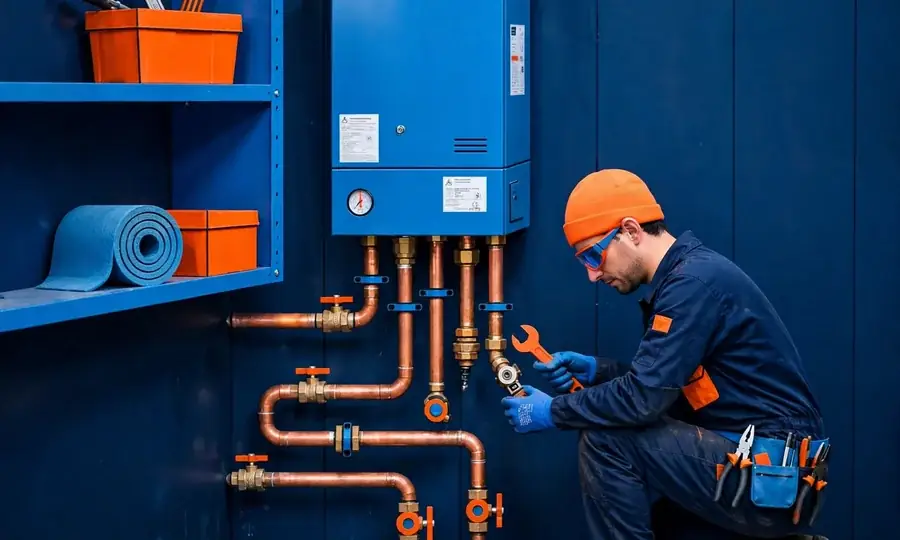
a technician diagnosing a residential boiler with gauges

Seasonal timing in Fairfield County

When Stamford boilers fail.

Stamford's failure calendar is predictable: October brings first-fire failures (systems that sat all summer), January brings deep-cold failures (weak components giving up under load), and March brings end-of-season failures (systems limping across the finish line). The commuter wrinkle: failures discovered at 7 PM after a day in the city feel more urgent than they are — run the checks before assuming the worst.

The smart play is September service: the tech finds the weak igniter, the worn nozzle, the tired circulator before the season. For commuters, fall service is also the argument for a smart thermostat with alerts — the "house at 55°F" text at noon beats the cold-house discovery at 7 PM.

Boiler Repair in Stamford, CT

Diagnosing Stamford systems

Three housing types, three fault profiles.

Stamford diagnosis starts with the building. Townhouse unit boilers — often combis or small modulating units in tight closets — fail at the diverter valve, plate heat exchanger, and condensate layer, and access is the constraint. Single-family gas systems in Glenbrook and Springdale fail like standard aging gas boilers: ignition, flame sensing, controls. North Stamford oil systems fail at the burner and tank: nozzles, electrodes, filters, aging tanks.

On site, the tech tests rather than guesses: combustion readings on gas, burner subsystem tests on oil, and a look at the distribution side for the single-family stock. Our signs your boiler may need repair guide covers the failure patterns in depth.

Boiler Repair in Stamford, CT

Unit boilers in townhouse condos

Small boilers, tight closets, HOA rules.

Stamford's townhouse stock runs individual unit boilers — compact combis or small heat-only units tucked into utility closets. They are the owner's to maintain, but servicing them means working inside HOA rules: scheduled access, parking for the tech, work-hour restrictions. Mention the building on the call so the visit is planned, not improvised.

The fault profile is its own: diverter valves sticking between heat and hot water, plate heat exchangers scaling up, condensate drains clogging and locking out the boiler. These are compact-system problems — a tech who only knows big basement boilers will misread them. Our national combi boiler repair page covers the compact-unit fault tree.

Boiler Repair in Stamford, CT

Common Stamford repair calls

What comes up.

  • Ignition and flame-sensing faults — sensors, igniters, gas valves
  • Combi diverter and exchanger faults — in townhouse unit boilers
  • Oil burner wear — Confirm service coverage and discuss the boiler fuel type before booking.
  • Condensate drain blockages — lockouts on high-efficiency units
  • Expansion tank and pressure issues — relief discharge, pressure swings
  • Zone and distribution faults — larger homes with long runs

When repair stops making sense

The line, stated plainly.

Repair makes sense when the block or heat exchanger is sound and the fault is in replaceable components.

One Stamford-specific note: on townhouse unit boilers, replacement also means HOA approval and logistics — equipment through the building, work-hour windows, sometimes a like-for-like venting constraint. Start that conversation with the HOA before the boiler forces the timeline.

Boiler Repair in Stamford, CT

Pressure: the gauge tells the truth

12–15 psi cold. Learn it.

Every Stamford homeowner should know their boiler's pressure gauge. 12–15 psi cold is the target on a typical home. Near zero means a leak or a failed auto-fill valve. Climbing past 30 psi with the relief valve discharging means a failed expansion tank. On combi unit boilers, the same gauge lives on the front panel — low pressure is the #1 "my combi stopped" cause, and topping up via the fill loop is a homeowner-safe step the triage will walk you through.

Persistent pressure loss is the most common "mystery" call: add water, pressure drops again, repeat. The leak is usually at a valve, a fitting, or the tank — found with inspection, not with more water. Our boiler leak and pressure repair page explains the pressure layer in full.

Boiler Repair in Stamford, CT

Frequently Asked Questions

Straight answers before you call.

01

My North Stamford oil boiler would not start on a cold morning. Where do I start?

Check the tank gauge first — then note whether the burner tries and fails or does nothing at all. In North Stamford's oil stock the usual morning-failure suspects are the nozzle, filter, and electrodes, with fuel level as the ever-present variable. Report the gauge reading and the burner's behavior when you call (888) 766-1474.

02

My downtown condo unit is cold but the building's boiler is running. Whose problem is this?

Almost certainly the building's distribution or your unit's zone — and it belongs to building management, not to an individual service call. Report it to the HOA or manager with specifics: your unit, which rooms, since when. An individual owner cannot authorize work on a central plant.

03

My Glenbrook colonial's baseboards tick and knock as they heat up. Is something wrong?

Usually just expansion — copper and aluminum tick as they warm and move in their hangers, and a little air adds knocking. Bleed the high points; if the noise is new, loud, or violent, call for a listen. Gradual ticking in an older colonial is character; sudden banging is a symptom.

04

The circulator pump on my Springdale ranch is getting loud. Does it need replacing?

A loud circulator is usually telling you its bearings are wearing or it is cavitating on air — either way it is a service item, not an emergency, until it quits. Note whether the noise is constant or only on startup when you call; that distinction helps the technician bring the right parts.

05

My boiler started short-cycling after our renovation. What changed?

The renovation changed the house's heat loss — new insulation, windows, or a reconfigured space can leave the old boiler oversized for the new load, so it fires briefly and shuts off. Short-cycling wastes fuel and wears parts. A technician can confirm with run-time observation and discuss options.

Boiler acting up in Stamford?

Call (888) 766-1474 — describe the symptoms for honest triage.

☎   Call (888) 766-1474