
Read the fault history
Record the model and error messages, then check for symptoms that help distinguish condensate, ignition, control, and water-flow problems.
Condensing boilers recover extra heat from exhaust gases, but faults in condensate drainage, combustion, controls, or water circulation can interrupt heating. Call about the symptoms you see and ask whether repair options are available in your ZIP code.
General inquiries: 7 AM–7 PM · Emergency calls: 24/7. Service availability must be confirmed.
Enter your ZIP code or city, or call to ask about available service options.
Search results do not guarantee coverage or an appointment.
These symptoms help explain what may need professional attention.
Symptoms can have more than one cause. Avoid opening sealed equipment, modifying safety devices, or working on live electrical or pressurized components.
An assessment should identify the actual fault before parts or equipment are recommended.
Record the model and error messages, then check for symptoms that help distinguish condensate, ignition, control, and water-flow problems.
A qualified technician may assess the drain/trap, venting, sensors, burner operation, and related manufacturer-required safety checks.
Discuss component availability, diagnostic fees, system age, and whether repairing the identified fault is economical.
Do not open a boiler cabinet, alter gas fittings, bypass safety controls, or work on pressurized components without appropriate qualifications.
Call first, describe the problem, and confirm local availability and charges.
Call (888) 766-1474 and explain the type of service you need.
Share the fuel type, model if known, and the symptoms or project goals.
Provide your ZIP code to ask whether service options are available.
Ask about assessment fees, scheduling, and any estimate before authorizing work.
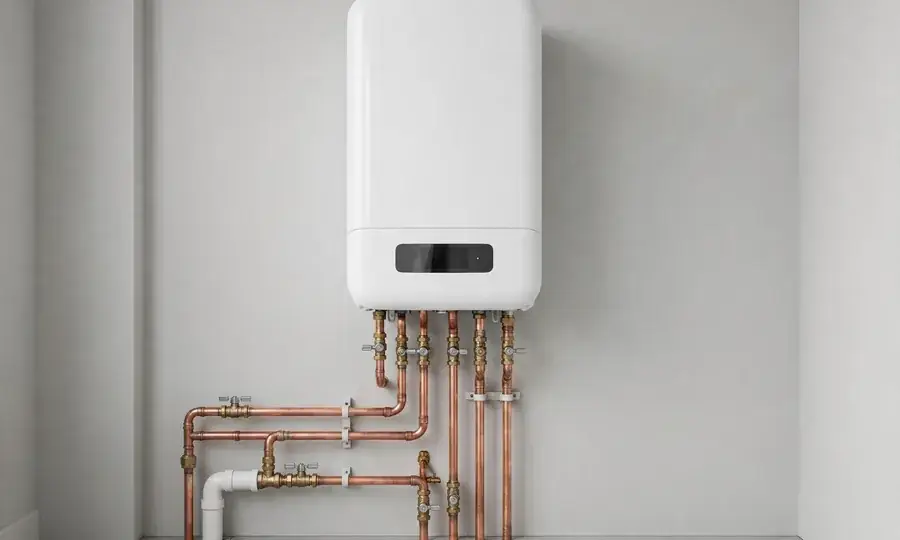
A condensing boiler wrings extra heat from flue gases by cooling them until water vapor condenses.
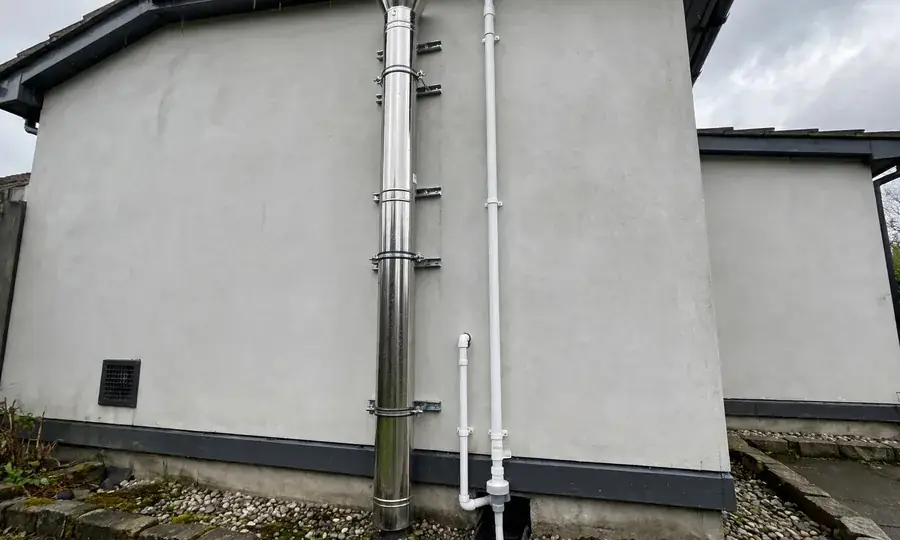
The secondary (or enlarged primary) heat exchanger drops flue-gas temperature below the dew point, recovering latent heat and pushing efficiency into the 90s. The byproduct — mildly acidic water — collects in the condensate trap/siphon and drains away through a plastic pipe, often run to an outside drain or soakaway.
That drain is the Achilles heel. In freezing weather an externally run condensate pipe can freeze solid; the trap fills, the boiler's sensor sees the backup, and the boiler locks out — the classic "worked yesterday, dead this morning" winter call. Internally, traps also silt up with debris over years. The fan-driven flue matters more here too: it must stay clear and correctly sloped so condensate runs back to the trap.
Condensing faults have a seasonal pattern.
Answers to common questions before you request an assessment.
It extracts additional heat from flue gases and produces condensate that must drain safely. Both gas-fired and some other configurations can use condensing technology.
Yes. On some models, a blocked or frozen condensate drain or trap can cause a safety shutdown. Diagnosis must follow the manufacturer’s instructions.
Not necessarily. Codes identify conditions or monitored circuits; several underlying faults can produce similar warnings.
A circulation, zone-control, thermostat, or diverter-related problem may be involved, even if the burner works.
Condensate should flow through the designated drain. Water outside that pathway can signal a blockage or leak and should be assessed.
Avoid opening sealed combustion components or altering venting. Follow only safe homeowner checks identified in your equipment manual.
Price depends on diagnosis, access, model, parts, and location. Ask about an assessment fee and written repair estimate.
Compare repair cost, age, parts support, efficiency, and the condition of the heat exchanger and other components.
If you can safely reach the external pipe, warm (not boiling) water poured over it or a warm cloth will usually clear it, and then the boiler can be reset once. The lasting fix is routing the pipe internally or insulating and upsizing it — a frozen pipe will freeze again on the next cold night.
Condensate is mildly acidic (around pH 3–4, like orange juice). It can stain and corrode unprotected drains and some metals over time, which is why it should discharge through plastic pipe to a proper drain, sometimes via a neutralizer. It is not a chemical emergency, but the pipework should be correct.
Learn about related heating-system problems and repair considerations.
Explore service →
Learn about related heating-system problems and repair considerations.
Explore service →
Learn about related heating-system problems and repair considerations.
Explore service →
Learn about related heating-system problems and repair considerations.
Explore service →Have the model and fault code handy if available. Call about condensate, ignition, or heating problems and ask whether service options are available for your location.
Call (888) 766-1474Tell us what's happening with your heating system and where service is needed.