
EPHRATA BOILER SERVICE

Boiler Diagnosis & Repair in Ephrata, PA

Boiler not heating right in Ephrata? In this oil-heavy market, most calls are burner calls — but gas, steam, and combi systems are covered too. Describe the symptoms by phone and check local options.

✓ Oil-burner focus✓ Phone triage first✓ Local pro diagnosis

General inquiries: 7 AM–7 PM · Emergency calls: 24/7 · (888) 766-1474

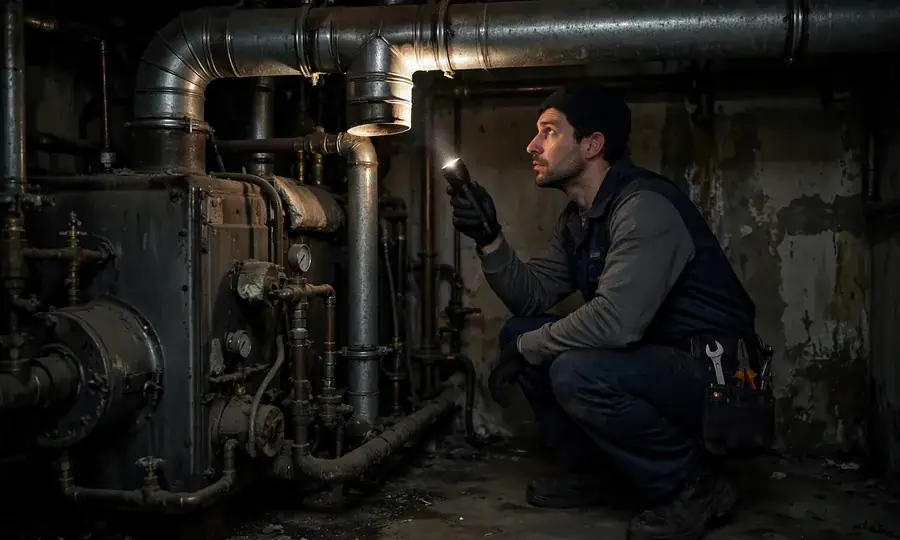
Technician inspecting a boiler flue with a flashlight

The service-history question

Four words that change everything.

"When was it last serviced?" — in Ephrata, the answer predicts the diagnosis. Serviced last fall: likely a genuine component failure, worth fixing properly. Three-plus years ago: likely maintenance debt — worn nozzle, loaded filter, eroded electrodes — and the fix starts with a full service, not a part swap. Never / unknown: expect multiple findings; price the service first, then decide on extras.

This is why the triage asks about service history before anything else. It is not small talk — it is the highest-information question in oil-burner diagnostics.

Boiler Repair in Ephrata, PA

How Ephrata boiler diagnosis works

Burner-first, because Ephrata is burner-heavy.

Most Ephrata calls start at the burner: lockout pattern (immediate vs. after running), tank level, last service date, soot or smells. Those four answers usually identify whether it is a nozzle/electrode issue, fuel starvation, or something deeper — before anyone travels.

On site, the tech tests within that subsystem — nozzle spray, electrode gap, cad-cell sighting, fuel pressure — and explains findings before any work is authorized.

Boiler Repair in Ephrata, PA

Common Ephrata repair calls

The oil-market fault map.

  • Burner lockouts — nozzles, electrodes, filters; the #1 call by far
  • Fuel starvation with oil in the tank — clogged filter, sludge, or line problems
  • Post-run-out no-starts — needs bleeding and repriming after delivery
  • Soot and delayed ignition — worn nozzles, wrong electrodes
  • Gas ignition faults — Confirm service coverage and discuss the boiler fuel type before booking.

The annual-service difference

Why Ephrata boilers live or die by maintenance.

In an oil market, the service interval is not a suggestion. Nozzles wear with every firing hour, filters catch whatever the tank sheds, and electrodes erode. A boiler serviced every fall runs; a boiler serviced "a few years ago" locks out in January. If your burner has not been serviced in over a year, say so on the call — it changes the triage.

Four checks before you call

The answers that route Ephrata triage.

  • Tank gauge — check the float first; run-outs are the most fixable no-heat call in an area with some oil-heated buildings, and "gauge reads empty" routes the call correctly
  • Reset button — press it once and watch; repeated resets flood the combustion chamber with unburned oil
  • Pressure gauge — a cold sealed system should read roughly 12–15 psi; near zero means water loss, a different problem than a dead burner
  • Last service date — "serviced last fall" versus "not since 2022" predicts the diagnosis before the tech travels

Calling the Ephrata emergency line with these four answers plus your ZIP gets you correctly prioritized in under a minute — especially on a teen-degree night when the queue is real.

What the visit involves in an area with some oil-heated buildings

Burner-first diagnosis, on site.

The tech starts where the triage left off: lockout pattern, tank level, service history. On the burner, it is nozzle spray, electrode gap, and cad-cell flame sighting — plus the filter and fuel line, and on older borough units the tank itself, since decades of rust and sludge starve burners that are otherwise healthy. On the minority gas systems, it is flame rectification signal and igniter condition. On sealed systems: the expansion tank charge checked against the gauge, because a feed valve quietly topping up a leaking system masks water loss until something bigger fails.

Findings come before authorization — what failed, what it costs to fix, and what the rest of the boiler's condition suggests.

Boiler Repair in Ephrata, PA

Frequently Asked Questions

Straight answers before you call.

01

My burner locks out constantly. What is the most likely cause in Ephrata?

Burner wear: nozzles, electrodes, and clogged filters are the dominant call in this market. Cold snaps finish off marginal burners by thickening the fuel and stirring tank sludge. Stop resetting it after the first try and call (888) 766-1474; repeated resets flood the chamber with unburned fuel.
02

The burner runs but the house is cold. What should I check?

The tank gauge first: a burner starving on fumes behaves exactly like a weak burner. If the tank has fuel, the problem is heat transfer or distribution: a sooted exchanger, a failing circulator, or air in the loops. Report the gauge reading and which rooms are cold; that pair points the diagnosis.

03

What does a combustion test tell you that I cannot see?

Whether the burner is actually burning clean: excess air, stack temperature, and CO levels reveal a worn nozzle or misadjusted electrodes long before they cause a lockout. In an oil town, the combustion test is the difference between a burner that is tuned and a burner that is guessing. It is the core of every proper fall service.

04

My heat exchanger is weeping. Can that be repaired?

Weeping sections on a cast-iron block are the beginning of the end: they do not heal, and they get worse. A weep can sometimes be nursed through a season, but it is a replacement signal, not a repair. Call (888) 766-1474 to talk through the timeline before it becomes a January emergency.

05

Why does my boiler soot up so fast?

Fast sooting means the burner setup is off: wrong nozzle, bad spray pattern, electrodes out of adjustment, or a draft problem. In a market where oil blocks run for decades, soot is the early warning of a burner that needs a real tune-up with a combustion test, not just a filter change.

06

The circulator is noisy. Is that urgent?

A noisy circulator is a circulator asking for retirement: bearings wear, and when it seizes, the boiler overheats and locks out or worse. It is not a tonight emergency if heat is still moving, but it is a schedule-soon repair. Note whether the noise is constant or only on startup when you call.

Boiler acting up in Ephrata?

Call (888) 766-1474 — describe the symptoms and check local repair options.

☎   Call (888) 766-1474