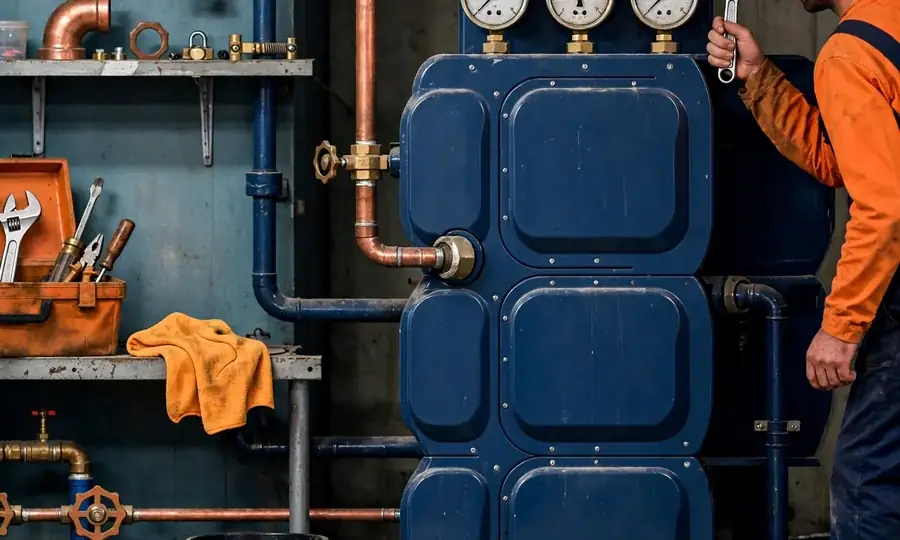
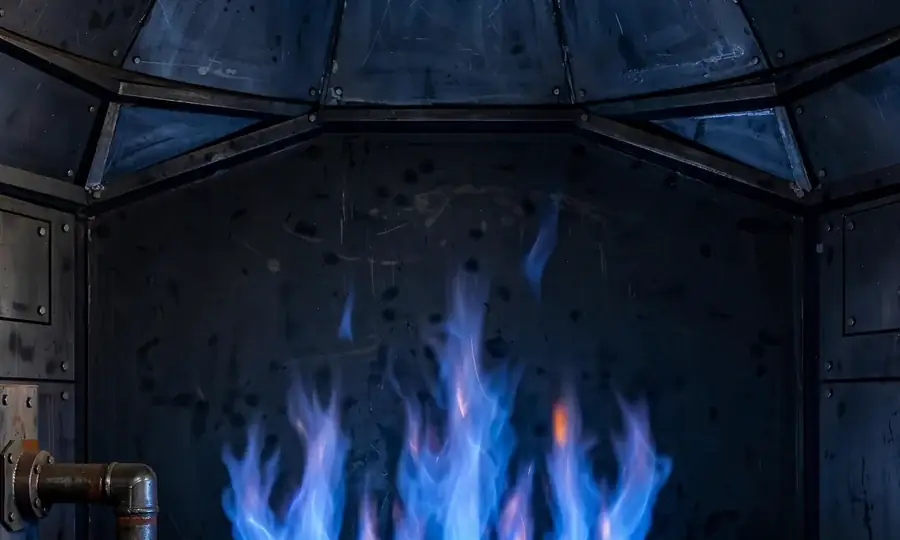
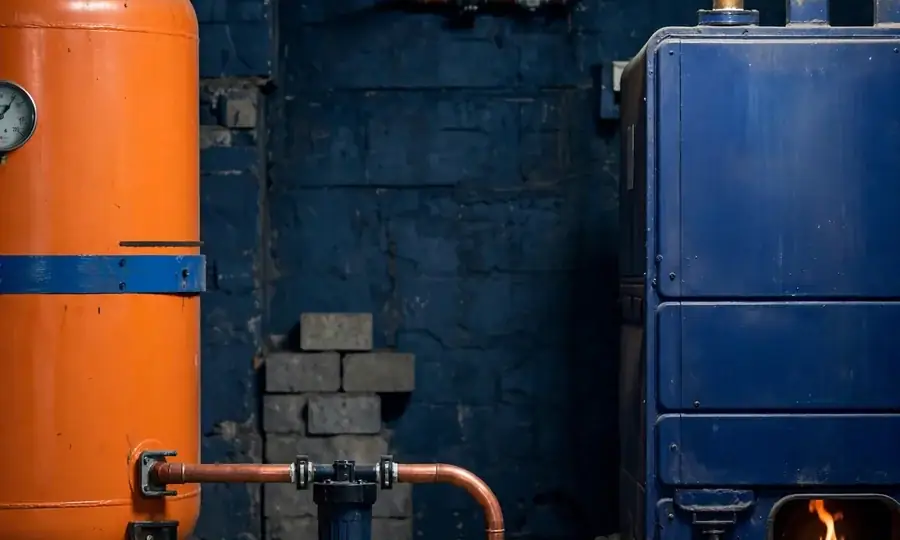
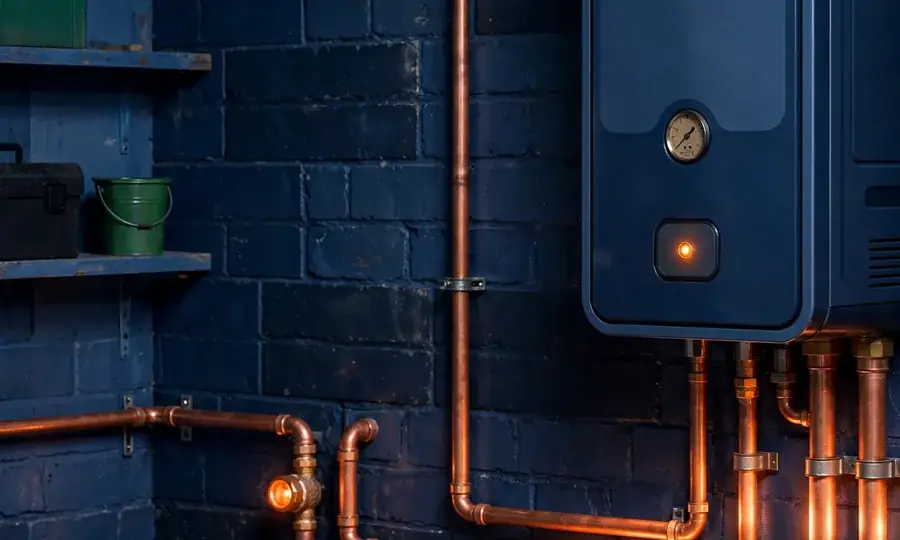
A proper diagnosis starts with the symptom and works outward. The pro checks what the boiler is actually doing: error codes on modern units, flame behavior on atmospheric burners, gauge readings — a sealed system should sit around 12–15 psi cold, so a gauge pinned at zero or climbing toward the relief valve's blow-off point is evidence, not guesswork. The auto-fill feed valve and expansion tank get tested as a pair, because a tank that has lost its air charge will push water out the relief valve every heat cycle and make the feed valve top the system up again — the classic slow self-draining loop.
On oil systems the diagnosis runs through the burner: nozzle spray pattern, electrode gap, filter condition, and whether the tank actually has fuel. On steam remnants — still found in some of the oldest west-end housing — it runs through water level, vents, and traps. The point is the same every time: find the failed component by testing, then replace only that. Anything else is parts roulette with your money.