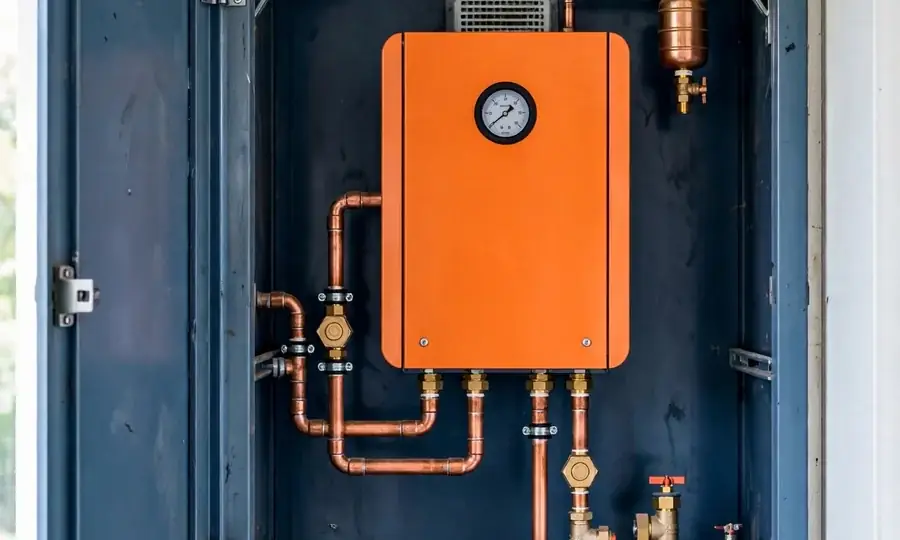
Diagnosis on a Levittown system starts with the constraints of the house. Slab construction means the boiler sits in a utility closet or crawlspace — the tech checks access, venting, and clearances before touching a wrench. Then the sequence: confirm the symptom, read the error history, check fuel supply (tank gauge on oil, gas pressure on gas), verify the electrical chain (thermostat call, limits, safeties), and test the suspect component under load.
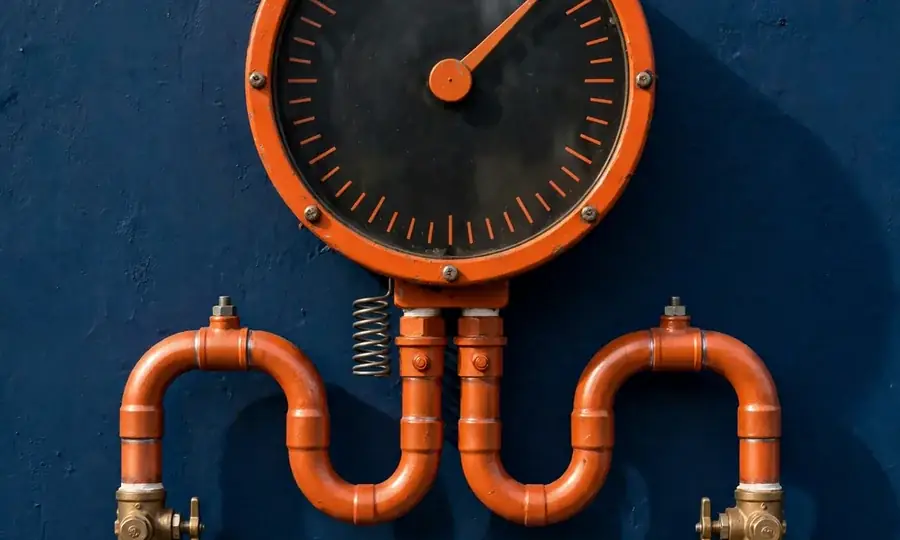
Oil systems get burner-first diagnosis — nozzle condition, electrode gap, pump pressure, filter state — because the burner is the moving part that fails most. Gas systems get ignition-first: flame sensor microamps, igniter resistance, flue and condensate path. Hydronic-side faults (pressure, air, circulation) are tested with gauges, not guesses: a cold reading near 12–15 psi is the baseline everything is judged against. The boiler pressure guide explains what those readings mean if you want to read your own gauge before calling.