

HICKSVILLE INSTALLATION

Boiler Installation and Replacement in Hicksville, NY

Replacing an aging boiler in Hicksville? Sizing, fuel choice, and venting decide whether the new unit saves money or just costs it — and in a town of dormered capes, the addition gets zoned properly this time. Call to discuss your situation — house, current system, and what is failing.

✓ ✓ Proper heat-loss sizing✓ ✓ Dormer zoning done right✓ ✓ Gas and oil options

General inquiries: 7 AM–7 PM · Emergency calls: 24/7 · (888) 766-1474

What to ask before you sign

The questions that separate a good install from an expensive one.

Ask for a heat-loss calculation — not a rule of thumb, not "same size as the old one." Then ask the Hicksville question: how does the new install handle the dormer? A replacement that keeps the original single-zone layout keeps the original cold-attic problem. Proper zoning — its own zone valve or circulator, its own thermostat, balanced against the original floors — is the difference between a new boiler and a solved problem.

Ask how the new unit vents, where condensate drains on a condensing unit, what happens to the oil tank if you switch fuels, and what is not included: chimney work, tank work, electrical upgrades, the zoning rework itself. If a quote cannot answer these, it is a guess, not a quote. The national boiler installation and replacement page covers the process; the Hicksville repair page helps decide whether replacement is even needed yet.

Installation in Hicksville, NY

Sizing for Hicksville housing

The dormer is a sizing input, not an afterthought.

An original Hicksville cape is a small, simple heat load — which is exactly why oversizing is the classic mistake: a boiler twice the needed size short-cycles, never reaching steady efficiency. The dormer complicates it honestly — a finished attic is real added load, often with real added heat loss through kneewalls and a thin roof. The heat-loss calc has to measure the house as it exists now: original floors plus addition, with the addition's envelope judged on its own merits.

Then the distribution question: can the existing baseboard deliver the new boiler's output at reasonable water temperatures — in both the original house and the dormer? On a condensing gas unit, that decides whether you ever see condensing efficiency. And the zoning question, asked now and not later: the dormer gets its own zone, or the next twenty years repeat the last twenty.

Installation in Hicksville, NY

What replacement involves

The job, step by step, dormer included.

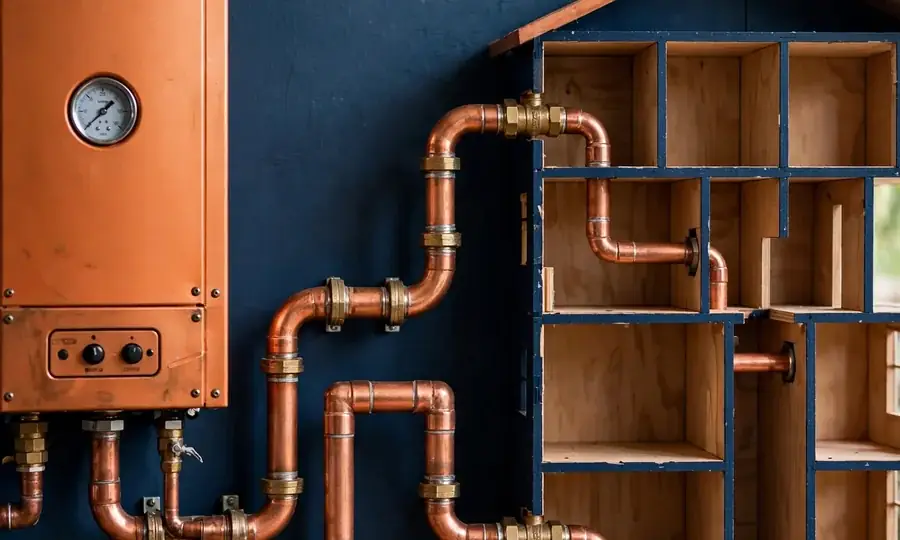
Old unit out of the basement — Hicksville's basements make access easier than slab towns, but seventy years of finished-basement remodeling can still narrow the path. New unit in: sized to the measured heat loss, piped to the new unit's requirements, new circulator and controls, expansion tank sized to the system volume, venting to code. The dormer gets zoned as part of the job — new zone valve or circulator, new thermostat, piping verified adequate for the added load.

Then: fill, purge air from every loop including the addition's, verify cold pressure near 12–15 psi, fire and combustion-test, and confirm every zone actually heats — original floors and dormer, room by room. A good installer leaves you with the pressure reading, the combustion numbers, and the manual. Plan for the house to be without heat during the workday; in winter, that takes scheduling, not luck.

Installation in Hicksville, NY

Fuel-choice math in Hicksville

Stay oil or convert? The honest version.

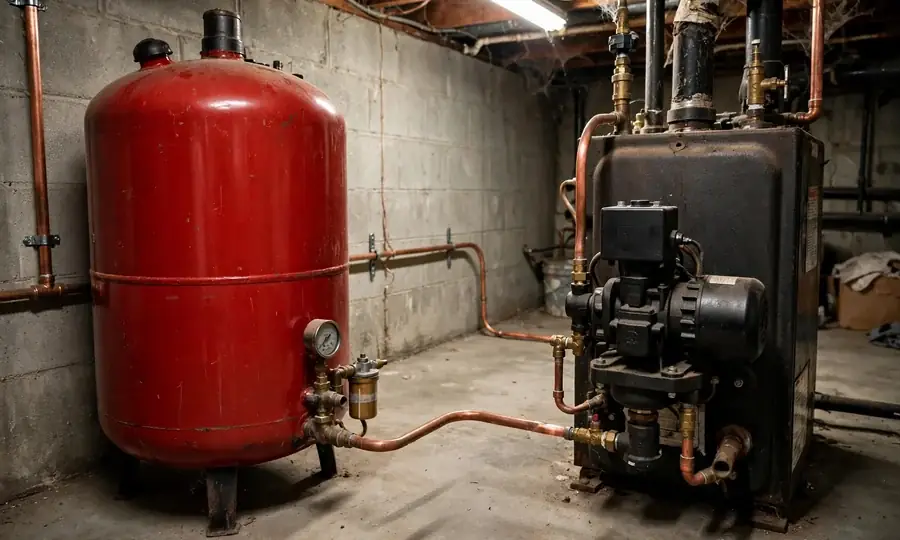
Staying oil is often right where the gas main does not reach — a modern oil boiler with a fresh burner is efficient, the basement tank and lines already exist — but an aging tank can force the question: tank replacement cost belongs in the stay-oil column. Converting to gas makes sense where the main serves the street and the lifetime numbers work — not on one winter's fuel-price vibes.

Watch the hidden costs both ways: conversion needs gas line sizing, venting, condensate handling, and tank decommissioning; staying oil may need tank or line work. Either way, size to the measured house — dormer included — not the fuel. For hydronic questions, the boiler pressure guide is a useful reference — and if the old unit still runs, get a diagnosis in Hicksville before committing to replace it.

Installation in Hicksville, NY

Frequently Asked Questions

Straight answers before you call.

01

My Hicksville cape's boiler is 35 years old and the dormers never heat right. New boiler or new distribution?

Usually distribution first. A 35-year-old boiler is replacement age, but the dormer problem is zoning: the original single-zone system was never designed for two finished floors. The honest survey assesses both and may recommend zoning work with the replacement. Call (888) 766-1474 for the survey; the answer comes from measuring, not guessing.

02

Should my Hicksville replacement stay oil or convert to gas?

If a gas main serves your street, price both; many Hicksville streets converted while others never got mains. The survey weighs conversion cost, the boiler replacement, and your distribution type together. Where gas is not available, a modern oil unit is the straightforward answer. The assessment happens in your basement.

03

What size boiler does a dormered Hicksville cape need?

Whatever the heat-loss calculation says for the house as it exists today, with the dormers counted. The original boiler was sized for a one-floor cape; copying its size repeats the mistake. Right-sizing plus proper zoning is what finally heats the upstairs. The survey does the math room by room.

04

How long does a boiler replacement take in a Hicksville basement?

Usually a couple of days of on-site work for a straightforward residential swap, plus delivery and inspection steps. Hicksville basements are generally walk-in accessible, which keeps things moving. Near-boiler piping that needs rebuilding to spec is the usual variable. You get a realistic timeline after the survey.

05

My indoor oil tank is as old as the boiler. Do both at once?

Usually yes. One visit for both costs less than two separate jobs, and a new boiler deserves clean fuel from a sound tank. The survey assesses the tank and prices the pair together. Mention the tank's age when you call (888) 766-1474.

06

Will a new boiler lower my fuel use in my Hicksville cape?

A right-sized modern unit typically uses noticeably less fuel than a 35-year-old oversized one, especially with proper controls. But if the dormers are the real problem, zoning the distribution may save more than the boiler swap. Be wary of specific savings promises made over the phone; the honest number comes from the survey.

Planning a boiler replacement in Hicksville?

Call (888) 766-1474 now — discuss sizing, dormer zoning, and fuel choice for your house.

☎   Call (888) 766-1474