SPRINGFIELD OIL BOILER SERVICE

Oil Boiler Repair in Springfield, MA

Oil boilers fail in a narrow, well-understood family: burner components, fuel supply, and combustion quality. This page covers all three.

✓ Confirm coverage by ZIP✓ Tank-side triage✓ a phone conversation about symptoms

General inquiries: 7 AM–7 PM · Emergency calls: 24/7 · (888) 766-1474

Oil is still real in Springfield

Oil burner problems can involve fuel supply, filters, ignition components and the condition of the tank. Describe your symptoms and system when calling.

The oil map is specific: Forest Park's Victorians and the close-in early-1900s neighborhoods with big cast-iron units and basement tanks, and the outer-ring fringes where piped gas never arrived. Oil here means delivery logistics, tank stewardship, and a burner with wearable parts — a different maintenance rhythm from gas.

The oil fault family is narrow and well understood: burner components (nozzle, electrodes, fuel filter, transformer, cad cell), fuel supply (empty tank, sludge, water in the tank, a failing fuel line), and combustion quality (soot, smoke, smell). Almost every oil no-heat call traces to one of those three. If you are not sure your symptom is oil-specific, the signs your boiler may need repair guide helps sort it before you call — and check the tank gauge first, because an empty tank is the fastest diagnosis there is.

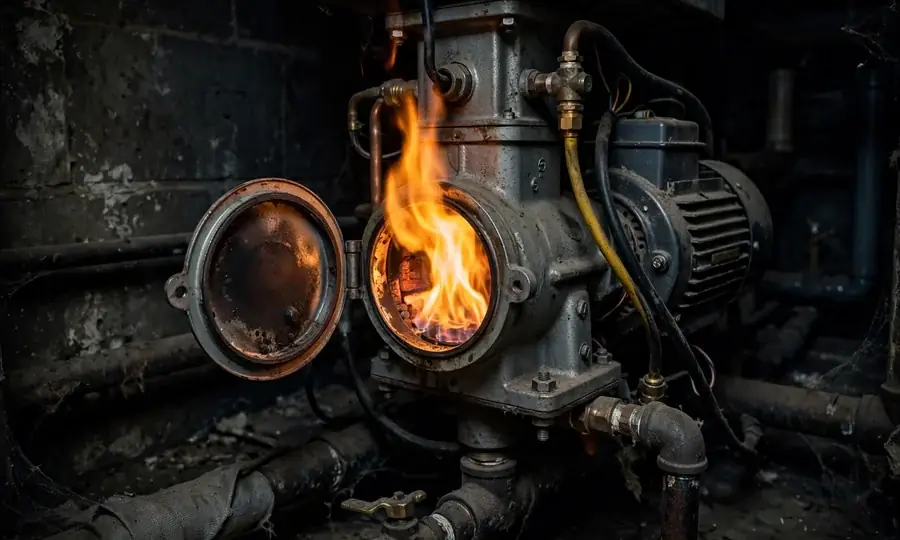
Oil burner assembly with flame inspection port open on a Springfield oil boiler

The burner and fuel failure set

What actually stops an oil boiler.

  • Worn or wrong nozzle — the most replaced part on any oil burner; spray pattern degrades and combustion goes dirty
  • Electrode and transformer failure — no spark, no flame; the classic click-with-nothing lockout
  • Clogged fuel filter and sludge — starved burner, especially after an empty-tank event or a fresh delivery stirs the tank
  • Cad cell and primary control faults — the flame-proving chain misreads and locks out a burner that is actually fine
  • Empty tank or water in the fuel — the gauge lies; sludge and water settle at the pickup and the burner sucks the worst of it first
  • Sooted heat exchanger — incomplete combustion coats the block, efficiency collapses, and the stack temperature climbs
Oil Boiler Repair in Springfield, MA

The tank is part of the diagnosis

Check the gauge before you check the burner.

An oil no-heat call starts at the tank, not the burner. Read the gauge, note when the last delivery came, and — if the tank is outside or in an unheated space — consider whether a January cold snap gelled the fuel. A burner that ran the tank dry will usually need a prime and a filter check after delivery; the line has air and stirred-up sludge in it now.

Tank stewardship is the unglamorous half of oil heat: keep the tank reasonably full through winter (a fuller tank means less condensation and less sludge pickup), watch for weeps at fittings and the tank's bottom seam, and know your tank's age. The delivery company handles fuel; the burner technician handles everything after the fuel line — say which side of that line your problem is on when you call.

Oil Boiler Repair in Springfield, MA

The oil service rhythm

Annual attention is not optional on oil.

An oil burner is a wear machine: the nozzle, filter, and electrodes are consumables, and the heat exchanger soots up in normal operation. Annual service — nozzle and filter replacement, electrode setting, chamber inspection, and a combustion test — is what keeps an oil boiler efficient and out of lockout season. Skipped years show up as climbing fuel use first and lockouts second.

For landlords with oil-heated buildings, that annual visit is also the moment to check the tank, the fuel line, and the water side — expansion tank charge, auto-fill valve function, and that 12–15 psi cold baseline — in one pass. The national oil boiler page covers burner service in general terms, and the hot-water hydronic page covers the water side these big cast-iron units share with gas systems.

Oil Boiler Repair in Springfield, MA

Springfield oil boiler services

Related services for oil-heated buildings.

A dead oil burner on a freezing night belongs on the emergency page — triage runs 24/7, and remember: reset once, then stop. Oil symptoms that turn out to be distribution problems are covered on the general diagnosis page. If your building runs gas instead, see the gas boiler page, and if the burner is done but the block is sound — or vice versa — the replacement page covers fuel-choice math including staying on oil.

Frequently Asked Questions

Straight answers before you call.

01

My Forest Park oil burner locked out overnight. Reset it once or call?

Press reset exactly once — if it fires and holds, watch it; if it locks out again, stop and call (888) 766-1474. Repeated resets flood the chamber with unburned oil. On Springfield's oil side the usual causes are a dirty nozzle, worn electrodes, or a clogged filter — routine fixes once a tech is on site.

02

How low should I let my Springfield oil tank go in winter?

Cold snaps burn faster than the gauge suggests. If the burner has already stopped, say so on the call; it changes the triage.

03

My oil boiler in Forest Park puffs smoke on startup. Is that dangerous?

Puffback means delayed ignition — oil pooling before it lights — and it deserves prompt attention. It usually traces to a worn nozzle, weak electrodes, or poor draft on these big old cast-iron units. Describe the smoke on the call; a burner tune-up with a combustion check is the fix. Do not keep running it to see if it clears.

04

There is an oil smell in my Victorian's basement that is getting stronger. Why?

A growing oil odor means something changed — a weeping fitting, a tank seam starting to fail, or a drip at the filter assembly. Big early-1900s homes often have tanks older than the owners realize. Check for wet spots under the tank and mention the smell's strength on the call.

05

My oil burner soots up every single winter in Springfield. What is the root cause?

Recurring soot means the burner never stays in adjustment — wrong nozzle, poor draft, or a heat exchanger that has not been properly cleaned in years. Soot is wasted fuel and a warning sign. Annual burner service with a combustion check, every fall without fail, is what breaks the cycle.

Oil burner trouble in Springfield?

Call (888) 766-1474 — check the tank gauge first, then describe what the burner does when it tries to fire.

☎   Call (888) 766-1474