Here is what a real one covers. The nozzle is replaced, not cleaned: it meters fuel into a fine spray, and a worn nozzle atomizes poorly, which means soot, wasted oil, and eventually a lockout. The electrodes are inspected and re-gapped to spec — the spark must hit the spray pattern precisely, or ignition delays and the burner rumbles on startup. The fuel filter and pump strainer are changed, because a fuel-starved burner locks out exactly like a broken one.
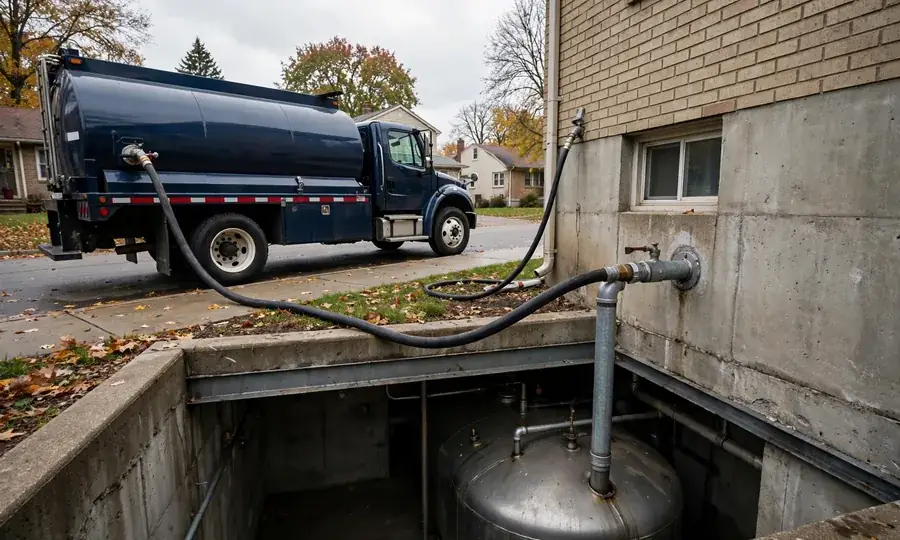
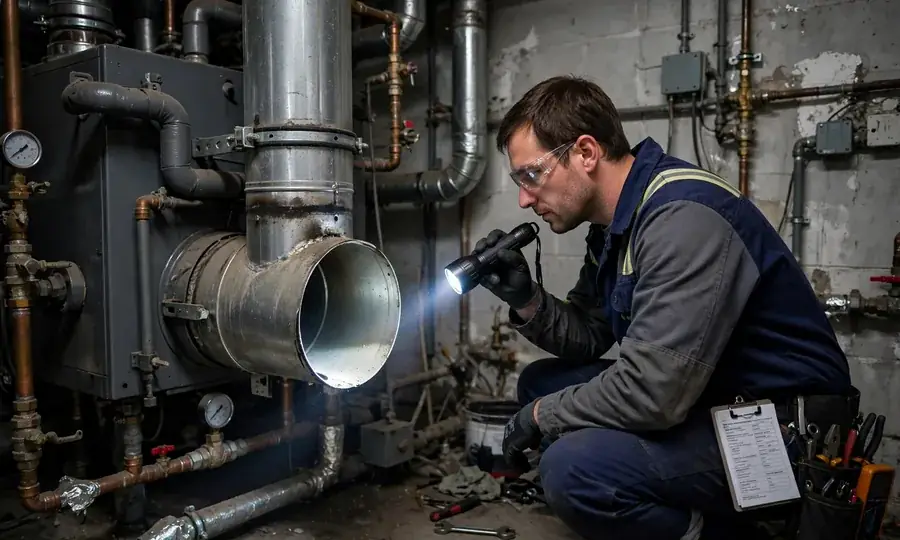
Then the heat exchanger is brushed clean and the burner is tuned with instruments — oxygen, carbon monoxide, and stack temperature — producing the first honest efficiency number the unit may have had in years. Finally the tank: gauge accuracy, visible condition, and your filter history, which is the earliest warning of internal rust. Tank-level discipline is yours between visits: check the gauge weekly in winter and order at a quarter tank, not an eighth. And if the burner has begun locking out nightly, skip the maintenance booking — that is emergency territory.