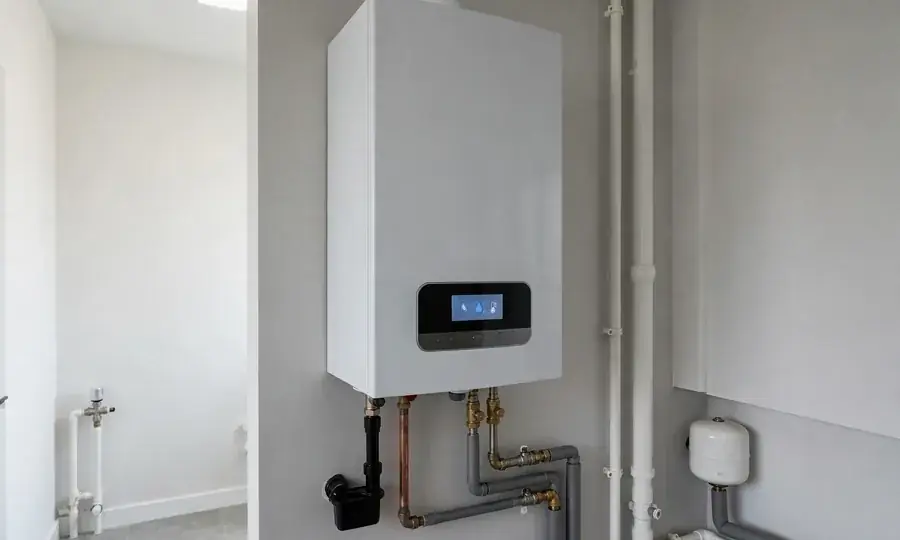
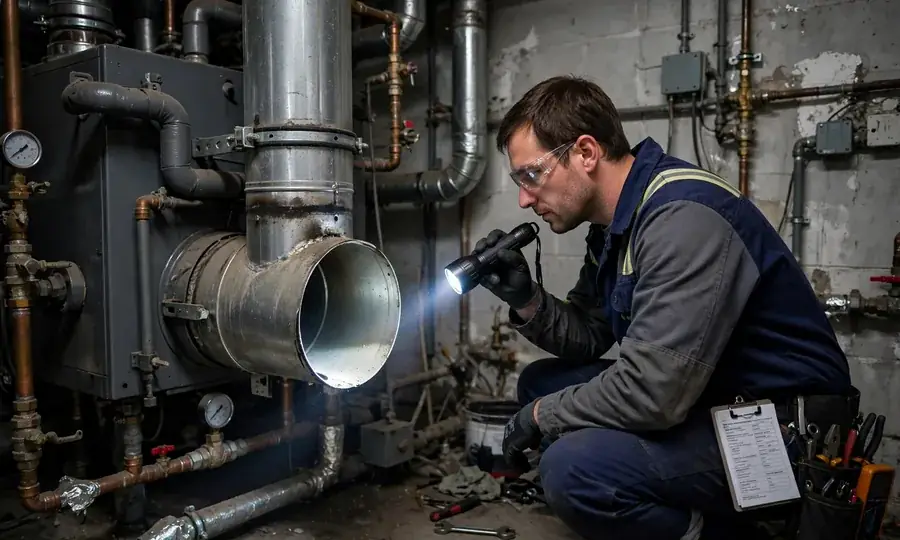
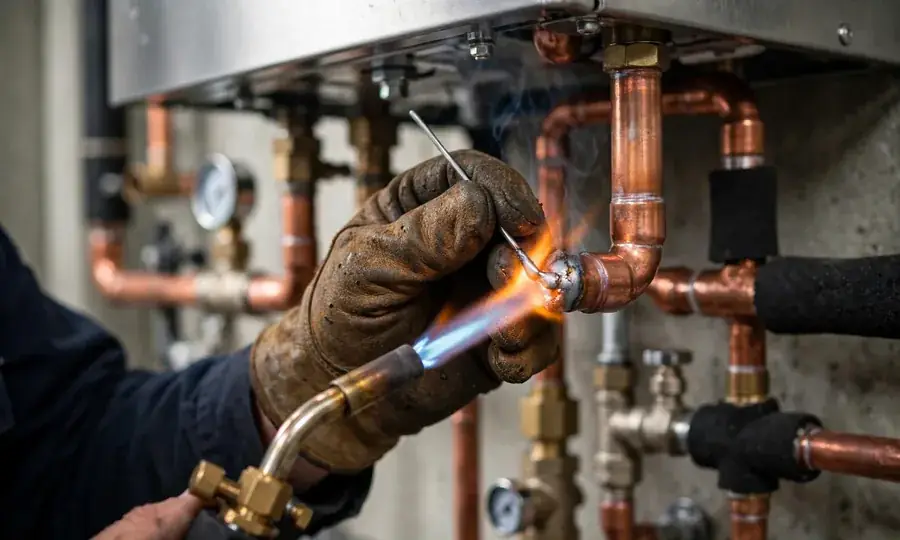
Here is the fault behind half of Medford’s gas calls. Modern gas boilers prove flame with a sensor rod sitting in the burner flame — the flame conducts a tiny electrical current, and the control board must “see” that current to keep the gas valve open. When the rod coats over with oxidation and combustion residue — the inevitable result of years without cleaning — the current drops below the board’s threshold. The boiler fires, cannot prove flame, and shuts the gas off within seconds. Then it tries again. Then it locks out.
The geography of this fault follows Medford’s North–South split. South Medford’s older atmospheric units in multis, many never cleaned, foul sensors fastest. North and West Medford’s newer electronic-ignition units fail here too — sensors foul on every fuel, on every design — but the fix differs: sometimes a cleaning restores the signal, sometimes the rod is too far gone and replacement is the honest call. That judgment is the tech’s, made with a meter in hand.
Prevention is unglamorous: annual service, which includes flame sensor cleaning before the coating becomes a lockout. And if your boiler has started the fire-then-die pattern this season, note whether it is getting worse — a sensor that needed one reset in November and three in January is telling you the timeline. Repeated lockouts that leave you without heat are an emergency call, not a wait-and-see.