
MANCHESTER GAS SERVICE

Gas Boiler Repair in Manchester, CT

Most of Manchester heats with gas — and most gas failures are ignition failures. Flame sensors foul, igniters crack, gas valves stick, and the boiler locks out on the coldest night of the year. Note the error code, describe the flame behavior, and get triage from people who read gas boilers for a living.

✓ Ignition & flame-sensing faults✓ CO safety checks✓ Short-cycle diagnosis

General inquiries: 7 AM–7 PM · Emergency calls: 24/7 · (888) 766-1474

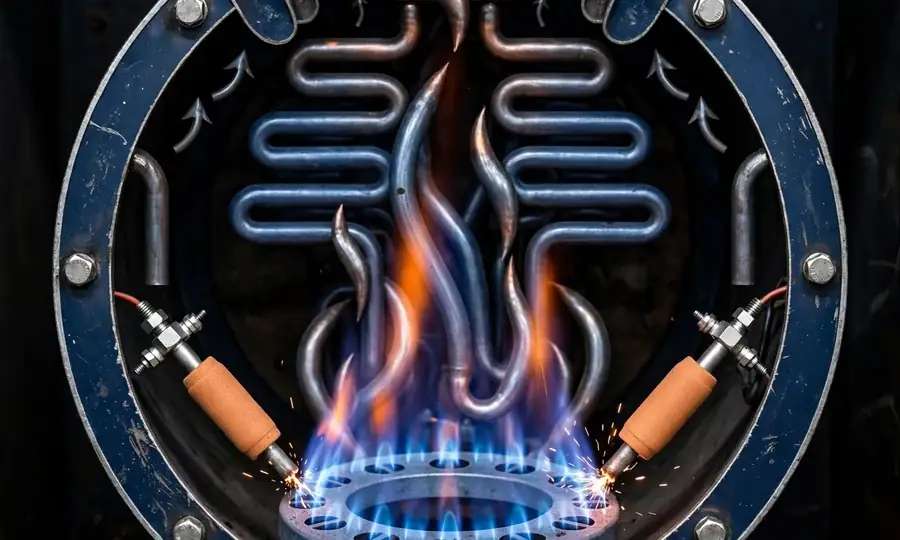
blue gas flames through a boiler sight glass

Gas in Manchester context

The majority fuel — with a real oil minority.

Manchester's gas majority covers the corridors, the Buckland Hills development, and converted homes — the newer and more centrally located stock. That split matters for triage: the first question on every Manchester call is the fuel, because the fault trees share almost nothing.

The gas stock skews middle-aged: units installed in the 80s–2000s now hitting the age where ignition components fail in patterns. Hot-surface igniters have a finite life. Flame sensors coat with oxidation. Gas valves stick after decades. The failures are predictable — which is why fall service catches them.

Gas Boiler Repair in Manchester, CT

Read your symptoms

What the boiler is telling you.

  • Tries to start, then lockout — ignition or flame-sensing fault; note the code
  • Yellow or lazy flame — incomplete combustion; stop using it, check CO detectors
  • Soot around the boiler — combustion problem; needs immediate attention
  • Short-cycling — fires, stops, fires; oversized unit or control fault
  • Rumbling on startup — delayed ignition; gas valve or burner issue
  • Rising gas bills, same weather — efficiency loss; combustion test tells the story
Gas Boiler Repair in Manchester, CT

The oversizing legacy

Manchester's 50s–70s boilers were sized generously.

Walk into a Manchester ranch with its original boiler and you will often find a unit twice the size the house needs. The era's rule was "bigger is safer," and the result is a boiler that fires, satisfies the thermostat in minutes, and shuts down — hundreds of extra start cycles per season. Every start is wear on the igniter, the gas valve, and the heat exchanger.

Short-cycling is the symptom that points here: the house heats fine, but the boiler fires constantly in short bursts. The fix at repair stage is controls — proper anticipator settings, outdoor reset if the control supports it. At replacement stage, it is the whole argument for a heat-loss calculation: the new boiler should be half the old one's size, and it will last longer for it.

Gas Boiler Repair in Manchester, CT

Carbon monoxide and aging gas units

The safety layer.

Every gas boiler produces carbon monoxide; proper venting carries it outside. The danger comes when venting fails: a blocked chimney, a deteriorated flue liner in an old masonry chimney (common in Manchester's older colonials), or a cracked heat exchanger spilling CO into the airstream.

Non-negotiables: working CO detectors on every floor with fresh batteries, and never ignoring a detector that alarms. If yours sounds, leave and call 911 — do not go back in to "check the boiler." After the all-clear, the boiler gets a full combustion and venting inspection before it fires again. Annual service includes the combustion test that catches CO problems before the detector has to.

Gas Boiler Repair in Manchester, CT

Flame color and soot: the visual check

What your eyes can diagnose.

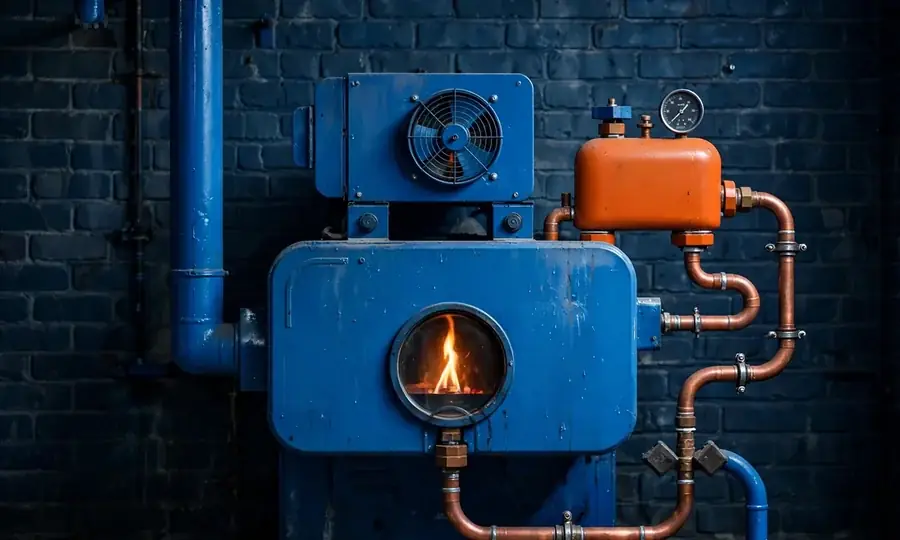
You do not need instruments for the first pass. Look at the flame through the sight glass: blue with maybe a small orange tip is healthy; yellow, lazy, or lifting flames mean incomplete combustion. Look around the boiler jacket: black soot streaks mean the burner has been running dirty. Smell for anything acrid near the flue. Any of these is a "stop and call" finding.

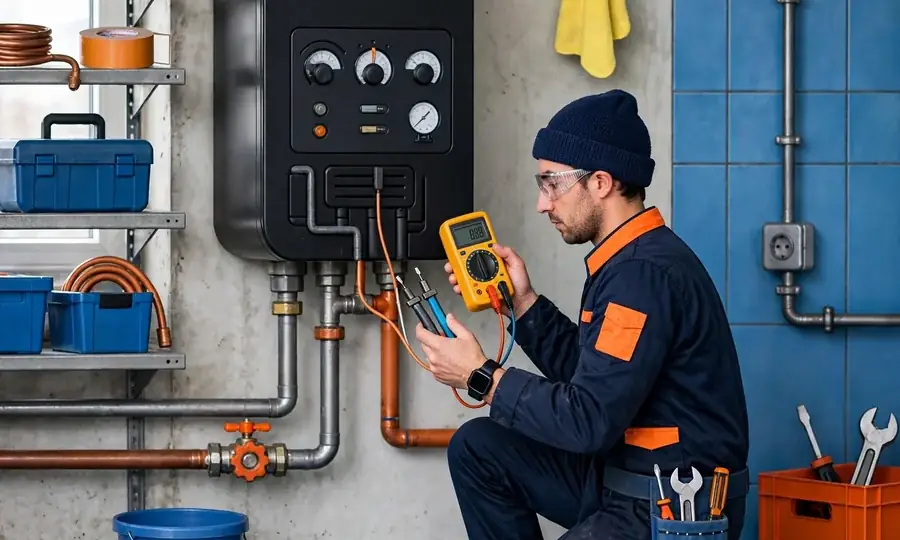
The deeper diagnosis — combustion analysis with a meter — happens on site: oxygen, CO, and stack temperature readings that say whether the burner is tuned or troubled. If your boiler has never had a combustion test, it is overdue. Our national gas boiler repair page walks through the full diagnostic sequence.

Gas Boiler Repair in Manchester, CT

Frequently Asked Questions

Straight answers before you call.

01

My Buckland Hills gas boiler shows an error code and will not fire. What now?

Write down the exact code before you touch anything — it maps to ignition, flame sensing, pressure, or condensate, and it is the fastest diagnostic clue you can give. Do not guess at fixes from the code alone. Report it when you call (888) 766-1474 and the triage will tell you whether it is a reset, a visit, or an emergency.
02

The flame sensor was just cleaned and the boiler locked out again. Now what?

Cleaning buys time on a worn sensor but does not restore it — a sensor that will not hold a flame signal after cleaning needs replacement. If a new sensor still drops out, the control board or grounding is suspect. Either way it is a technician visit, not another cleaning.

03

My sealed gas system keeps losing pressure and I have to refill it. What is wrong?

A sealed system should not need regular refilling. The usual causes are a failed expansion tank that has lost its air charge, a weeping joint somewhere in the loops, or a faulty auto-fill valve. Find the leak or the failed component — topping off repeatedly just masks it while pressure swings stress the system.

04

What pressure should my gas boiler's gauge show?

Around 12 to 15 psi when the system is cold is typical for a residential hot-water setup, rising somewhat when hot. If it climbs toward 30, the expansion tank is likely waterlogged; if it falls to zero, you have a leak or a feed problem. Either extreme is a call, not a DIY adjustment.

05

The condensate drain on my high-efficiency unit is backing up. Is the boiler broken?

Probably not broken — just shut down as designed. Exterior condensate runs freeze solid on teen-degree nights, and the unit stops rather than flood itself. The lasting fix is rerouting the drain inside the thermal envelope. Until then, call and describe the backup; the triage will confirm it is condensate, not a heat-exchanger fault.

Gas boiler trouble in Manchester?

Call (888) 766-1474 — describe the fault code for fast triage.

☎   Call (888) 766-1474