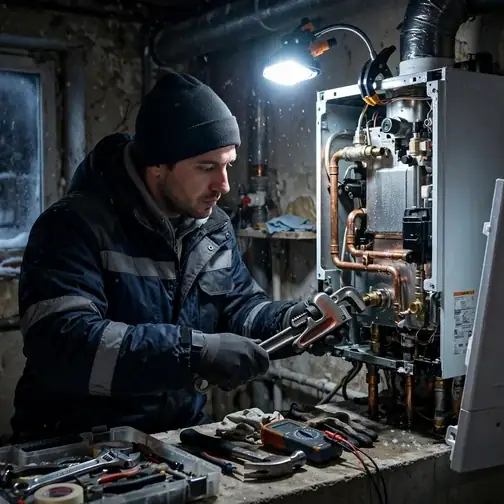
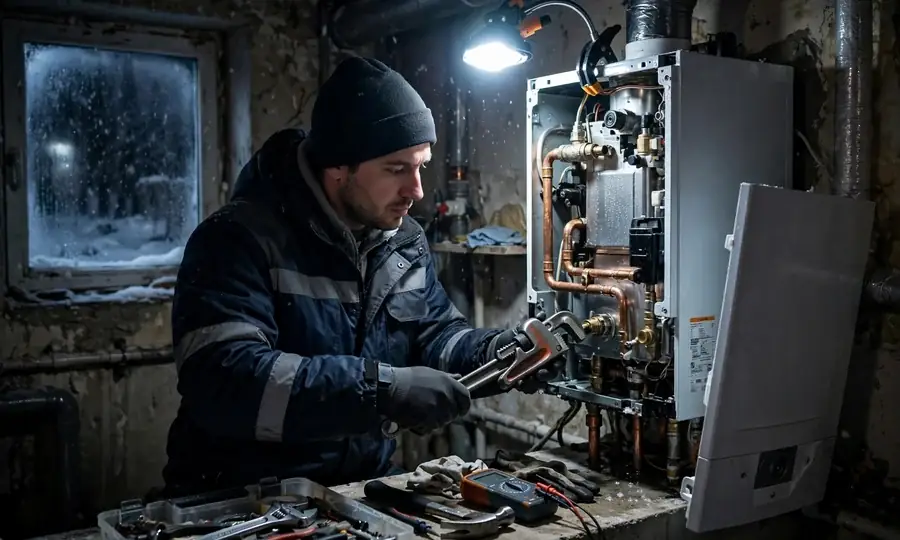
The empty tank in a twin. The most common winter-night call in the borough core: a homeowner who never looked at the gauge, a tank at empty, a burner locked out. The dispatcher hears “oil, gauge reads empty, burner locked out” and the call becomes a delivery first, then a restart — sludge pulled into the filter and nozzle, air in the fuel line, a burner that needs bleeding and a filter change before it fires reliably again.
The dead atmospheric gas unit. The borough’s older twins run atmospheric gas heaters through old masonry chimneys, and a failed igniter or a collapsed draft on a freezing night looks identical to a dead boiler from the thermostat. The tell is sound and smell — nothing from the basement, no odor, just silence — and the technician’s first look is at ignition and the chimney before anything else.
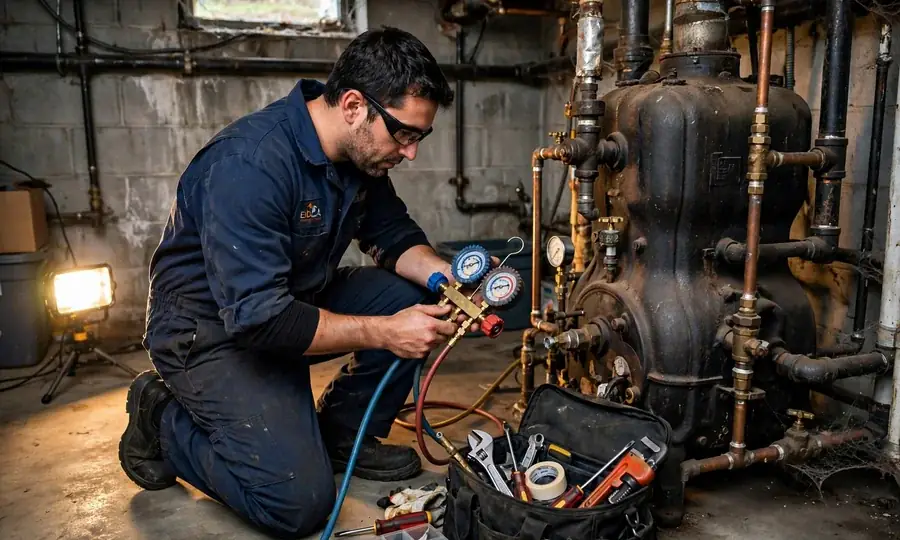
The leak in the small basement. A weeping section or a failed fitting that turns steady at 1 AM, water spreading across a floor that has no drain. This one skips the fuel questions entirely: water feed off, power off at the emergency switch, a bucket under the drip, and the dispatcher told “water leak” so the right kit comes on the truck.