
Where does oil heat still exist in Norristown?
These are oil-fired cast-iron units, many installed when oil was the modern upgrade. If yours is one of them, you are not an oddity; you are just on the other triage track.
About one Norristown home in ten still heats with oil — the blocks the gas mains skipped, and the houses whose owners never saw a reason to switch. These are often the oldest working boilers in the borough: cast-iron blocks with burners rebuilt many times over. This page covers their fault world.
General inquiries: 7 AM–7 PM · Emergency calls: 24/7 · (888) 766-1474
Oil burner problems can involve fuel supply, filters, ignition components and the condition of the tank. Describe your symptoms and system when calling.
Oil survives in Norristown in two places: blocks the gas main never reached — scattered streets where oil was simply the default and stayed the default — and houses that never converted because the oil unit kept running. Both skew old: 1970s and 80s cast-iron blocks, basement tanks installed when the house was built, fuel lines run when codes were looser.
That age profile means oil calls here are burner and fuel-supply calls. The block will outlive its burner components several times over — nozzles, electrodes, filters, pumps are wear items, and the houses that service them annually are the ones still heating.
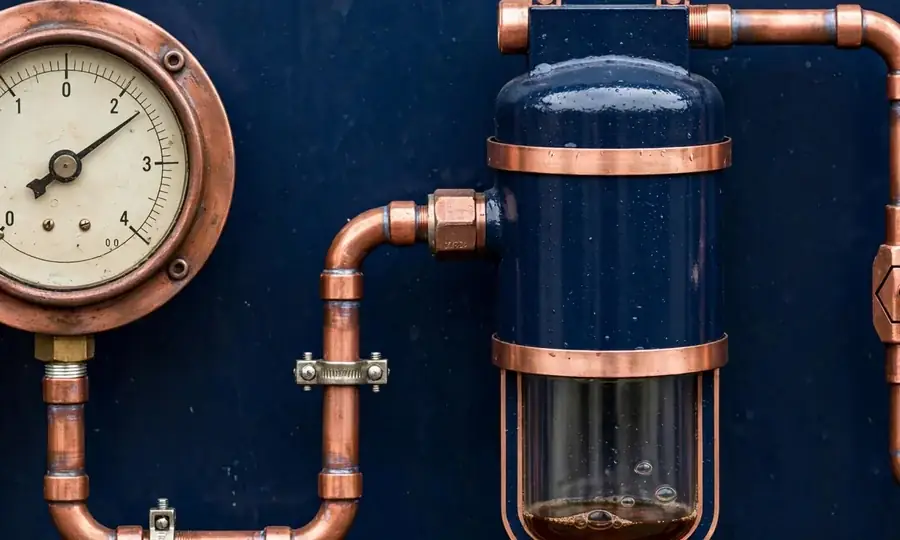
On the oldest stock, maintenance is the repair.
Norristown's oil boilers are old the way the borough is old — 1970s and 80s cast-iron blocks in basements with low ceilings, burners rebuilt more times than anyone remembers. On equipment this age, annual service is not maintenance — it is survival: nozzle replaced yearly, filter element yearly, electrodes inspected and gapped, pump pressure verified, combustion checked with an analyzer.
The pattern is unforgiving and predictable: the houses that service annually heat through January; the houses that skip two years call in January. If yours has not been serviced in years, lead with that when you call — it tells the tech to expect a neglected burner and to bring accordingly.
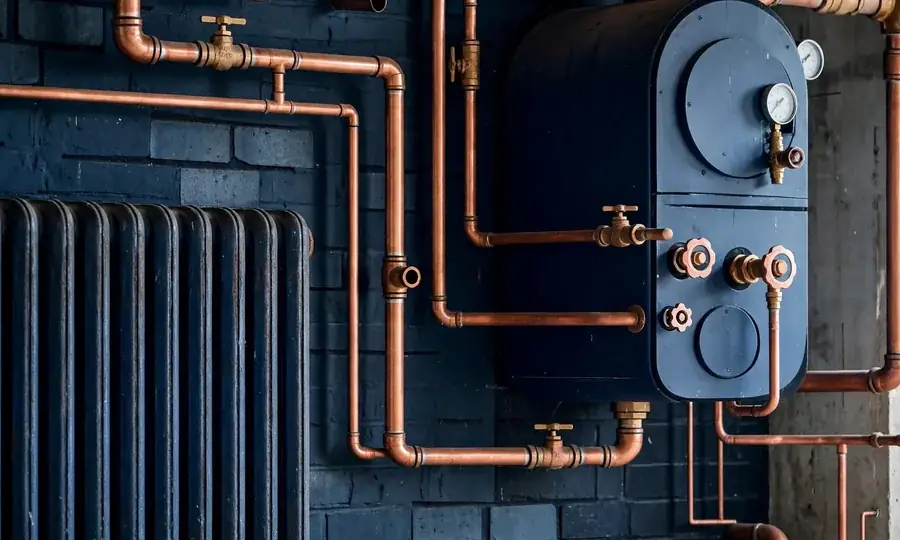
Where Norristown's oil logistics get interesting.
Borough oil tanks live in basements with narrow stairs and low ceilings — installed when the house was built, rarely inspected since. Fuel lines run through unheated spaces to reach the burner, and in sustained teens those exposed runs can gel. Single-pipe setups, common in the oldest installs, are fussier about lift and vacuum than two-pipe.
Check the float gauge before assuming a boiler fault — run-outs are the most common oil ‘emergency,’ and a run-out needs a delivery plus a bleed-and-reprime, not parts. Fuel-oil smell without visible leaking usually means a weeping fitting or cracked filter housing: ventilate and call promptly. In attached rowhouses, the neighbor smells it before you do.
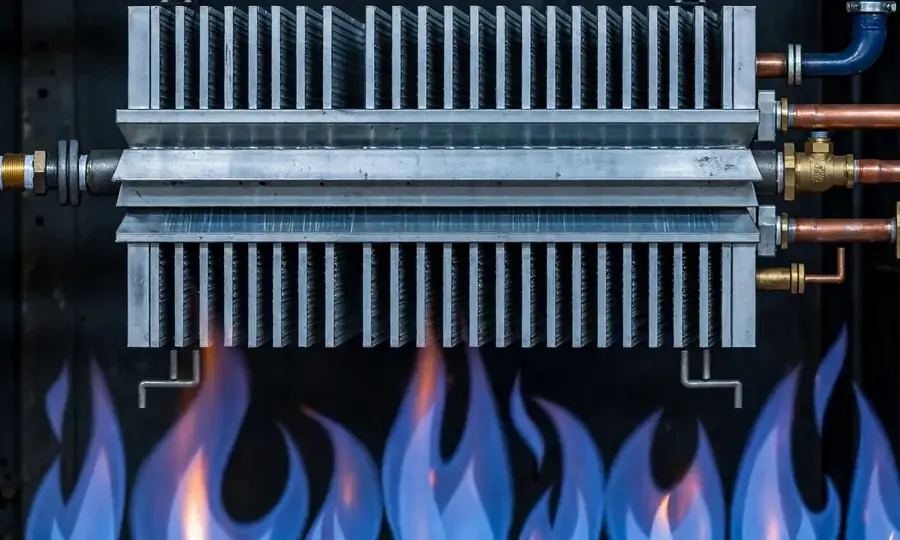
The holdout-block decision.
Most of Norristown has gas at the street — which makes every aging oil boiler a decision waiting to happen. Converting at replacement time is the borough's most common fuel switch: no more tank, no more deliveries, and a gas unit in a gas neighborhood. But conversion inherits the chimney question — oil-era masonry flues and gas units have a known disagreement — and it only makes sense when the oil block is actually finished.
A sound oil block with a fresh burner is not a problem to solve; it is heat. The decision inputs are block condition, tank condition, and chimney state — in that order. Get those answered honestly and the fuel question answers itself.

Straight answers before you call.
These are oil-fired cast-iron units, many installed when oil was the modern upgrade. If yours is one of them, you are not an oddity; you are just on the other triage track.
That is the classic sound of delayed ignition — oil pooling before it lights, then lighting all at once — and it means the nozzle, electrodes, or fuel delivery need attention. The oil smell says combustion is incomplete or the tank and lines need a look. Do not run it rumbling for weeks; it soots the heat exchanger and gets more expensive to clean.
Check the gauge on a schedule — weekly in deep winter — and order when it reads a quarter, because January delivery windows tighten. Tight-basement tanks are the Norristown norm, and a flashlight and a routine beat a run-out every time. Running dry stirs sludge into the filter and nozzle, turning an empty tank into a service call.
It is a real option in Norristown since gas serves most of the borough, but the math is personal: the age of your oil unit, the condition of the tank, and what your twin-side neighbors did all matter. Some homeowners convert at replacement time; others keep a healthy oil boiler and its paid-off tank. Talk it through with a tech who has seen both sides of your block.
The nozzle and oil filter get replaced, the electrodes are cleaned and gapped, the heat exchanger gets brushed and vacuumed, and the burner is combustion-tested and adjusted. It is the single highest-value visit an oil boiler gets — skip a few years and the soot buildup quietly eats the efficiency you are paying for. Annual is the schedule, not a suggestion.
Related services in the Norristown area.
If the fault might not be oil-side, the general repair page triages symptoms across fuels — including the conversion-era gas majority covered on the gas boiler page. No heat on a freezing night is an emergency call; a finished block or an aging tank leads to the installation and replacement page. Nationally, oil boiler repair covers burner and fuel-supply work in general.
Call (888) 766-1474 — check the tank gauge first, then describe the burner symptoms.