/>
ELIZABETHTOWN GAS BOILER SERVICE

Gas Boiler Repair in Elizabethtown, PA

Most Elizabethtown homes heat with gas — but “gas boiler” covers two very different machines here. Downtown runs converted atmospheric units, some old enough to have started on coal, with standing pilots or early electronic ignition and heavy cast-iron blocks. The post-war ring and newer subdivisions run sealed systems and wall-hung condensing units with their own fault language: condensate drains, pressure switches, and venting. This page maps gas faults to the equipment that actually produces them.

✓ Ignition & flame-sensing faults✓ Condensate & venting issues✓ a phone conversation about symptoms

General inquiries: 7 AM–7 PM · Emergency calls: 24/7 · (888) 766-1474

Elizabethtown’s gas boiler stock

Two generations of gas equipment, two fault families.

Downtown conversions — atmospheric gas boilers in brick rowhouses and twins, many installed during the coal-to-gas and oil-to-gas waves of the last century. They are simple, heavy, and long-lived, but their ignition components are tired: thermocouples, standing pilots converted to intermittent ignition, flame sensors fouled by decades of combustion, and controls past their design life.

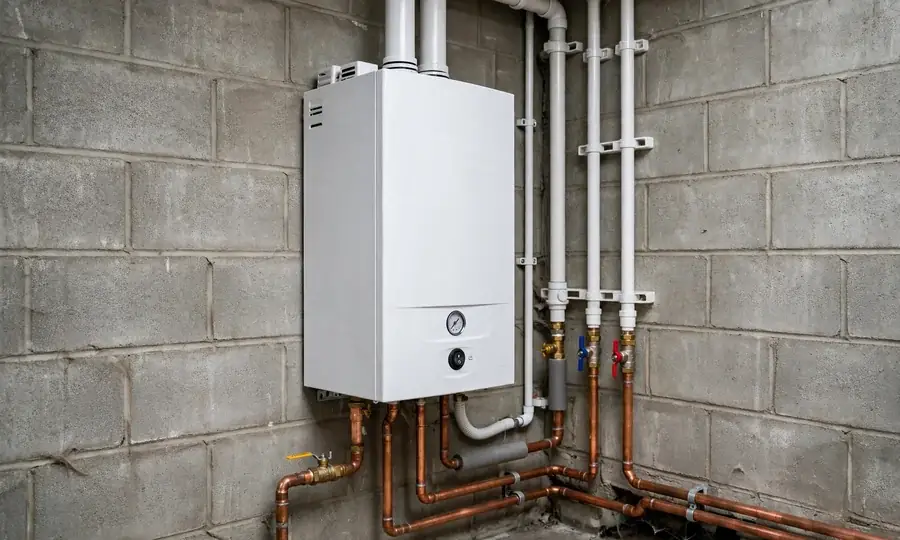
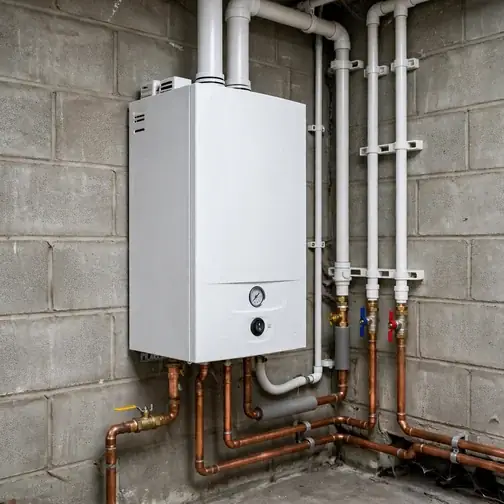
Modern wall-hung gas boiler with venting pipes mounted on a basement wall

Sealed and condensing units — post-war capes and ranches with pressurized gas systems, and newer subdivisions with wall-hung condensing boilers. These trade burner simplicity for controls complexity: pressure switches, condensate management, outdoor-reset sensors, and modulating gas valves. When they fail, the fault is usually a sensor, a drain, or a vent — not the heat exchanger.

Ignition and flame faults

The faults that stop gas boilers — and how they present.

  • Flame sensor fouling — the classic short-cycle: fires for seconds, drops out, retries, locks out; a cleaning fixes what a control board cannot
  • Hot-surface igniter failure — clicks or silence with no flame; igniters are wear parts with a finite life
  • Pressure switch and venting faults — blocked vents, failed inducer motors, or snow-choked terminations shut the sequence down before ignition
  • Condensate freeze-ups — externally run condensate drains freeze solid on January nights in the teens; the unit locks out on a full trap
  • Thermocouple and pilot issues — older downtown conversions that still run pilots or early intermittent systems
  • Gas valve and control faults — power reaches the valve but no gas flows, or the control never calls for it — diagnosis, not guessing
Gas Boiler Repair in Elizabethtown, PA

Condensate and venting in January

Elizabethtown’s coldest weeks expose the weak points.

Condensing boilers make acidic condensate that has to drain somewhere — and in many subdivision installs, “there” is an exterior wall. A January cold snap freezes that line, the trap backs up, and the boiler locks out on a fault the homeowner reads as a dead unit. The fix is thawing plus rerouting or insulating the drain — a repair visit, not a new boiler.

Venting deserves the same attention: concentric vent terminations through side walls get buried by drifting snow or blocked by nests in shoulder seasons. After any heavy snow, check that the termination is clear before assuming the boiler failed. If the unit still will not fire with clear vents and a clear drain, the fault is deeper — call and describe the sequence of lights or the error behavior.

Gas Boiler Repair in Elizabethtown, PA

Pressure and the water side

Gas boilers fail on the water side too.

Sealed gas systems in the post-war ring live at 12–15 psi cold. A gauge that drifts down over weeks points at the expansion tank losing its charge, an auto-fill valve not making up the difference, or a weeping fitting somewhere in the loop. Topping off the system without finding the leak just repeats the cycle — and on old downtown conversions with original piping, chronic make-up water accelerates corrosion.

Cold radiators in a twin or cape with a healthy burner are almost always distribution: air trapped at high points, a stuck zone valve, or a circulator losing strength. Bleed the radiators first — it is free and it fixes a surprising share of “boiler” calls.

Gas Boiler Repair in Elizabethtown, PA

Frequently Asked Questions

Straight answers before you call.

01

My downtown conversion boiler will not fire. What is the usual cause?

Ignition train wear: flame sensors, igniters, and pilot-era controls in atmospheric boilers converted from coal decades ago. These units fail at the fire side first. Note whether the pilot lights, whether the main burner follows, and any sounds; that sequence tells the technician where the train breaks.

02

What does it mean when the boiler fires for seconds then quits?

Flame failure: the sensor did not prove flame, so the gas valve closed as designed. Combustion deposits coating the sensor are the usual cause. Cleaning helps temporarily, but a sensor that keeps fouling means the burner needs adjustment. Report the fire-then-quit pattern on the call.

03

My sealed gas unit keeps showing low pressure. How do I handle it?

Top it up once through the fill valve to 12 to 15 psi cold and watch it. If it holds, it was likely a one-time burp of air; if it falls again within days, the expansion tank or a fitting is failing. Do not make topping up a weekly ritual: the fresh water corrodes the system. Call (888) 766-1474 when it will not hold.

04

Is my old atmospheric boiler a carbon monoxide risk?

Any fuel-burning appliance can be, which is why CO detectors belong on every floor. The specific risks on old atmospheric units are cracked heat exchangers and blocked flues. Annual servicing and working detectors are the defense. If a detector alarms, get out, call 911, and keep the boiler off until it is inspected.

05

The new condensing unit in our subdivision keeps shutting down in January. Why?

Frozen condensate is the prime suspect: January nights in the teens freeze externally run condensate drains across the Hershey-side subdivisions, and the boiler shuts down to protect itself. Thaw the line, do not force operation, and mention the freeze on the call so the visit reroutes the drain permanently.

Gas boiler resources

National guides for gas-fired systems.

For the general fault families behind these symptoms, see gas boiler repair and boiler leak and pressure repair — the national versions of this page’s local detail. If your system loses pressure regularly, the boiler pressure guide walks through what a healthy 12–15 psi cold reading looks like and what moves the needle. Homes on oil instead should read the Elizabethtown oil boiler page; a dead unit on a freezing night belongs on emergency boiler repair. Our how it works page explains the connection process.

Gas boiler trouble in Elizabethtown?

Call (888) 766-1474 — describe the ignition or lockout behavior and get connected to a local pro.

☎   Call (888) 766-1474