
/>
DOWNINGTOWN OIL BOILER SERVICE

Oil Boiler Repair in Downingtown, PA

Downingtown's oil homes are a self-selected group: borough blocks the gas mains reached late or never, heated by oil-fired cast iron that has been doing the job for decades. This page is the oil practitioner's reference: burner faults, tank realities, and the winter discipline that keeps the minority fuel reliable.

✓ Burner, nozzle & filter faults✓ Tank & gauge checks✓ a phone conversation about symptoms

General inquiries: 7 AM–7 PM · Emergency calls: 24/7 · (888) 766-1474

The oil burner's four-element balance

Atomization, air, spark, draft — disturb one, get a symptom.

  • Atomization decay — nozzles wear; the spray coarsens, the flame stretches and smokes, the chamber soots. Annual nozzle replacement is the cheapest efficiency in oil heat
  • Spark weakening — electrodes erode and drift out of gap; light-off gets later and more dramatic until lockout
  • Fuel restriction — filters, strainers, and sludge; the classic 'runs fine, then doesn't' as restriction crosses the critical line
  • Flame blindness — cad cells age and dim; the control locks out on a flame that is burning perfectly well
  • Air-pattern collapse — worn retention heads and cracked blast tubes; combustion goes rich, smoky, and inefficient
  • Neglect compounding — skipped tunes stack: soot insulates the chamber, efficiency falls, and each symptom amplifies the next

Tank craft for borough basements

The gauge, the sludge, and the damp.

Borough oil tanks live in old basements — damp ones. Read the gauge monthly in winter; verify with a stick if it ever looks suspicious, because a stuck gauge is a classic prelude to a dry tank. Sludge is the slow enemy: steel tanks shed it over the decades, and it migrates to the filter and nozzle. Damp basements corrode tanks from the outside; inspect the legs and seams, not just the body.

Fill and vent pipes deserve a glance each fall — nests, ice, and debris turn a scheduled delivery into a no-fuel call that looks exactly like a burner failure. The Downingtown heating guide places the oil blocks; on those blocks, the tank is half the heating system.

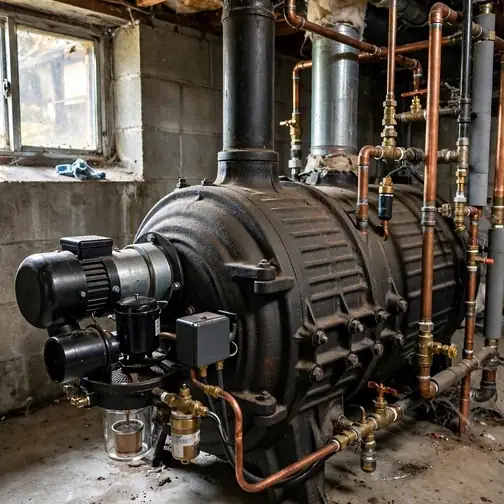
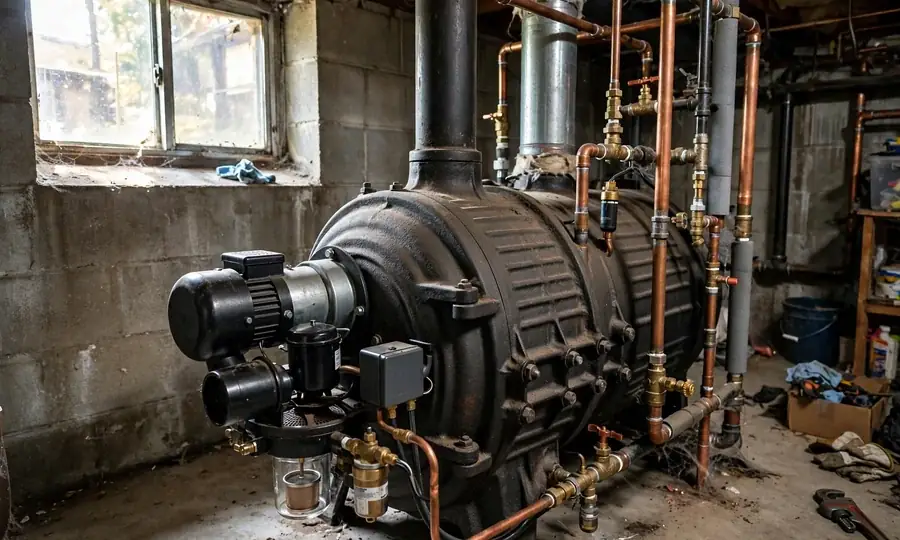
Borough basement oil tank installation in Downingtown Pennsylvania
Oil Boiler Repair in Downingtown, PA

The annual tune: what 'serviced' means

Not a filter swap — a combustion reset.

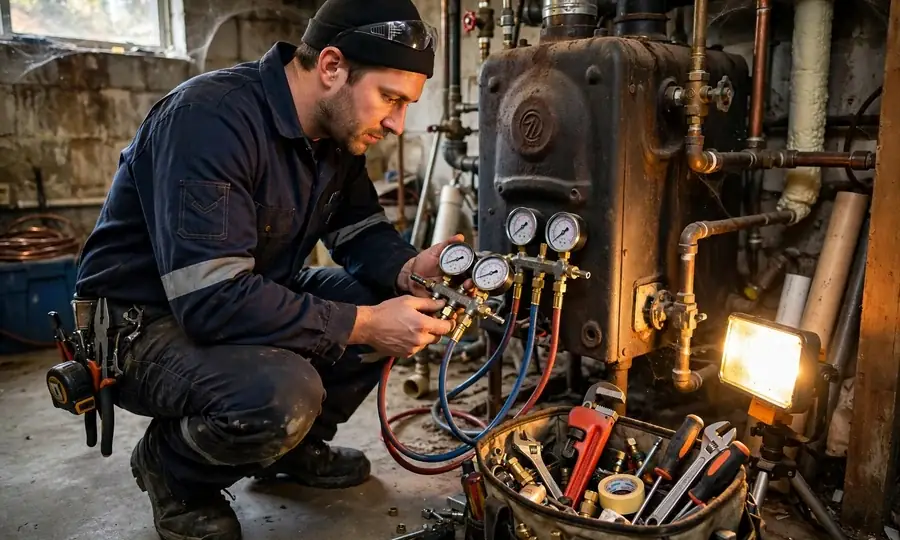
A real oil tune is a sequence: nozzle replaced, filter and strainer changed, electrodes cleaned and gapped, chamber brushed and vacuumed, then combustion tuned with instruments — CO2, smoke number, draft, stack temperature. The numbers at the end should be written down; they are the baseline next year's tune is judged against. A 'tune' without combustion numbers is a cleaning with aspirations.

Skipped tunes do not just risk lockouts — they cost fuel all winter. A sooted chamber and a worn nozzle can hold efficiency hostage for months, and the surcharge shows up on every delivery ticket. The tune pays for itself in fuel before it pays for itself in reliability.

Oil Boiler Repair in Downingtown, PA

Oil's durable minority

Oil burner problems can involve fuel supply, filters, ignition components and the condition of the tank. Describe your symptoms and system when calling.

Downingtown's oil share is not shrinking so much as settled: the blocks that will convert mostly have, and the rest heat with oil indefinitely. That stability supports real oil expertise locally — burner mechanics who have seen every failure mode the equipment offers. Across Pennsylvania, the same durable-minority pattern holds in Pottstown and Norristown, where borough oil blocks produce the identical service vocabulary.

Gas households, of course, live on the gas page — different fuel, different faults, different discipline.

Oil Boiler Repair in Downingtown, PA

Frequently Asked Questions

Straight answers before you call.

01

My borough oil burner locked out twice this week. What is the pattern telling me?

A burner that locks out repeatedly is not having hiccups; it has a hard fault: a worn nozzle, weak electrodes, a clogged filter, or water in the tank. Borough oil burners overdue for service soot toward lockout, and cold snaps finish the job. Stop resetting it and call (888) 766-1474.

02

What does a fall oil service visit cover?

Nozzle, filter, electrodes, and a combustion test: the full burner setup. In the borough's oil pockets, this is the visit that prevents January lockouts. Burners that miss years of service soot their heat exchangers and die on the coldest nights. Schedule it in the fall, before the heating season starts.

03

My tank gauge reads a quarter. Is that enough to get through a cold snap?

Maybe not. A quarter tank in a cold snap can run out faster than you expect, and running dry means bleeding lines and repriming the burner after delivery. Will-call customers should order at a quarter, not at empty. If the gauge is near empty and the burner locked out, call your oil company first, then (888) 766-1474 for the restart.

04

There is a strong oil smell in my basement after delivery. Normal?

A faint odor right after a fill can happen; a strong or lingering smell cannot be ignored. It can mean a spill at the fill pipe, a leaking fitting, or a tank problem the delivery exposed. Ventilate, do not run the burner until you know the source, and call (888) 766-1474 if the smell persists past a few hours.

05

Can I get off oil if my borough street has gas mains?

If the main reaches your street, yes, and the borough's mains arrived block by block, so it is genuinely street-specific. Conversion means gas piping, venting changes, and retiring the oil tank. Call (888) 766-1474 with your street; the triage can tell you whether the main is there before you plan the project.

Downingtown oil boiler services

Related services in the Downingtown area.

Cross-fuel symptoms: general diagnosis. Empty tank at midnight: emergency repair. Gas household: gas page. Finished block: installation. Nationally: oil boiler repair and the warning-signs guide.

Oil burner trouble in Downingtown?

Call (888) 766-1474 — check the gauge first, then describe the symptom to triage.

☎   Call (888) 766-1474