
Our Ditmars 2-family oil burner locked out overnight. Reset it?
Press reset exactly once — if it fires and holds, watch it; if it locks out again, stop and call. Repeated resets flood the chamber with unburned oil.
An oil-heated house in Astoria lives by the seasons: the fall service visit, the first refill, the January deep freeze that tests everything, the spring filter change. About one home in nine here heats with oil — mostly 1–2 family houses around Ditmars with 25- to 40-year-old boilers and basement tanks older than the mortgage. This page follows that year, and the equipment decisions inside it.
General inquiries: 7 AM–7 PM · Emergency calls: 24/7 · (888) 766-1474
Before the heating months.
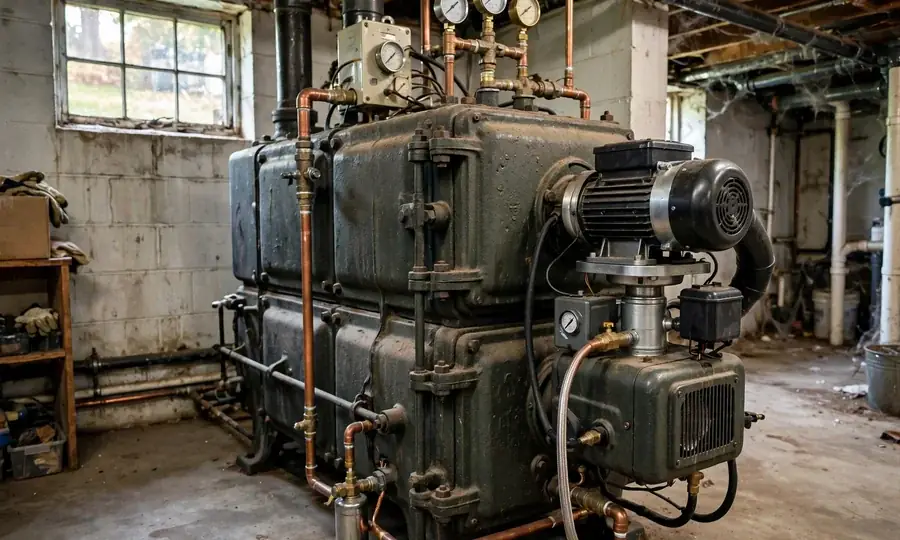
The year starts with the yearly visit, ideally before the first sustained firing: the spray nozzle cleaned or replaced, the filter renewed, the igniter checked and gapped, and the flame verified for a clean, even burn. On a 30-year-old burner this visit is the whole winter’s protection — oil is a dirtier fuel than gas, and precision parts don’t forgive neglect.
Fall is also when the tank gets its yearly look-over: seams, corrosion bleed, any oil odor that’s new since last season. A tank problem found in October is a planned project; the same problem found in January is an emergency. The pro reads the tank every visit for exactly this reason.
Fuel logistics.
Order with margin — watching the level through December and reordering early beats every alternative, because an empty tank in deep cold drags sediment into the filter and the spray nozzle on its way down, turning a refill into a service call. And expect the filter to complain after each fill-up: incoming oil stirs years of tank sediment, and the days after a refill are peak season for starved-burner symptoms. If the burner acts up within a week of a fill, say so on the triage call — it’s a filter story, not a burner story.
Trust the dial, then verify it. Float mechanisms stick with age, and a needle parked at a quarter on a seized float has ended many cold nights. The triage runs a fuel-level verification before anything else when a burner won’t fire — the least expensive fix in oil heat, and the most commonly skipped.
When weaknesses surface.
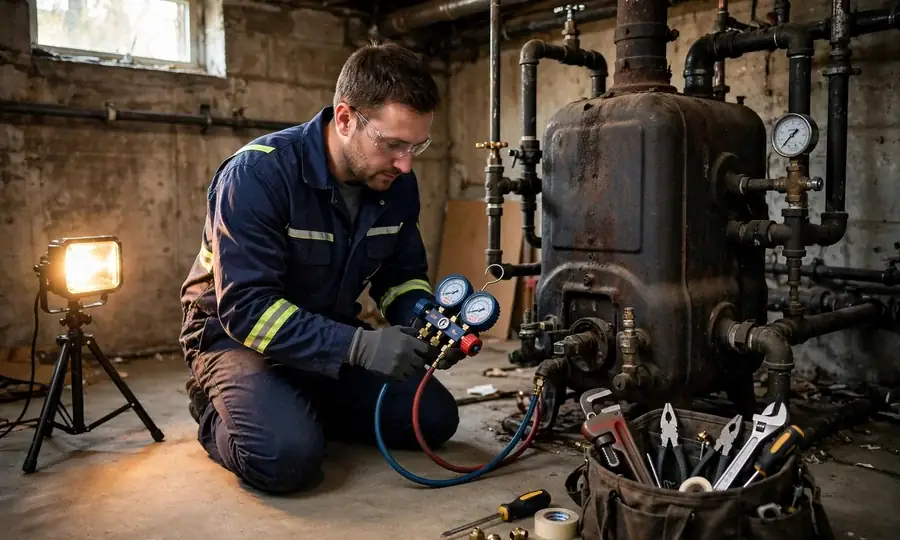
Deep cold finds every deferred maintenance item at once. The starved filter that limped through December quits entirely. The worn spray nozzle that kind of worked in November won’t atomize at 15°F. Worn igniters give weak spark and delayed ignition — sometimes with a startling ignition thump that soots up the boiler’s internals. The fuel pump that’s been getting louder finally stops pushing oil.
What to do when the burner quits in deep cold: check the level first (and distrust the dial a little), then call. Don’t keep jabbing the reset button — repeated restarts on a faulting burner risk a flooded firebox. Describe what happened in plain words — when it quit, what you hear now, when the last refill came — and the triage routes from there. The visit traces the fuel’s route — tank, line, filter, pump, spray nozzle, spark, flame — instead of guessing at the burner.
The oldest thing in the basement.
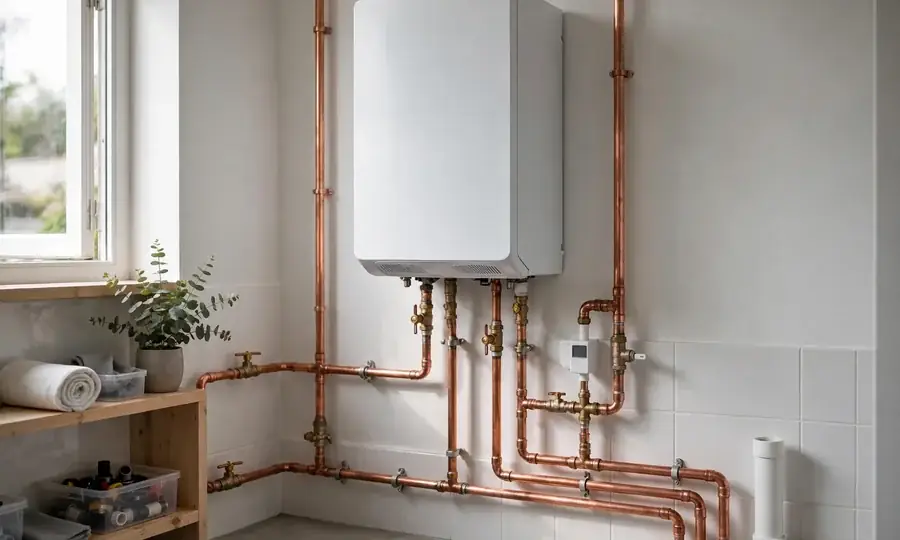
Basement steel tanks serve for decades and then announce their retirement: seeping seams, corrosion bleeding down the sides, an oil odor that wasn’t there last season. Funds spent rebuilding a burner above a dying tank are funds misaimed — which is why the tank gets inspected on every oil visit, not just when someone asks.
A solid 35-year-old tank keeps serving; a seeping one is a replacement conversation, and October is when to have it. Tank replacement is its own project — old tank out in pieces, new tank set, lines reconnected, first fill watched — and doing it on a calendar beats doing it over a spreading stain in January.
The long question.
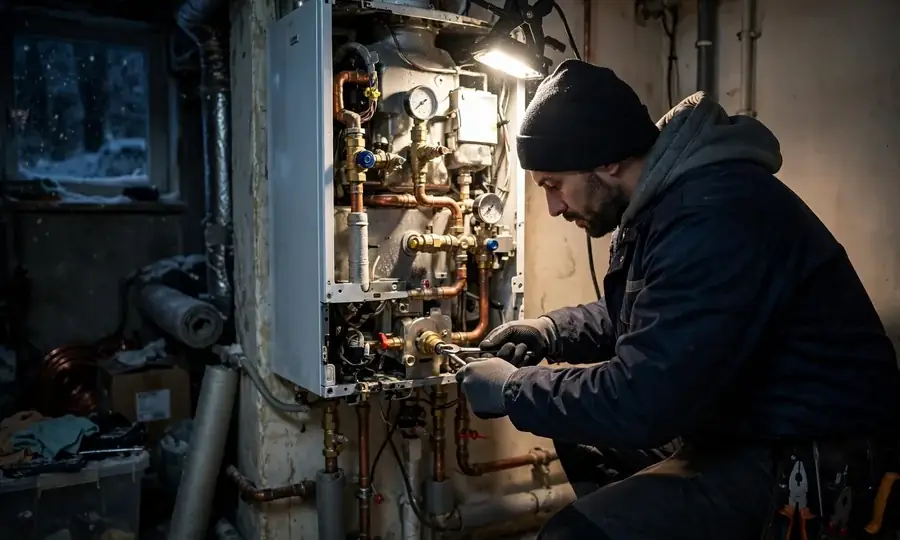
Every Astoria oil homeowner eventually does this math. If the gas main is at the curb and the boiler is near end of life, conversion often pencils out — one project, one disruption, decades of simpler fuel. If the boiler has years left and the tank is sound, the payback rarely justifies ripping out a working system; run it well, service it yearly, and revisit the question at replacement time.
There’s no fashion answer, only a house answer: main location, tank condition, boiler age, and how long you plan to own the house. Call and talk it through free — the replacement page has the framework, and the triage will give you the honest version for your specific case, not the sales version.
Straight answers.
Press reset exactly once — if it fires and holds, watch it; if it locks out again, stop and call. Repeated resets flood the chamber with unburned oil.
Cold snaps burn faster than the gauge suggests. If the burner has already stopped, say so on the call; it changes the triage.
A growing odor means something changed — a weeping fitting, a tank seam starting to fail, or a drip at the filter. Ditmars-area oil homes are often the ones that never converted, with tanks older than owners realize. Check for wet spots under the tank and mention the smell's strength on the call.
Puffback means delayed ignition — oil pooling before it lights — and it deserves prompt attention. It usually traces to a worn nozzle, weak electrodes, or poor draft. Describe the smoke on the call; a burner tune-up with a combustion check is the fix. Do not keep running it to see if it clears.
It depends on whether gas is at your curb and on the state of the oil tank — many Ditmars 1-to-2 family homes never converted and run fine on modern oil burners. The conversion math runs through the chimney, the piping, and the abandoned tank. It is a once-in-decades decision; bring it to a real conversation, not a guess.
Where to go next.
For faults beyond the burner and tank — distribution, controls, pressure — boiler repair in Astoria covers the full diagnostic picture on vintage equipment. The national oil boiler repair page goes deeper on burner anatomy and combustion, and signs your boiler may need repair helps you read the symptoms before calling. Oil’s footprint grows outside Astoria: Elmont and Jamaica show the oil-heated pockets of Queens and Nassau County, where tanks and deliveries dominate the service conversation.
Call (888) 766-1474 — mention your fuel and tank level on the call.